
Reviewed · HISTORICAL TOURS
Rio de Janeiro: Little Africa Heritage Walking Tour
Rio’s port area has stories that still feel alive today. I like how this walk connects African heritage to very specific Rio locations, not vague hand-waving. I also love the balance of viewpoints, from a rooftop look over Mauá Square to street-level stops that explain how culture took shape here. One thing to consider: it’s a long, mostly outdoors walk, so bring water and expect heat or rain.
What makes it especially worth your time is the way you’re guided through Brazil’s colonial-era context first, so later stops land with more weight. Guides such as Luana, Nathalia, Marina, Larissa, Eddie, Raquel, and Ryane have earned strong praise for storytelling energy and for handling sensitive topics with care. The route is paced to keep moving, but it still takes about 150 minutes of attention, photos, and listening.
In This Review
- Key Highlights You’ll Feel On the Walk
- A Story-First Walk Through Rio’s Little Africa
- Meet at Museu de Arte do Rio: Getting Oriented Fast
- Rooftop Time: Mauá Square and Guanabara Bay From Above
- Morro da Conceição to Largo da São Francisco da Prainha
- Pedra do Sal: The Place Where Samba Was Born
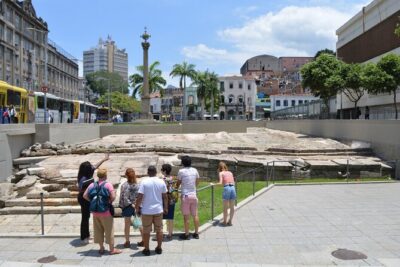
- Jardim Suspenso do Valongo and Cais do Valongo: Ending With Weight
- Pace, Rain or Shine, and What to Bring
- Price and Value: Why $40 Makes Sense Here
- Who Should Book This Tour (and Who Might Skip It)
- Should You Book Rio’s Little Africa Heritage Walking Tour?
- FAQ
- Where does the tour start?
- How long is the tour?
- What language is the tour offered in?
- Is hotel pickup included?
- Does the tour run in rain?
- What should I bring?
- How late can I be before the guide leaves?
- Is there a minimum age?
Key Highlights You’ll Feel On the Walk
- Rooftop panoramas: Mauá Square and Guanabara Bay viewed from above, early in the tour.
- Little Africa context: how port neighborhoods became known for African community life around the turn of the 20th century.
- Food and culture links: Largo da Prainha as a place to spot African influence in Brazilian gastronomy.
- Afro dance legacy: Mercedes Baptista is recognized for Afro-Brazilian dance and trailblazing at the Municipal Theater.
- Samba origin stop: Pedra do Sal, described as the place where samba was born.
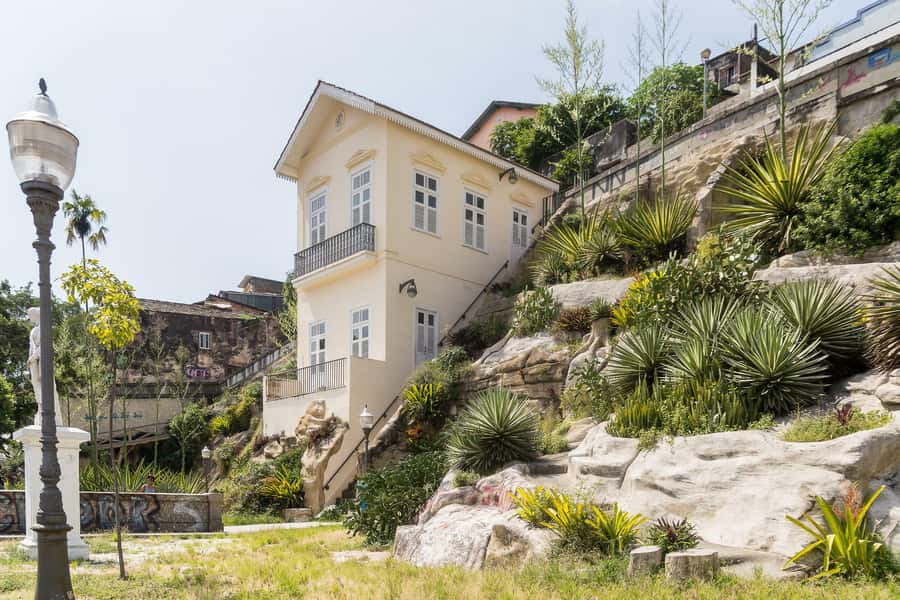
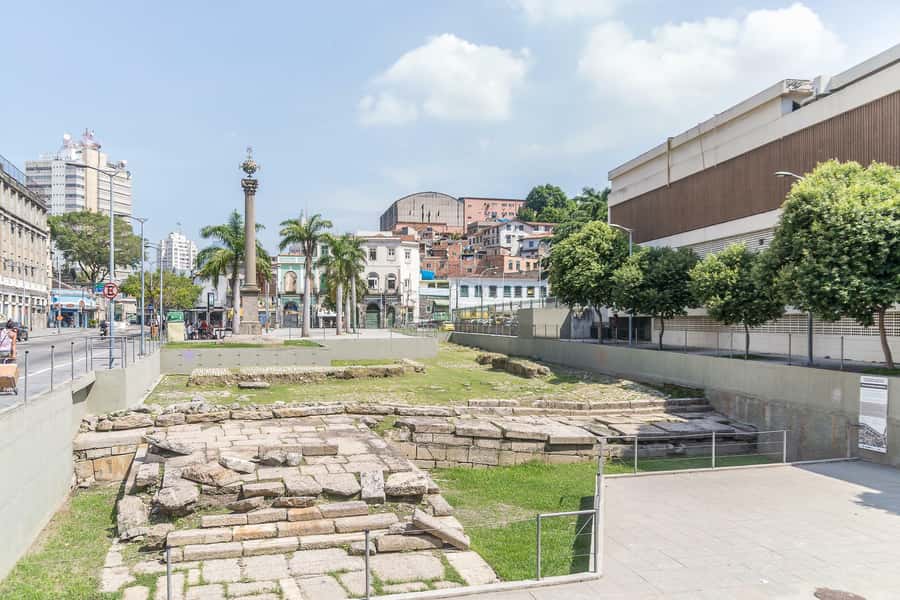
- Valongo landmarks to close: Jardim Suspenso do Valongo and Cais do Valongo finish the story on a strong note.
More heritage walks through the Little Africa district
- Explore Little Africa : Unveiling Afro Heritage in Rio de Janeiro★ 5.0 · 97 reviews
- African Heritage: Gastronomy and Musicality Experience★ 5.0 · 39 reviews
- Jewish Tour in Rio de Janeiro★ 5.0 · 37 reviews
- Rio Jewish Heritage Half-Day Tour★ 5.0 · 35 reviews
A Story-First Walk Through Rio’s Little Africa
This tour works like a good museum exhibit, except you’re walking through the city. You start with the broader background—Brazil’s colonial period—and that matters. Without that setup, it’s easy to see sights and miss why they mattered to real people.
What I love most is how the stops stay grounded in Rio’s geography. You’re not just told history; you’re shown where it shows up. The walk also leans into the cultural side of the story—especially dance and music—so the experience feels human, not only academic.
The other reason this tour hits is tone. Several guides are praised for being enthusiastic and personable, like Eddie’s “passion” for the community or Nathalia’s thoughtful balance of serious topics with a lighter touch. That kind of delivery helps you stay engaged even when the subject matter gets heavy.
Meet at Museu de Arte do Rio: Getting Oriented Fast
You meet in front of the Museu de Arte do Rio. Plan to arrive about 5 minutes early. The guide can wait only 15 minutes if you’re late, so don’t count on sprinting across town at the last second.
From there, the tour begins with an orientation into Brazil’s colonial period. This isn’t filler. It’s the mental map you’ll use throughout the walk, especially once the route shifts into neighborhoods that took on the name Little Africa.
A short break is built in after you start. That’s useful if you’re wiping sweat off your glasses or switching your phone from low battery mode to photo mode. Just remember: after the break, you’re still on your feet for a while.
Rooftop Time: Mauá Square and Guanabara Bay From Above
One of the most memorable moments is the rooftop view tied to the Mauá Square area. From up high, you can take in the shape of the port and the sweep of Guanabara Bay, and the city feels bigger than it looks at street level.
This is a smart move in the tour design. Seeing the landscape from above helps your brain connect later details—where people moved, where neighbors formed, and why the port region became such a magnetic setting for cultural change.
If you’re the type who gets restless during long explanations, don’t worry. This part acts like a reset. You get a view break and then you’re back to the story with a clearer sense of place.
Still browsing Rio De Janeiro? These are the ones we go back to



Morro da Conceição to Largo da São Francisco da Prainha
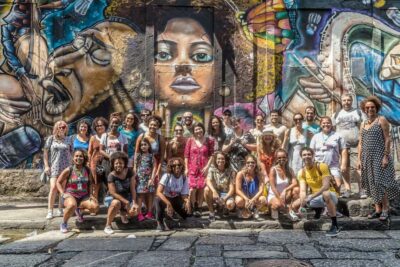
After the initial orientation and the rooftop moment, you head into the walking section through Morro da Conceição. The guided walk here is about picking up the layers: how the neighborhood environment shapes community identity and how those identities persist through everyday spaces.
Then you move to Largo de São Francisco da Prainha. This stop is especially interesting if you like food culture. You’ll learn about African influence in Brazilian gastronomy—one of those connections that makes perfect sense once you hear it, but is easy to miss if you only focus on beach Rio.
What to watch for on this segment is how the guide uses nearby streetscape details to support the story. You’ll feel like you’re learning to read the city: what you see isn’t random, and it didn’t happen by accident.
Pedra do Sal: The Place Where Samba Was Born
Pedra do Sal is a key emotional stop on the route. It’s described as the place where samba was born, and standing there with the tour’s earlier context in your head makes the meaning land quickly.
This is also where Afro-Brazilian culture becomes the center of the conversation. You’re not just hearing about origins in a generic way. You’re seeing a specific area tied to the development of music and community life.
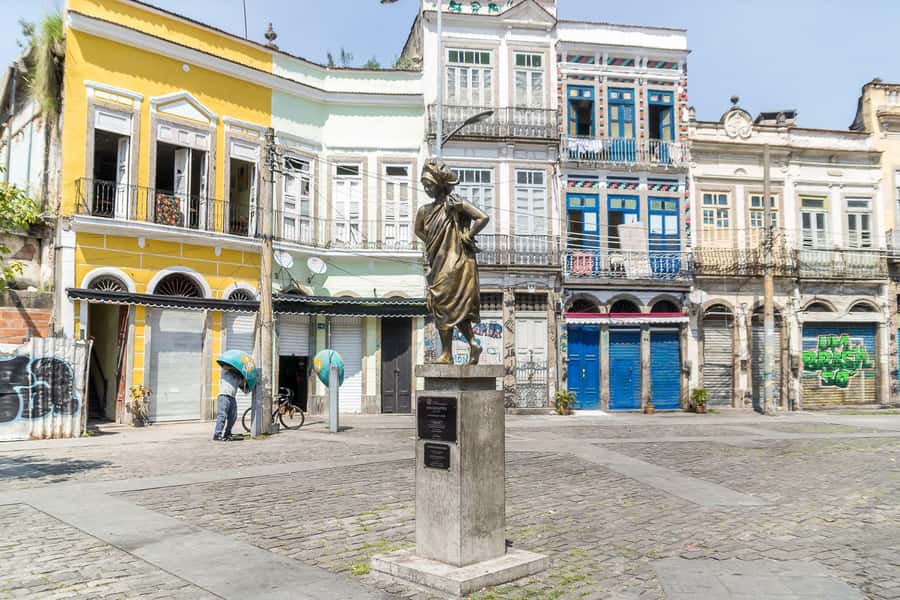
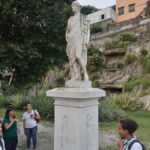
In the same overall portion of the walk, you also see the statue honoring Mercedes Baptista. She’s recognized as a forerunner of Afro dance in Brazil and noted as the first black dancer at the Municipal Theater in Rio de Janeiro. That detail matters because it shows how cultural expression moved between public stages and street-level traditions.
If you care about performance—dance, music, rhythm—this is one of the reasons to book. The tour treats samba and Afro dance as history you can point to, not just background entertainment.
Jardim Suspenso do Valongo and Cais do Valongo: Ending With Weight
The ending doesn’t feel like a quick wrap-up. After your samba and dance stops, you move to Jardim Suspenso do Valongo (Hanging Garden of Valongo) and then to Cais do Valongo, before returning to Museu de Arte do Rio.
These sites give the walk a more reflective tone. Even without extra theatrics, the names alone point to a specific place in the city’s story. The guide ties them into the broader theme of African heritage and the long echo of port neighborhood life.
If you like walking tours that change your perspective at the end—not just the start—this section delivers. It’s a good time to slow your photos down, put the phone away for a minute, and actually listen.
Pace, Rain or Shine, and What to Bring
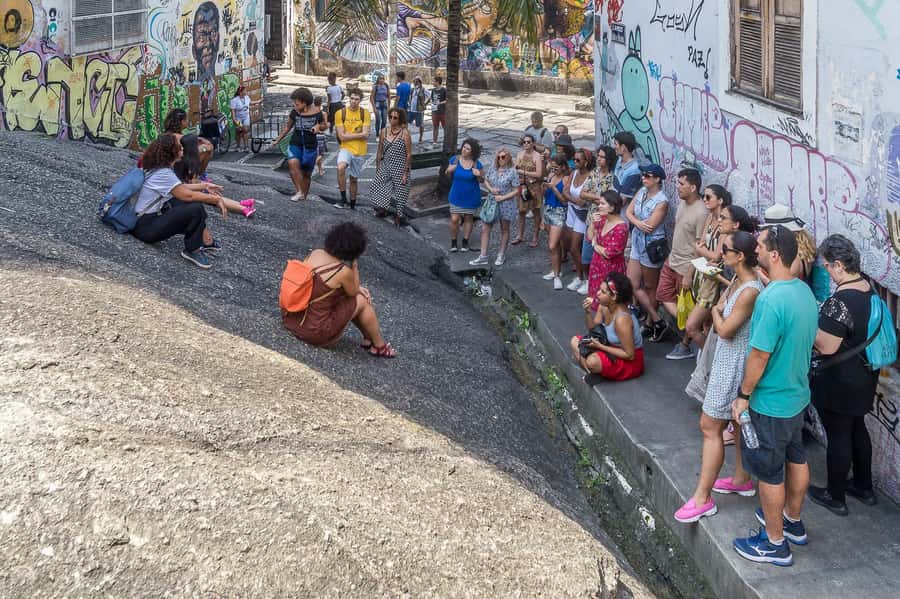
This tour runs for 150 minutes, and it’s scheduled rain or shine. That means you should dress for weather, not for what you hope the sky does.
Bring comfortable shoes. The route is a walking tour, and you’ll be moving between several stops. Bring sunscreen and water too—especially if you’re visiting during a sunny part of the day.
Also, pack flexible clothes. Even if rain starts, you’ll still be walking. You’ll be glad you didn’t choose anything that gets heavy and miserable when wet.
Finally, note that the tour is offered only in English. If you speak Portuguese well, you’ll still be fine, but don’t plan on switching languages mid-route.
Price and Value: Why $40 Makes Sense Here
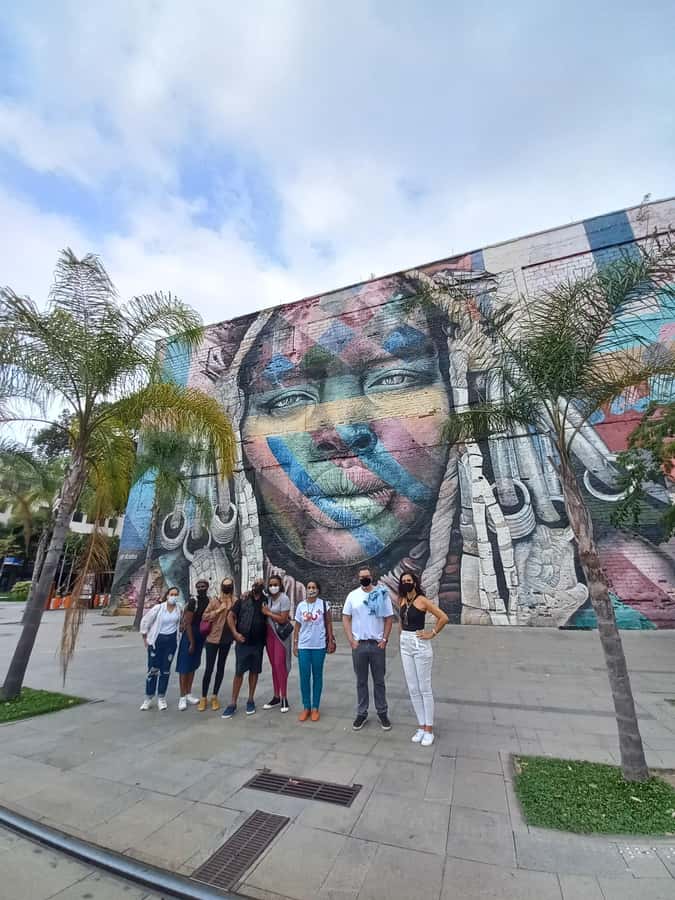
At $40 per person for about 2.5 hours, this isn’t a bargain you’ll forget, and it’s not a luxury add-on either. It’s priced like a focused city experience with a real guide leading you through named landmarks.
What you’re paying for is context plus delivery: the tour starts with colonial-era framing and keeps adding meaning as you reach each location tied to African heritage, samba, and Afro dance. Guides are often singled out for being enthusiastic, personable, and genuinely invested—like Luana’s storytelling energy or Nathalia’s ability to answer sensitive questions thoughtfully.
So the value isn’t just the number of stops. It’s the way the route builds understanding. If you’re new to Rio, this tour can help you interpret the city quickly, which makes other neighborhoods and landmarks easier to appreciate afterward.
Who Should Book This Tour (and Who Might Skip It)
This is a great fit if you:
- Want to understand Brazil through African heritage in a concrete, place-based way.
- Enjoy guided walking tours that prioritize storytelling over quick photo stops.
- Care about samba and Afro-Brazilian dance as part of history, not just entertainment.
It may be less ideal if you:
- Dislike long outdoor walks. You’ll be outside for most of the 150 minutes.
- Want a light, purely scenic tour. This one includes serious historical material, and the guide keeps the discussion respectful.
Kids under 5 aren’t suitable for this experience, mostly because it’s a long walking format.
Should You Book Rio’s Little Africa Heritage Walking Tour?
Yes, if you want Rio to make more sense fast. I’d especially recommend booking it earlier in your trip—so you have the cultural and historical frame before you start roaming on your own.
It also stands out because the best part isn’t just the landmarks. It’s the guide-led storytelling that connects colonial context, neighborhood identity, and cultural legacies like samba and Afro dance. If you’re looking for a tour that feels educational without turning into a lecture, this one has that sweet spot.
Just go prepared: comfortable shoes, water, and a rain-ready mindset. If you do that, you’ll come away with a deeper understanding of Rio that lasts longer than the photos.
FAQ
Where does the tour start?
You meet in front of the Museu de Arte do Rio.
How long is the tour?
It lasts about 150 minutes.
What language is the tour offered in?
The tour is offered in English only.
Is hotel pickup included?
No, there’s no hotel pickup or drop-off.
Does the tour run in rain?
Yes, it runs rain or shine.
What should I bring?
Bring comfortable shoes, sunscreen, water, and comfortable clothes.
How late can I be before the guide leaves?
The guide can wait for 15 minutes in case of delays.
Is there a minimum age?
It’s not suitable for children under 5 years old.
More Walking Tours in Rio De Janeiro






More Tour Reviews in Rio De Janeiro




More Heritage Walks in Rio




Fresh off the review desk: newer Rio De Janeiro tours we have been out on





Historical Tours, compared.
 ★ 4.4Historic Rio and Santa Teresa Half-Day TourFrom $47228 reviews
 ★ 5.0Explore Little Africa : Unveiling Afro Heritage in Rio de JaneiroFrom $8297 reviews
 ★ 4.8Paraty: Historic Centre Walking Tour & Cachaça TastingFrom $1996 reviews
 ★ 5.0Learn the History of Rio with an Unforgettable City Center Walking TourFrom $4982 reviews
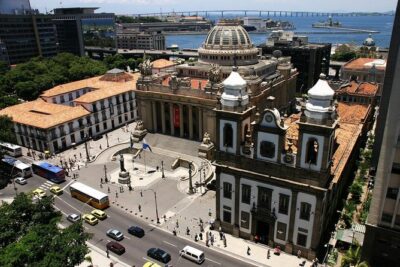 ★ 4.5Rio’s city walking tour: a glimpse of history and olympic legacyFrom $6078 reviews
 ★ 4.5Olympic Boulevard, Museum of Tomorrow & Historical RioFrom $7266 reviews
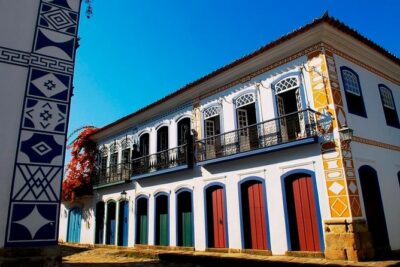 ★ 5.0Private walk tour of Paraty’s historical center – BY PARATY TOURSFrom $8049 reviews
 ★ 4.1Olympic Boulevard, Museum of Tomorrow & History TourFrom $6747 reviews
Browse the lists this tour appears in