
Reviewed · CHURRASCO & FOOD TOURS
African Heritage: Gastronomy and Musicality Experience
Follow the samba back to Africa. This 5-hour Rio experience links African ancestry to what you can taste and hear today, from the Morrinho Project at Museu de Arte do Rio to Yoruba-influenced food and a hands-on percussion session. I especially love how the Morrinho Project reframes favelas as community and daily life, and I love that you get real Yoruba-flavored Afro-Brazilian gastronomy plus drumming with an instructor from the African continent. One thing to consider: it is a food-focused stop, so it is not suitable for people with food restrictions, and parts of the day are outdoors.
If you want a day that feels like story + street, this is a strong pick. It runs as a private tour (only your group), starts at 10:00 am near Praça Mauá, and ends at Largo de São Francisco da Prainha for sunset sounds. The price is $110 per person and includes the gastronomy tasting and IPN entry, but drinks aren’t included, so budget a little extra.
In This Review
- Key things to know before you go
- A Rio walking day built around African ancestry, not stereotypes
- Museu de Arte do Rio (MAR) and the Morrinho Project: favela life, shown differently
- Eduardo Kobra’s mural: graffiti that points to ancestral roots
- Instituto de Pesquisa e Memoria Pretos Novos (IPN): the weight of the site
- Cais do Valongo and Little Africa: a crucial chapter of humanity
- Quilombo Pedra do Sal: cultural resistance you can hear
- Afro-Brazilian and Yoruba tastings at Pedra do Sal: what you eat is the story
- Percussion workshop with an instructor and drummer from the African continent
- Largo de São Francisco da Prainha: where the night’s soundtrack starts
- Price and logistics: is $110 a good deal for this day?
- Who this tour fits best (and who should skip it)
- The real takeaway: why this route sticks with you
- Should you book African Heritage: Gastronomy and Musicality in Rio?
- FAQ
- How long is the experience?
- What time does the tour start?
- Where does the tour begin and end?
- What’s included in the price?
- Are drinks included?
- Is this tour suitable for people with food restrictions?
Key things to know before you go
- Morrinho at MAR shows one favela’s daily life through a detailed permanent model, challenging the usual fear-based narrative.
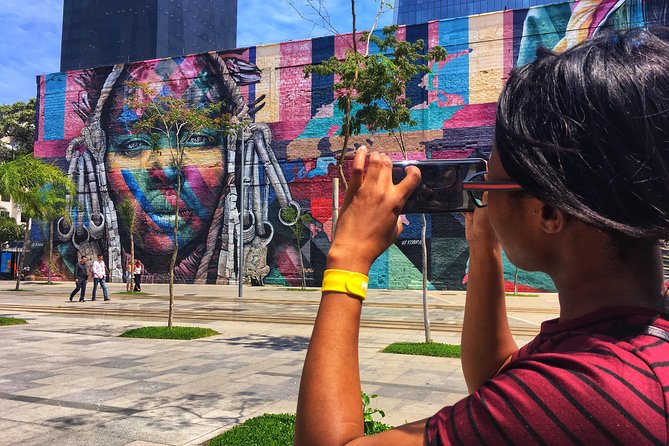
- Eduardo Kobra’s huge graffiti mural connects art to ancestry, pointing toward older cultural roots in Brazil.
- IPN Pretos Novos is archaeological and sobering, centered on the bones found at the site and what they reveal about slavery.
- Valongo + Little Africa explain a turning point in human history, with traditions that continued and changed.
- Pedra do Sal is cultural resistance in action, with weekly outdoor samba energy.
- Gastronomy + percussion come together at Pedra do Sal, with an instructor and drummer from the African continent.
More heritage walks through the Little Africa district
- Rio de Janeiro: Little Africa Heritage Walking Tour★ 4.9 · 177 reviews
- African Heritage: Gastronomy and Musicality Experience★ 5.0 · 39 reviews
- Jewish Tour in Rio de Janeiro★ 5.0 · 37 reviews
- Rio Jewish Heritage Half-Day Tour★ 5.0 · 35 reviews
A Rio walking day built around African ancestry, not stereotypes
Rio teaches you fast. If you only watch the postcard stuff, you miss the deeper currents—especially the African ones that still shape music, food, language, and belief. This tour is built like that: you start with art and representation, move into archaeology and historic sites, then finish with food and rhythm where Afro-Brazilian culture stays active, not just displayed.
I like that the day doesn’t treat African heritage as a side note. It treats it as the backbone of the culture you hear on the street every night. The tone is educational, but also grounded—this isn’t about staring at plaques. It’s about understanding why Rio sounds the way it does.
Museu de Arte do Rio (MAR) and the Morrinho Project: favela life, shown differently
Your first real stop is Museu de Arte do Rio (MAR), where you’ll find the Morrinho Project on permanent display. Instead of a generic, simplified view of favelas, the installation reproduces the streets, inhabitants, and everyday life of the Pereira da Silva favela in detailed form.
This matters because it flips the script. When favelas get reduced to headlines, people miss what makes them human places: social networks, creativity, and resilience. At Morrinho, you can look at the place as a lived environment—one where community isn’t an abstract idea.
You’ll typically spend about 25 minutes here, and because it’s inside the museum, it’s a good early anchor. If you’re the type who likes to understand the theme before you move on, this is a great way to set your mental map for the rest of the day.
Eduardo Kobra’s mural: graffiti that points to ancestral roots
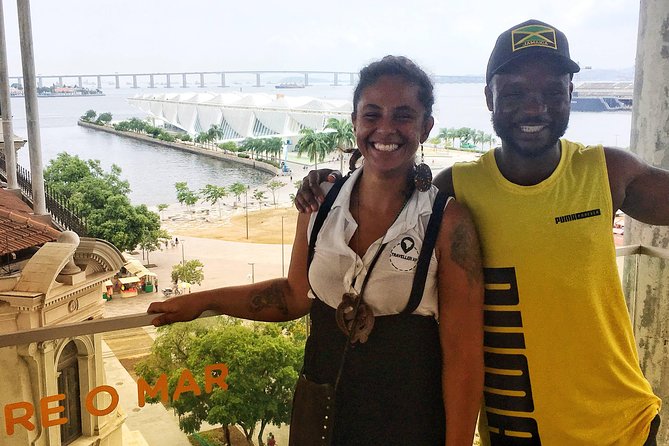
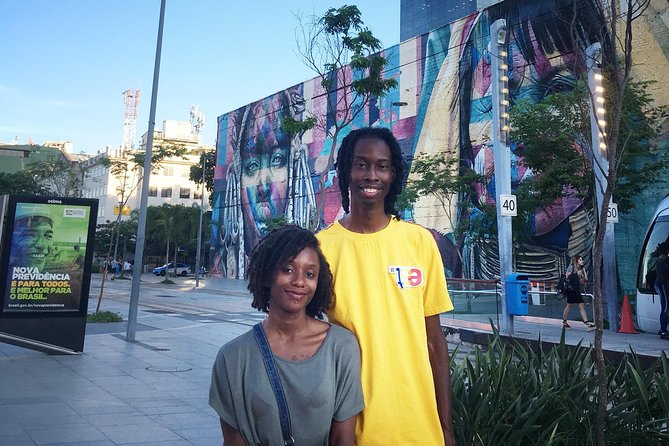
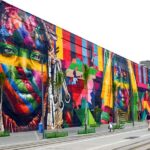
From MAR, you’ll shift to street-scale art with Eduardo Kobra, noted here as the largest mural of graffiti in the world. The focus isn’t just the size or style. You’re meant to look for how the mural references ancestral ethnic groups and very old cultures tied to Brazil’s history.
Graffiti can be easy to dismiss as noise—something made to shock. Kobra’s work nudges you to see it as a visual argument: a way of claiming identity in public space, and a reminder that ancestry is not only personal. It’s national, too.
This stop is short, so I’d treat it like a quick concentration exercise: stand back, scan the mural’s big shapes, then return to the details. If you’re the kind of traveler who loves “why did they choose this symbol?” moments, this part will click.
Still hungry? More churrasco and food tours
Instituto de Pesquisa e Memoria Pretos Novos (IPN): the weight of the site
The Instituto de Pesquisa e Memoria Pretos Novos (IPN) changes the mood in the best way—by grounding the day in physical evidence. You’ll visit the archaeological site and see the permanent exhibition centered on the bones of Africans discovered at the place.
This is where the tour stops being “culture facts” and becomes “history you can’t walk away from.” The impact here is about understanding the slave period in Brazil through what the site preserves, not through vague storytelling.
Expect roughly 40 minutes at IPN. That’s usually long enough to absorb what’s presented, without rushing. If you do this, give yourself permission to feel uncomfortable. That’s part of how you’ll understand why the later stops about resistance, religion, samba, and music matter so much.
Cais do Valongo and Little Africa: a crucial chapter of humanity
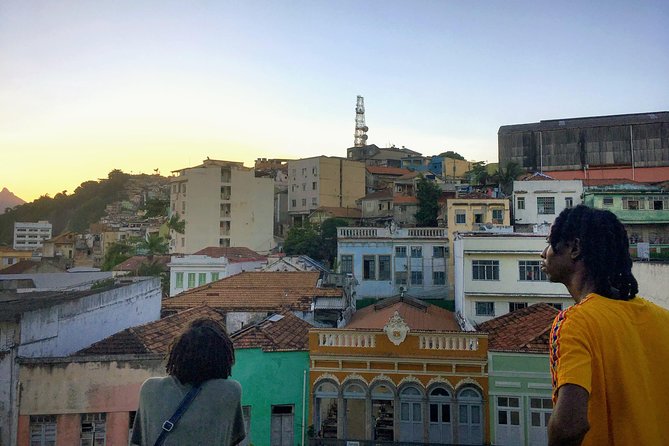
Next comes Cais do Valongo, a historical site tied to the Pier of Valongo and the region known as Little Africa. You’ll learn the history and traditions associated with this area—and why it’s important in the story of humanity.
Valongo is one of those places where the setting does some of the talking. You’re looking at a point of arrival and transformation, and then you’re learning how cultures carried forward afterward. In a good tour, you connect the “then” to the “now,” and this one makes that connection by pushing you toward tradition and community rather than only tragedy.
Time is short here (around 15 minutes), so don’t treat it like a quick photo stop. Use it to lock in the theme: movement of people, survival of culture, and the creation of Afro-Brazilian identity where it could survive.
Quilombo Pedra do Sal: cultural resistance you can hear
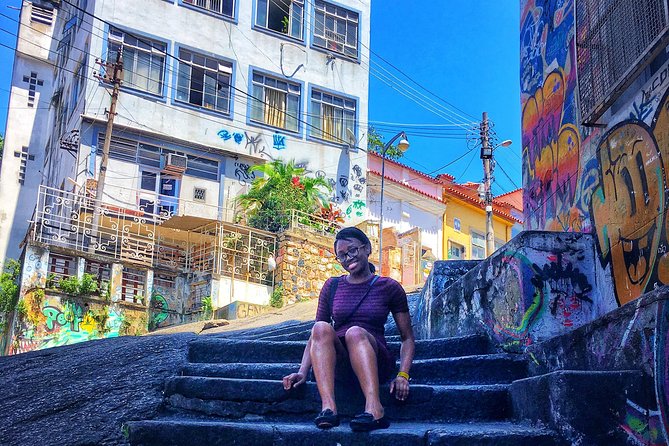
Then you arrive at Pedra do Sal, described as meeting the remaining community of Quilombo Pedra do Sal—a place of cultural resistance. This is where the tour goes from history to lived heritage.
The key detail for me is that this isn’t framed as a museum idea. It’s tied to preservation of heritage by Afro-descendants, and to weekly outdoor samba sessions where Cariocas celebrate Afro-Brazilian legacy. That weekly rhythm is a strong reminder: culture here didn’t end with emancipation. It adapted, kept going, and turned into everyday joy.
You’ll spend about three hours at Pedra do Sal. That length is intentional. It gives time for food, time for music, and time for your brain to shift from “learning” into “feeling the culture.”
Afro-Brazilian and Yoruba tastings at Pedra do Sal: what you eat is the story
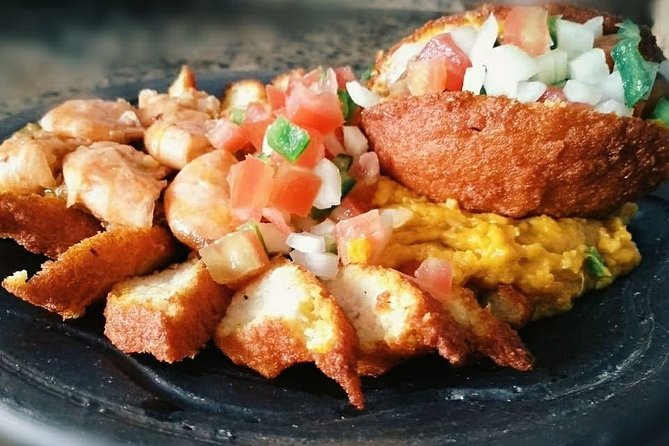
The most practical part of the day is food. At Pedra do Sal, you’ll get a tasting of typical dishes of Afro-Brazilian and Yoruba cuisine, described as common in the daily practice of religions of African origin.
If you’ve ever wondered why African-influenced ingredients and flavors show up in Brazil so strongly, this stop answers that question with your taste buds. It’s not just a snack. It’s a cultural map—showing how belief systems, community life, and food traditions interlock.
One note: drinks aren’t included. So plan to pace yourself, especially if you’re also planning to buy a beer later. And because the tour is marked as not suitable for people with food restrictions, if you have dietary limits, this might not be the right experience for you.
Percussion workshop with an instructor and drummer from the African continent
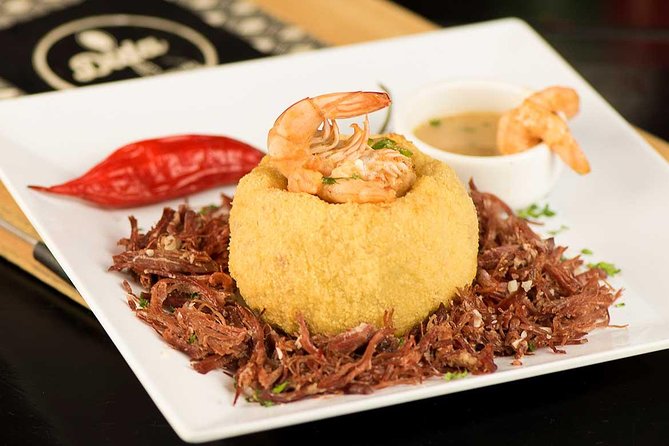
After the food, the tour shifts into hands-on musicality with a percussion workshop. You’ll have an instructor and a drummer from the African continent, and the focus is on how percussion culture influences people to this day.
This is where I think the tour earns its name. You don’t just hear about rhythms. You work with them—so you start to understand the structure behind what you might hear at a samba circle or on the street.
Percussion is a language with rules. Even if you’re not a musician, you can feel timing, call-and-response energy, and how group rhythm builds momentum. It’s one of the best ways to understand why samba isn’t only entertainment—it’s social connection.
Largo de São Francisco da Prainha: where the night’s soundtrack starts
You end at Largo de São Francisco da Prainha, and timing matters here. When the sun sets behind Morro da Conceição, the square comes alive with sounds associated with samba, funk, jazz, and chorinho.
This stop is short (around 15 minutes), but it’s designed for impact. You’ll find outdoor seating, cold beers and snacks from local bars nearby, and a relaxed atmosphere that makes it easy to hang out rather than rush through. The square is also surrounded by beautiful Portuguese architecture, so you get a sense of how different historical layers sit side by side in Rio’s city life.
If you want the day to land in a satisfying way, this is a smart finish. You’ve spent hours learning the African roots of culture; now you’re letting Rio’s nightlife show you what those roots sound like in real time.
Price and logistics: is $110 a good deal for this day?
At $110 per person for about five hours, this tour is priced as a true cultural experience—not a bargain museum add-on. The key value is what’s included: Afro-Brazilian gastronomy tasting and IPN tickets.
Several other stops have admission listed as free in the schedule (like MAR, IPN’s ticket line is specifically included, Cais do Valongo, and the finale at Prainha). So you’re paying mostly for expert guidance, the coordinated route, and the hands-on percussion and food components that are harder to replicate on your own.
Two practical considerations:
- Drinks aren’t included, so you’ll likely buy something during the day or at the end.
- The experience requires good weather. Since at least parts of Pedra do Sal and Prainha are outdoor-focused, plan for flexibility.
On the logistics side, this is a private tour, so you won’t be fighting a crowd for attention at the sites. That’s especially useful at smaller stops where you want to ask questions and keep your place in the story.
Who this tour fits best (and who should skip it)
This tour is a strong match if you:
- want to connect African ancestry to Rio’s music and food in a way that feels lived, not abstract
- like art and public spaces as part of history, not only as decoration
- enjoy hands-on experiences like tastings and percussion
It may be a weaker fit if you:
- have food restrictions, since it is not suitable for people with food restrictions
- prefer purely indoor museum pacing, because parts of the route are outdoors and weather-dependent
- need full wheelchair-style accessibility details beyond what’s provided; the data only says most travelers can participate, not specifics
Also, if you’re visiting Rio for a short time, this is efficient. You cover major anchor points for African heritage, then finish where music is naturally part of the scene.
The real takeaway: why this route sticks with you
A lot of Rio tours skim the surface: pretty places, quick stories, and then you’re on to the next stop. This one has a clearer mission. It ties together representation (Morrinho), evidence (IPN), historic arrival points (Valongo and Little Africa), living resistance (Pedra do Sal), and the sound of culture (percussion + sunset music).
I also like the emotional clarity. The day doesn’t pretend slavery and violence were distant events. It puts the weight on the table first at IPN, then shows you how people transformed that pain into community structures, worship practices, food, and rhythm.
And honestly, the best part is that it ends where Rio tells the truth about itself: music in the open air.
Should you book African Heritage: Gastronomy and Musicality in Rio?
I’d book it if you want a day that’s educational and active, with real cultural experiences built in—not just sightseeing. The mix of Morrinho at MAR, IPN Pretos Novos, Valongo, and then Pedra do Sal’s food and percussion makes the story feel complete, and the private format keeps it personal.
Skip it if food restrictions are an issue for you, or if you know you’ll be miserable spending time outside in the sun and at sunset. Also, go in with the right mindset: some stops are emotionally heavy, and that’s part of why the later celebration feels earned.
FAQ
How long is the experience?
It’s about 5 hours.
What time does the tour start?
The start time is 10:00 am.
Where does the tour begin and end?
It starts at Museu do Amanhã, Praça Mauá 1, Centro, Rio de Janeiro, and ends at Largo de São Francisco da Prainha, Saúde, Rio de Janeiro.
What’s included in the price?
The price includes Afro-Brazilian gastronomy tasting and IPN tickets.
Are drinks included?
No. Drinks are not included.
Is this tour suitable for people with food restrictions?
No. It is not suitable for people with food restrictions.
More Tour Reviews in Rio de Janeiro






More Churrasco and Food Tours





More Heritage Walks in Rio
Fresh off the review desk: newer Rio de Janeiro tours we have been out on




Churrasco & Food Tours, compared.
 ★ 4.5Christ the Redeemer, Sugarloaf, Selaron & BBQ LunchFrom $692,428 reviews
 ★ 4.0Skip the Line to Christ Redeemer, Sugar Loaf and Barbecue LunchFrom $113593 reviews
 ★ 4.0Rio From the Sea: Guanabara Bay Cruise with Optional Barbecue LunchFrom $7488 reviews
 ★ 5.0Guided Market Fruit Tasting in Rio with 15+ Exotic FlavorsFrom $4968 reviews
 ★ 5.0City Tour Full VIP – Corcovado Train + Churrascaria RodízioFrom $14743 reviews
 ★ 5.0A socio-educational and gastronomic experience in the Vidigal favelaFrom $5539 reviews
 ★ 4.2Barra da Tijuca Walk & Food Tour with DrinksFrom $019 reviews
 ★ 4.7The Best Food Tour: Taste the Most Authentic Flavours of RioFrom $7518 reviews
Browse the lists this tour appears in