
Reviewed · AFRO-BRAZILIAN & JEWISH HERITAGE
Jewish Tour in Rio de Janeiro
Rio through a Jewish lens is a smart shortcut. This 3-hour, small-group tour is built to help you understand Jewish life in Rio without getting stuck in logistics. I like the up-close focus on synagogues and community centers, plus the pickup and drop-off that saves you from juggling cabs. One thing to consider: indoor stops like the Jewish museum and the Grande Templo Israelita can add a bit of cost since entrance fees aren’t included.
You’ll also get a crash course in how different Jewish communities in Rio shaped public life, education, and memorial culture—right along the city’s best-known coastline. And since the group caps at 14, you’re not just herded from point to point. On the flip side, the time is tight, so if you want long museum time or lots of deep Q&A, you may wish you had a longer day.
In This Review
- Key Highlights You’ll Actually Feel
- Jewish Rio in 3 Hours: The Real Value
- Hotel Pickup and the 9:00 Start: Easy Mode for Your Morning
- Leblon by the Synagogues: Beit Lubavitch and Midrash
- Ipanema and the CIB Community Center: Jewish Life Meets the Beach
- Botafogo Beach, Anne Frank Education, and the ARI Synagogue
- Botafogo Bay and Itzhak Rabin Park: A Memorial With Views
- Museu Judaico do Rio: The Museum Stop That Feels Like a Living Center
- Grande Templo Israelita: The Big Monument With a Limited Visiting Calendar
- Price and Value: What $95 Buys (and What It Doesn’t)
- Who Should Book This Tour (and Who Might Want a Different Plan)
- Should You Book the Jewish Tour in Rio?
- FAQ
- How long is the Jewish Tour in Rio de Janeiro?
- What does the tour cost?
- What time does the tour start, and where do we meet?
- Is hotel pickup included?
- Is port pickup available?
- How many people are in the group?
- What’s included in the price?
- Are entrance fees included?
- Is the tour suitable for children?
- What is the cancellation policy?
Key Highlights You’ll Actually Feel
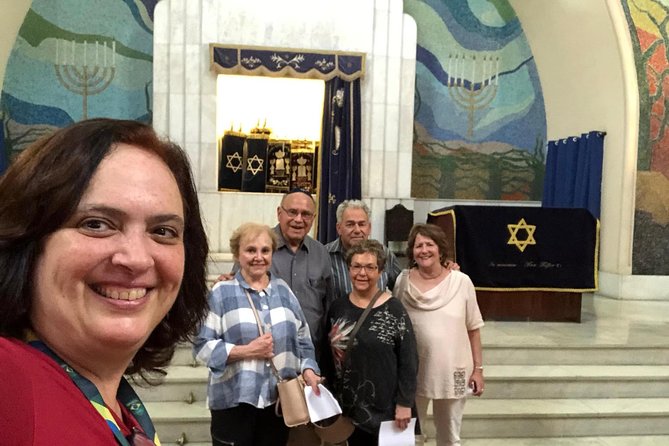
- Small group (max 14): personal attention and time for questions without rushing.
- Hotel pickup and drop-off: you start and end with minimal hassle.
- Multiple community stops: you’ll see Orthodox, Progressive, and historical Ashkenazi threads.
- Beaches plus Jewish sites: you get Rio context while you learn.
- Museu Judaico do Rio: a serious cultural center with research and archives.
- Grande Templo Israelita: a major monument with a limited visiting calendar.
More heritage walks through the Little Africa district
- Rio de Janeiro: Little Africa Heritage Walking Tour★ 4.9 · 177 reviews
- African Heritage: Gastronomy and Musicality Experience★ 5.0 · 39 reviews
- Jewish Tour in Rio de Janeiro★ 5.0 · 37 reviews
- Rio Jewish Heritage Half-Day Tour★ 5.0 · 35 reviews
Jewish Rio in 3 Hours: The Real Value
This tour works because it compresses three things most visitors need into one morning: city orientation, Jewish community history, and “how people actually live” sites (synagogues, community centers, education-linked projects).
For the price point ($95 per person), what makes it feel like value is the structure. You’re not paying for a generic bus ride—you’re paying for a guide who can connect what you’re seeing: the way neighborhoods like Leblon and Botafogo sit alongside community institutions, and how memorial and cultural work show up in parks and museums, not just in houses of worship.
You should also know what the tour does not try to be. It isn’t a long museum day. It’s a guided tour of key locations that helps you understand the bigger story quickly—especially useful if you only have a few hours in Rio.
Hotel Pickup and the 9:00 Start: Easy Mode for Your Morning
You meet at the Hilton Rio de Janeiro Copacabana (Av. Atlântica, 1020) at 9:00 am. From there, you’re transported by car or van and brought back to the meeting point at the end.
In practice, this matters more than it sounds. Rio can be spread out, and a beach-and-synagogue route is the kind of day where timing and transport costs can sneak up on you. Pickup and drop-off (for selected hotels, plus port pickup) means you can focus on learning and photography instead of figuring out where to stand and which cab to take.
The van ride also gives your guide room to point out city context along the way—helpful when you’re seeing multiple neighborhoods in a short window.
Leblon by the Synagogues: Beit Lubavitch and Midrash
Leblon is one of Rio’s more upscale neighborhoods, and the tour uses that setting on purpose. You’re not just learning about Jewish history in the abstract—you’re watching it sit inside real city geography.
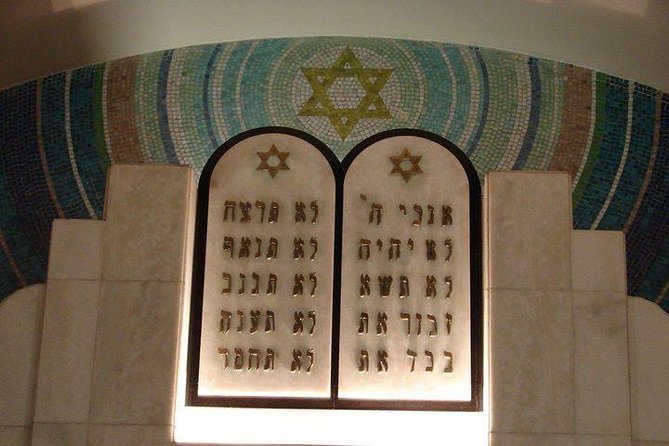
In this area, you’ll see the Beit Lubavitch Synagogue and the Midrash Cultural Center. Even if you’re not fully familiar with the details of Lubavitch life, the guide’s explanations make the basics understandable: how religious practice, community learning, and cultural education connect in one physical space.
This stop is short—about 20 minutes—but it’s high signal. You get a sense of how an active Jewish institution operates in a major modern city, rather than only encountering Jewish history as something from the past.
Tip for your visit: if you’re taking photos outside, do it quickly and respectfully. Many religious spaces prefer you keep your camera work discreet, especially at entrances.





Ipanema and the CIB Community Center: Jewish Life Meets the Beach
From Leblon, the route continues along the coastline toward Ipanema. This stretch matters because Ipanema isn’t just a postcard. It’s one of the city’s main social centers, with constant activity and a “this is what daily life looks like” feel.
You’ll also visit the CIB (Jewish Community Center). What I like about this stop is that it moves the story from religious buildings into community services and daily rhythms. Community centers are where you see how Jewish life connects to education, gatherings, and support systems—things that are harder to spot if all you do is visit synagogues.
The tour balances this with the setting: you’re learning while you’re seeing the city that surrounds these institutions. That combination helps you remember the story later, when you’re walking around Rio on your own.
Botafogo Beach, Anne Frank Education, and the ARI Synagogue
Botafogo Beach gives you a classic Rio vista—open water, famous views, and a strong sense of place. But the real payoff here is what sits behind the scenery.
You’ll visit a municipal school named after Anne Frank. The project connects to a wider network (CONIB) that names schools in her honor, with goals focused on peace, respect for diversity, and human rights. It’s one of those details that can feel small until you realize it’s education translated into public institutions.
Nearby, you can also visit the A.R.I. synagogue, tied to Progressive Judaism in Rio. The ARI (Israel’s Religious Association of Progressive Judaism) was founded in 1942 and is affiliated with the World Union for Progressive Judaism. The community raised the Rabbi Henry Lemle Community Center, which opened in 1997 and includes classrooms, a library, an auditorium, administrative spaces, and the synagogue Henrique Peres (with capacity up to about 150 people). The center also includes the Center for Reference and Research on the Holocaust Zinner Family.
Why this matters: it shows Jewish presence in Rio isn’t one single style or one single era. You’re seeing different denominations, different community priorities, and a shared focus on teaching—especially around memory and human rights.
Practical note: this is a stop where questions help. If you’re curious about how Progressive Judaism differs in practice from other forms you might encounter, your guide can usually explain it on the spot.
Botafogo Bay and Itzhak Rabin Park: A Memorial With Views
Then comes Botafogo Bay and Itzhak Rabin Park. This park is named for Israel’s ex president and includes a bust of Itzhak Rabin. It’s positioned on top of Morro de Pasmado, giving a view over Botafogo Bay and Urca Bay.
Even though it’s brief—around 20 minutes—this stop does something valuable. It connects the dots between state-to-state relationships and public memorial culture. The park’s design and symbolism point to the relationship between the Brazilian state and the state of Israel.
If you like learning through landmarks, this is a great moment to pause. Rio views are easy to photograph, but the guide’s interpretation is what turns a lookout into a meaningful stop.
Museu Judaico do Rio: The Museum Stop That Feels Like a Living Center

Museu Judaico do Rio de Janeiro is the tour’s main indoor learning stop. It was founded in 1977 after a donation of a menorah, and it operates as a dynamic cultural center rather than a static collection.
Expect regular exhibits covering the history of the Jewish community in Rio and Jewish traditions in religious, cultural, and historical contexts. The center runs activities both inside its own facilities and through other partner organizations. It also supports academic research related to migration and organizes annual student competitions.
What I really like about this museum stop is that it’s not only about looking at artifacts. It has a Study Center focused on migration and the Holocaust, a video archive with over a thousand films, and a library. In other words, you’re stepping into a place that works on documentation and education.
This stop takes about 30 minutes on the tour, and the museum admission is not included in the price. Plan for that additional cost when you budget.
Also be aware: museum hours can change, and even well-planned tours can run into closures. If an indoor site isn’t open on the day you go, you’ll want your guide to make the most of what’s available—so keep a little flexibility in your expectations.
Grande Templo Israelita: The Big Monument With a Limited Visiting Calendar
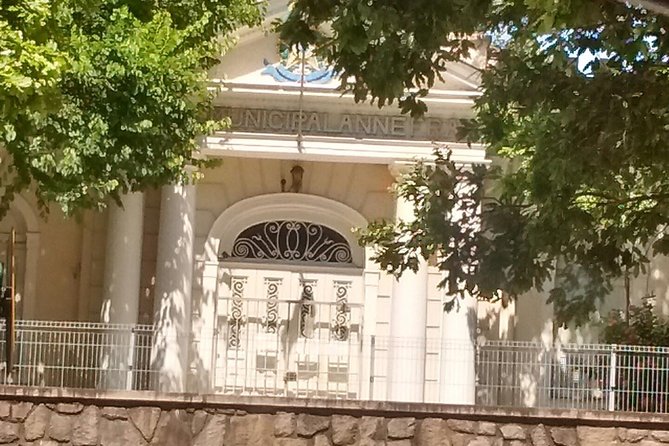
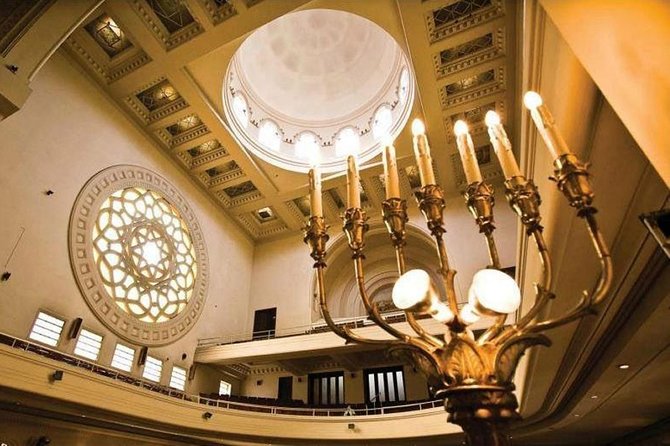
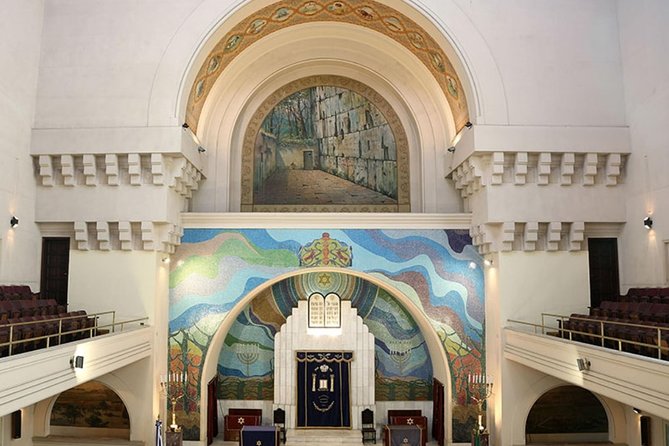
The final major site is the Grande Templo Israelita do Rio de Janeiro. This is the Jewish Community of Rio’s largest monument and part of the history of the Yishuv and the city. It’s associated with Ashkenazi tradition.
The building design is eclectic, mixing elements of Hebrew origin with classical architecture. The design was elaborated in 1919 by an architect named Vodred. The temple opened in 1932. Mosaics were made in 1976 by artist Humberto Cozzo.
Here’s the key practical detail you should know: the temple collapsed in 1987 and is currently open only during high holidays, special events, and tourist visits. That means your ability to enter and see what’s inside can depend on the day.
Admission for this stop is not included, and the tour schedules about 30 minutes here. In many cases, this is the kind of stop where the outside alone still makes sense—because it’s a major historical landmark—but your guide’s explanation is what brings it fully to life.
Price and Value: What $95 Buys (and What It Doesn’t)
At $95 per person for roughly 3 hours, you’re paying for:
- professional guiding
- transport by car or van
- hotel and port pickup/drop-off (selected hotels)
- access to a route built around key institutions
What you should budget extra for:
- food and drinks
- entrance fees for stops that charge (notably the Museu Judaico do Rio and the Grande Templo Israelita)
A big part of the value is that many of the key stops along the coast are free to visit, while the paid museum and monument are used as the “anchor” experiences. If you show up prepared to pay for the paid entrances, you’ll feel like you got your money’s worth.
Another value factor: the group size stays small (max 14). That makes it easier for your guide to tailor explanations without the pressure of a giant bus tour schedule.
Who Should Book This Tour (and Who Might Want a Different Plan)
This is a strong choice if you:
- want a Jewish-focused introduction to Rio without spending your whole day figuring out transport
- like seeing how community institutions fit into real neighborhoods
- want synagogues, education-linked projects, and memorial culture in one morning
You might want a different option if you:
- plan on spending most of your day inside museums and want long browsing time
- are hoping for a huge number of major, ticketed indoor sites (this tour keeps things tight)
Also, if you’re very sensitive to pacing, remember this is about three hours. You’ll see a lot, but it’s not a slow, sit-down day.
Should You Book the Jewish Tour in Rio?
Yes, I’d book it if you want one efficient, respectful morning that connects Rio’s famous coastline to Jewish community life and memory work. The mix of synagogues, community centers, education initiatives, and a major Jewish museum gives you context you won’t easily piece together on your own.
Before you go, do two things:
1) budget for museum and monument entrance fees
2) keep your expectations realistic about time inside each site—this is a “key stops” tour, not an all-day deep archival experience.
If you want, tell me your travel dates and whether you’re staying near Copacabana, Ipanema, or Leblon—I can suggest how to fit this into your schedule with minimal backtracking and the best use of the morning.
FAQ
How long is the Jewish Tour in Rio de Janeiro?
The tour runs about 3 hours.
What does the tour cost?
It’s $95.00 per person.
What time does the tour start, and where do we meet?
It starts at 9:00 am. The meeting point is Hilton Rio de Janeiro Copacabana, Av. Atlântica, 1020, Copacabana.
Is hotel pickup included?
Yes, hotel pickup and drop-off are included for selected hotels.
Is port pickup available?
Yes, port pickup and drop-off are included.
How many people are in the group?
The tour has a maximum of 14 travelers.
What’s included in the price?
A professional guide, hotel pickup and drop-off (selected hotels), port pickup and drop-off, and transport by vehicle/car or van are included.
Are entrance fees included?
No. Entrance fees are not included. Some stops are listed as free, while others like the Jewish Museum and the Grande Templo Israelita are not included.
Is the tour suitable for children?
Children must be accompanied by an adult, and most people can participate.
What is the cancellation policy?
You can cancel for a full refund up to 24 hours before the experience’s start time (free cancellation).
More Tour Reviews in Rio de Janeiro






More Heritage Walks in Rio






Fresh off the review desk: newer Rio de Janeiro tours we have been out on





Afro-Brazilian & Jewish Heritage, compared.
 ★ 4.9Little Africa Heritage Walking TourFrom $40177 reviews
 ★ 5.0Explore Little Africa : Unveiling Afro Heritage in Rio de JaneiroFrom $8297 reviews
 ★ 5.0African Heritage: Gastronomy and Musicality ExperienceFrom $11039 reviews
 ★ 5.0Rio Jewish Heritage Half-Day TourFrom $9935 reviews
 ★ 4.9Afrobrazilian Heritage & Black History WalkFrom $649 reviews
 ★ 4.6Little Africa – Walking tour from the passed to the futureFrom $328 reviews
 ★ 5.0African Culture Walking TourFrom $1005 reviews
★ 4.8Rio Jewish Heritage Half-Day TourFrom $994 reviews
Browse the lists this tour appears in