
Reviewed · HISTORICAL TOURS
Rio Jewish Heritage Half-Day Tour
Rio’s Jewish map is surprisingly close by. What makes this half-day tour click is how it turns a few streets into a readable story, starting at Park Itzhak Rabin and moving through key Jewish sites around Botafogo and Copacabana. I especially like the small-group format and the way the guide (often Leonardo) threads local detail with personal, human context.
You’ll also get some genuinely good sightlines, including views out over Botafogo beach and Sugar Loaf while you begin the route. The one possible drawback: this is a 3-hour sprint, so it’s not a slow, stay-in-one-place kind of experience, and synagogue stops can shift based on request and availability.
In This Review
- Key highlights you’ll actually feel on the street
- A 3-hour route that makes Rio’s Jewish presence feel real
- Park Itzhak Rabin: a memorial start with real Botafogo views
- Chaim Weitzman Square and Catete: how public space tells community history
- Jewish Museum and Grand Temple: context plus a striking 1932 building
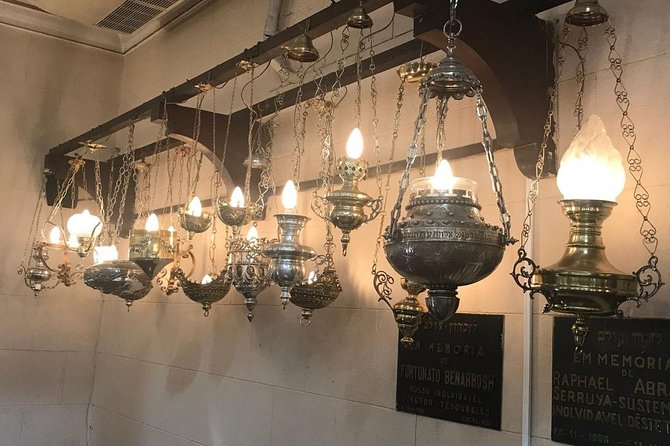
- Shel Gmelut Hassidim at Botafogo: Sephardic rite and an imperial connection
- Copacabana community stops: Clube Israelita Brasileiro and Beth El
- Optional synagogue swaps in Copacabana and Leblon
- Price and logistics: what the $99 gets you in real terms
- Who this tour suits best, and who should choose something else
- Final verdict: should you book the Rio Jewish Heritage Half-Day Tour?
- FAQ
- How long is the Rio Jewish Heritage Half-Day Tour?
- What places are included on the tour?
- Are hotel pickup and drop-off included?
- What language is the live guide available in?
- What are the entrance or donation costs for the Jewish Museum and Grand Temple?
- Are meals included?
- Can the synagogue stops change depending on availability?
- Is this a small-group tour?
- What’s the booking and cancellation situation?
Key highlights you’ll actually feel on the street
- Park Itzhak Rabin viewpoints: You start with Botafogo beach and Sugar Loaf in view, then connect the scenery to the memorial’s meaning.
- Chaim Weitzman Square stops time in your brain: You see how Rio names public places after Jewish figures, including a school connection to Anne Frank.
- Catete as a commerce story: The route points out where resident Jews once helped build a furniture trade hub.
- Jewish Museum + Grand Temple: You get architecture (including the 1932 Grand Temple) plus context that helps the sites make sense, not just look pretty.
- Sephardic synagogue at Shel Gmelut Hassidim: You visit a synagogue linked to the Sephardic Jewish-Spanish rite and note its visit by Emperor D. Pedro II.
- Copacabana community sites: You continue to Clube Israelita Brasileiro and Beth El Synagogue, then you may tailor with a request-based synagogue swap.
More heritage walks through the Little Africa district
- Explore Little Africa : Unveiling Afro Heritage in Rio de Janeiro★ 5.0 · 97 reviews
- African Heritage: Gastronomy and Musicality Experience★ 5.0 · 39 reviews
- Jewish Tour in Rio de Janeiro★ 5.0 · 37 reviews
- Rio Jewish Heritage Half-Day Tour★ 5.0 · 35 reviews
A 3-hour route that makes Rio’s Jewish presence feel real
This tour is built for people who want a strong sense of place without eating up an entire day. In just about three hours, you’re guided through a chain of stops that lets you see how Jewish life took shape across neighborhoods, not in one isolated museum bubble.
I like that the pacing is practical. You’re not wandering alone, trying to guess which building matters or why it matters. You’re also not stuck in one room the whole time. The route is designed like a timeline you can walk through: memorial and views first, then public squares and neighborhood details, then museum and houses of worship, and finally community institutions in Copacabana.
The guide is a big part of the value. In the best cases, like with Leonardo, you get someone who brings a sense of story and personal connection rather than just dates. That can turn what could be a checklist into a route you remember.
Park Itzhak Rabin: a memorial start with real Botafogo views
The tour’s opening stop is Park Itzhak Rabin, which you visit for both meaning and perspective. The park was inaugurated by Lea Rabin, and the timing of that detail matters. It anchors the tour in a moment of commemoration before you move into everyday places where communities lived, worked, and prayed.
Even if you’re not a “memorial person,” the payoff here is simple: you look out over Botafogo beach and Sugar Loaf while your guide explains what you’re seeing. It’s an easy way to “get your bearings” fast in Rio. You come for the views, and you leave with a reason those views are part of the story.
Practical tip: wear comfortable shoes. The start is visual and interpretive, but you’ll still be walking and moving between viewpoints and streets. If it’s sunny (it often is), a hat and water help, especially before you shift into indoor museum time.
Chaim Weitzman Square and Catete: how public space tells community history
Next you head toward downtown areas for Chaim Weitzman Square and nearby context. This is where the tour starts teaching you how names become landmarks. The square includes a public school named after Anne Frank, and that detail gives you a tangible link between Jewish history and Rio’s civic life.
Then the route moves through the Catete neighborhood story—specifically the point that resident Jews once established thriving furniture commerce there. That kind of detail is what makes the tour feel grounded. You’re not only learning about synagogues and museums; you’re learning about livelihoods: shops, trades, and the daily economy that communities built.
One consideration: these stops are more about understanding than photo ops. You can take pictures, sure, but the value is in listening to the connections the guide draws. If you like learning how neighborhoods evolve, you’ll enjoy this stretch. If you only want architecture and exterior views, you might wish for a bit more time.
Still browsing Rio De Janeiro? These are the ones we go back to


Jewish Museum and Grand Temple: context plus a striking 1932 building
After public squares and neighborhood background, you shift into institutions. The tour includes the Jewish Museum and the Grand Temple, described as a beautiful building from 1932. This combination is smart: museum time gives the framework, and the temple building then gives the emotional and visual anchor.
The Grand Temple is the kind of place where you’ll appreciate having a guide. Without context, a historic religious building can become just “another big church-style structure in Rio.” With context, you start seeing how architecture, community priorities, and history connect.
Budget note: entrance costs aren’t included in the main price. You’ll likely pay about USD 3.00 for the Jewish Museum entrance and a tzedakah donation of USD 6.00 at the Grand Temple area. These amounts are small compared with the guided nature of the tour, but they’re still worth planning for so there are no surprises.
Inside, dress matters. The tour asks you to dress appropriately, so if you’re coming straight from beach time, consider bringing a light layer or a cover-up you can wear comfortably.
Shel Gmelut Hassidim at Botafogo: Sephardic rite and an imperial connection
In Botafogo, the tour includes Synagogue Shel Gmelut Hassidim, associated with the Sephardic Jewish-Spanish rite. The guide’s explanation here is part of the magic. Different rites within Judaism have different traditions and community histories, and this stop helps you see that Jewish heritage in Brazil isn’t one single uniform story.
There’s also a particularly interesting historical note: this synagogue has received the visit of Emperor D. Pedro II. That detail matters because it ties a local religious site to broader national history. It’s a reminder that Jewish communities have been visible in Rio’s story for a long time.
This stop is also where timing and silence etiquette become important. You’ll want to listen closely and keep the tone respectful. If you’re the type who likes to ask questions, the guide is usually the best person to do it in a way that doesn’t interrupt worship or reflection.
Copacabana community stops: Clube Israelita Brasileiro and Beth El
Then you move toward Copacabana for two more key stops: Clube Israelita Brasileiro and Beth El Synagogue. This is a great balance point in the itinerary. You’ve already seen museums and temples; now you’re seeing community life in more everyday forms.
Clubs and community institutions matter because they show you how culture, social life, and support systems often worked side by side with religious identity. Beth El Synagogue adds a clear “this is still living community space” element.
Copacabana can be a lot visually, so the structure of the tour helps you focus. You’re not stuck in the chaos of a famous beach district, guessing what you should care about. You arrive at specific places with a guide who can explain why they fit the broader map.
Optional synagogue swaps in Copacabana and Leblon
The itinerary includes synagogue visits, but there’s a helpful flexibility built in. Depending on your request and availability, synagogues such as Beth Yacov (Eastern-European Ashkenazi rite) in Copacabana and Beit Lubavitch (Orthodox Chasidic rite) in Leblon may replace other synagogue stops.
This is one of the tour’s smarter features. It lets you tailor the route to the kind of traditions you want to learn about. If you’re curious about how Ashkenazi or Chasidic communities expressed themselves in Rio, ask about these swaps early—your best shot is to align the request with what’s available that day.
Small planning tip: if you have strong preferences, it helps to be clear about which rite or synagogue style you want most. The tour can adjust, but you’ll get a better outcome if your request is specific.
Kosher lunch is also mentioned as available if you request it in advance. That can be a nice way to keep the day’s theme consistent without adding the mental load of finding options on your own.
Price and logistics: what the $99 gets you in real terms
At USD 99 per person for about 3 hours, the cost isn’t just paying for sightseeing. You’re paying for guided interpretation, hotel pickup and drop-off, and air-conditioned transport by minivan or car.
For a city like Rio, hotel pickup is a genuine time-saver. It also reduces the risk of wasting energy on figuring out which streets to take. For this route, that matters because Jewish heritage stops are spread across recognizable districts, and moving between them is easier with a driver.
Also consider the optional or extra costs you might add. The two specific amounts called out are:
- USD 3.00 for the Jewish Museum entrance
- USD 6.00 tzedakah donation at the Grand Synagogue
If you budget roughly USD 108 total for those known items, you’re still in a normal guided-tour range for a structured half-day with multiple sites. The real value is that you’re not just looking at buildings—you’re getting a guided route that explains how the pieces fit together.
The tour operates with a small group, and that usually improves the experience. You can ask questions, and the guide can keep pace without turning the day into a noisy parade.
Who this tour suits best, and who should choose something else
I think this works best for three types of people:
First, history-minded travelers who want context, not only exteriors. This itinerary is full of “why is that here?” details, like the Anne Frank school connection and the Catete furniture commerce reference.
Second, first-timers in Rio who want a cultural angle. The tour uses classic Rio neighborhoods—Botafogo, Copacabana, areas around downtown—to show a side of the city that most “beach and views only” plans skip.
Third, people who appreciate a guide with a story. The reviews highlight Leonardo’s ability to make the visit engaging through his own connection to the material and his clear enthusiasm for sharing advice.
Who might want a different format? If you want long stays inside each site, quiet time without movement, or a slower pace focused on fewer stops, this may feel too compact. It’s half-day by design.
Final verdict: should you book the Rio Jewish Heritage Half-Day Tour?
If you want a guided, easy-to-follow introduction to Jewish heritage in Rio, I’d book it. The route is tight, the stops are meaningful, and the guide quality can be a big factor—especially with Leonardo, who seems to bring both knowledge and personal storytelling.
I’d pay extra attention to planning for entrance costs at the Jewish Museum and the Grand Temple donation. Also, if you care about specific synagogue traditions, ask about swaps like Beth Yacov or Beit Lubavitch ahead of time so you get the version of the route you want.
FAQ
How long is the Rio Jewish Heritage Half-Day Tour?
It lasts about 3 hours.
What places are included on the tour?
The tour includes Park Yitzhak Rabin, the Jewish Museum, the Grand Temple, Clube Israelita Brasileiro, and synagogue visits.
Are hotel pickup and drop-off included?
Yes. The tour includes hotel pick-up and drop-off.
What language is the live guide available in?
The live guide is available in Spanish and English.
What are the entrance or donation costs for the Jewish Museum and Grand Temple?
The Jewish Museum entrance is USD 3.00 per person, and the Grand Synagogue involves a tzedakah donation of USD 6.00 per person.
Are meals included?
Food and drinks aren’t included. Kosher lunch is available if requested in advance.
Can the synagogue stops change depending on availability?
Yes. Beth Yacov (Ashkenazi rite) and Beit Lubavitch (Chasidic rite) may replace other synagogue stops based on your request and availability.
Is this a small-group tour?
Yes. It’s described as a small-group tour.
What’s the booking and cancellation situation?
The booking includes free cancellation up to 24 hours in advance for a full refund, and you receive confirmation within 24 hours of booking (subject to availability).
More Historical Tours in Rio De Janeiro





More Tour Reviews in Rio De Janeiro






More Heritage Walks in Rio




Fresh off the review desk: newer Rio De Janeiro tours we have been out on





Historical Tours, compared.
 ★ 4.4Historic Rio and Santa Teresa Half-Day TourFrom $47228 reviews
 ★ 4.9Little Africa Heritage Walking TourFrom $40177 reviews
 ★ 5.0Explore Little Africa : Unveiling Afro Heritage in Rio de JaneiroFrom $8297 reviews
 ★ 4.8Paraty: Historic Centre Walking Tour & Cachaça TastingFrom $1996 reviews
 ★ 5.0Learn the History of Rio with an Unforgettable City Center Walking TourFrom $4982 reviews
 ★ 4.5Rio’s city walking tour: a glimpse of history and olympic legacyFrom $6078 reviews
 ★ 4.5Olympic Boulevard, Museum of Tomorrow & Historical RioFrom $7266 reviews
 ★ 5.0Private walk tour of Paraty’s historical center – BY PARATY TOURSFrom $8049 reviews
Browse the lists this tour appears in