
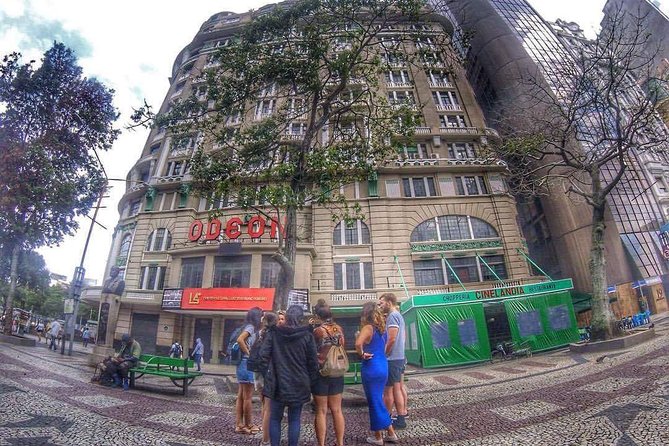
Reviewed · SANTA TERESA & LAPA
Historical Downtown and Lapa – Walking Tour
Rio’s history is on your feet. This walking tour strings together Centro landmarks and the Escadaria Selarón into a guided route with in-depth commentary. I like that the guide doesn’t just point and move; you get time to ask questions, including about Brazil’s political story. One thing to consider: you’re on foot for the full stretch, so plan for sun, heat, and a steady walking pace.
You’ll start at Praça Floriano in Centro and finish near Praça Quinze de Novembro, keeping things easy for jumping into the rest of your day. It runs as a small group (up to 20 people) for about 3 hours, so you’re not stuck in a huge crowd while you’re trying to follow the story. If you prefer a tour with real back-and-forth, this format helps.
Guides vary, but Rio by Foot often brings multilingual options. In particular, Rafael and Juliana are names you may see—both are reported as energetic and fun, with Rafael praised for safety and answering lots of questions, and Juliana for high-energy explanations in both English and Portuguese.
In This Review
- Key things to love about this Centro and Lapa walk
- Walking the Centro and Lapa Loop: what the 3 hours feels like
- Meeting at Praça Floriano: easy starting point, quick guide-finding
- Biblioteca Nacional: why a national library stop hits harder than it sounds
- Museu de Belas Artes and the WWII memorial: art and memory in the same breath
- Avenida Rio Branco: the boulevard that explains Rio’s big-picture politics
- Escadaria Selarón and the República area: street art as a public story
- Feira da Praça XV: a market pause that doesn’t eat your whole schedule
- Asking questions about Brazil: the best value for history-first visitors
- Cost and value: is $40 worth it?
- Who this tour fits best (and who might want a different plan)
- Should you book this Historical Downtown and Lapa walking tour?
- FAQ
- What is the tour duration?
- Where does the tour start and end?
- How much does it cost?
- Is the tour’s admission ticket included?
- Does the tour include food and drinks?
- Is hotel pickup or drop-off included?
- How many people are in the group?
- What languages do guides speak?
- Are children allowed?
- What is the cancellation policy?
Key things to love about this Centro and Lapa walk

- In-depth historical commentary with time for your questions, including Brazil’s political history
- Included admissions at major stops like Biblioteca Nacional and Museu de Belas Artes
- Great photo stops, especially the Escadaria Selarón, where you naturally slow down
- A manageable duration (about 3 hours) with breaks built into the flow
- Small group size (max 20), which makes it easier to hear and interact
More of bohemian Santa Teresa and Lapa
- Rio: Christ the Redeemer, Sugarloaf, Selaron & BBQ Lunch★ 4.5 · 2,428 reviews
- Rio: Pub Crawl in Lapa with Cachaça Tasting and Live Samba★ 4.7 · 881 reviews
- Rio de Janeiro: Christ, Selaron Steps, and Tijuca Park Tour★ 4.7 · 857 reviews
- Santa Teresa, Lapa, and Cinelândia with Tram Ride and Selarón Steps★ 4.5 · 274 reviews
Walking the Centro and Lapa Loop: what the 3 hours feels like

This is the kind of Rio tour that’s built for orientation. You don’t just see “stuff.” You walk a route through parts of Centro that help you understand how the city organized itself over time—and why Lapa’s creative, street-level energy fits into that bigger picture.
The duration is listed at about 3 hours, which is long enough for real context but short enough to keep your day flexible. In practice, you should expect a few miles of walking at an average pace (one guide-style report described about 3 miles). You’ll also want to be ready for typical street conditions: uneven sidewalks, curb cuts, and the usual “Rio feet” reality.
The tour is designed for most travelers, and it’s also a solid option if you’re a history buff. It’s not a food tour, and food and drinks aren’t included, so plan to eat before or after. That said, there’s time for a quick toilet break and drink refill during the tour flow, which makes a big difference on a 3-hour walk.
One practical drawback: if you’re sensitive to sun or heat, this can feel like a lot. A cool day will feel easier than a hot one, especially on exposed sections like broader boulevards.
Meeting at Praça Floriano: easy starting point, quick guide-finding
You’ll meet at Praça Floriano, 1 – Centro, Rio de Janeiro. The address is right in Centro, a busy area with plenty of streets and foot traffic, so it’s usually straightforward to reach using local transit options (the tour notes it’s near public transportation).
The tour ends at Praça Quinze de Novembro, also in Centro. That matters because it gives you a practical landing zone for continuing your day—rather than dragging yourself back across town at the end of a walking tour.
Look out for recognizable guide wear. One account specifically said to watch for green shirts and to gather near the nearby theater area when you arrive. If your guide looks less obvious, it’s still worth double-checking with the tour team at the meeting location early—Rio moves fast, and you don’t want to lose time.
Biblioteca Nacional: why a national library stop hits harder than it sounds
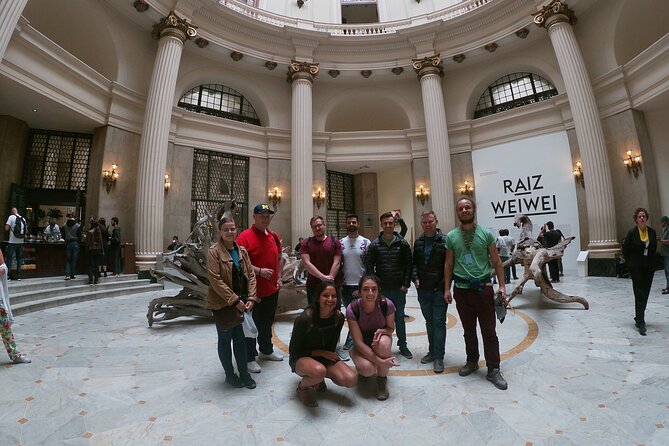
Your first major stop is the Biblioteca Nacional area. The tour schedule gives it about 25 minutes, with admission included. Even if libraries aren’t your “main hobby,” this stop works because it’s a tangible symbol: Brazil’s national institutions, learning, and cultural memory are easier to grasp when you can actually stand in front of the building and hear what the guide connects it to.
This is also a good early stop because it helps you get bearings fast. When a guide frames the area for you, the next streets don’t feel random. You start spotting patterns—how power, public life, and culture show up in buildings and street layouts.
Because the library stop comes early, you’ll probably feel less rushed than later photo-heavy sections. It’s also an admission stop, so you’re not just walking past from the sidewalk.
Old downtown Rio, a few more ways to see it




Museu de Belas Artes and the WWII memorial: art and memory in the same breath
Next comes the Museu Nacional de Belas Artes area, scheduled for about 15 minutes, again with admission included. In the way this tour is described, this part isn’t only about paintings or museum halls. It’s paired with the World War II remembrance element in the same broader area—so you get a public-memory conversation as well as an art-and-identity one.
This stop makes sense for history lovers because it shows how societies record big events. The guide’s job here is to connect what you see (museum space, formal public presence, memorial energy) to how people build meaning after major shocks. Even if you’re not spending long inside, you’re getting context fast.
A heads-up: 15 minutes is short. If you like to linger, use the guide’s explanation as your “time multiplier.” You’ll leave with a better understanding of what you’re looking at, even if you don’t have hours inside the museum.
Avenida Rio Branco: the boulevard that explains Rio’s big-picture politics
Then you walk along Avenida Rio Branco for about 20 minutes. This isn’t a “go in and out of places” segment—it’s about moving through the city’s visual language. Broad boulevards like this tend to show you how a city wants to project authority, order, and public presence.
This section is where questions often come alive. The tour is specifically described as a place where you can ask about Brazil’s political history, and a long straight walk is an easy moment for the guide to point out how different eras leave different marks on the built environment.
If you’re the type who likes to understand why cities look the way they do, this is one of the most useful stretches. You’re not only seeing sights; you’re seeing city planning as a historical document.
Escadaria Selarón and the República area: street art as a public story
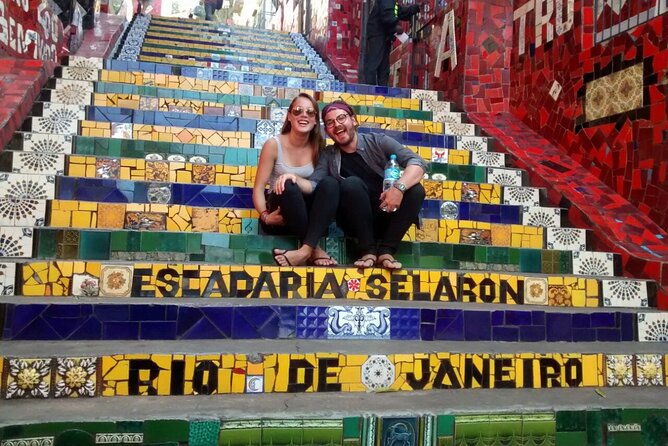
You’ll then reach Escadaria Selarón, the famous tiled stairway. You should treat this as your “slow down and look” stop. It’s one of those places where the guide can talk history and symbolism, but your eyes do the rest—color, texture, and the way the stairway pulls you upward.
Photo opportunities are a major part of this stop, and most people naturally linger. Even if you’re not a big photographer, it’s worth taking a moment here just to watch how the neighborhood energy flows around it.
The tour also references the Republic area, which ties into the broader “how Brazil’s public identity formed” theme. Expect this segment to connect street-level visuals to civic life—how art and public space reflect ongoing ideas of nationhood and belonging.
The potential drawback is simple: this is popular. That means you might have to work around other visitors for clear angles. Going with a guide helps because you’ll know where to look and what details matter, not just where the biggest photo crowd stands.
Feira da Praça XV: a market pause that doesn’t eat your whole schedule
Another scheduled stop is Feira da Praca XV, with about 15 minutes here. Admission isn’t included, which usually means you’re not paying a ticket to enter the atmosphere—you’re just there to browse, observe, and take in the feel of the square.
This is a smart pacing move. After museums and monuments, a market square gives your brain a reset. It also makes the historical commentary feel real. You’re not only looking at buildings; you’re seeing everyday life in the same city.
One practical tip from guide-style experience reports: the route can feel extra lively on days when markets are open (one mention specifically noted a Saturday experience). You can’t control the calendar, but if your schedule lines up, you’ll likely get a stronger sense of local rhythm.
If you’re hungry, keep expectations realistic: the tour doesn’t include food or drinks. Use the market stop as inspiration for what to eat afterward rather than expecting your lunch to be handled.
Asking questions about Brazil: the best value for history-first visitors
The standout “value lever” on this tour isn’t only the sites—it’s the conversation. The tour is framed as a great option for history buffs, with multiple opportunities to ask questions about Brazil’s political history.
Here’s how to get the most out of it:
- Ask for a quick timeline connection: how does what you’re seeing connect to what happened later?
- Ask for practical next steps: what neighborhood should you walk next, and why?
- Ask safety and logistics questions in plain terms: where to linger, where not to waste time, and what makes sense given your interests.
Guides like Rafael are repeatedly praised for being friendly, safe-feeling, and able to answer questions. Juliana is described as high energy and easy to chat with, including switching between English and Portuguese. Either way, you’ll get more out of the route if you treat it like a guided Q&A with walking routes between answers.
Cost and value: is $40 worth it?
The listed price is $40 per person for about 3 hours. On paper, that might sound like a normal walking tour cost. The value comes from the “hybrid” format: you’re not just walking and listening. You also get admission included for key stops like Biblioteca Nacional and Museu de Belas Artes.
That matters because admissions can add up on a tight trip. Plus, the small-group size (up to 20) makes the experience feel closer to a guided stroll than a mass sightseeing bus alternative.
If you’re traveling solo with limited time and want a solid framework for Centro and Lapa without spending hours researching, this price-to-time ratio tends to work well. If you’re allergic to walking or you only care about one or two icons, you might feel it’s more effort than payoff.
Who this tour fits best (and who might want a different plan)
Book this if you:
- Love history and want more than “famous sights”
- Want a first-time orientation to Centro and Lapa
- Like asking questions and getting direct answers from your guide
- Prefer a group that stays small (max 20), so you can actually hear the explanations
You might skip or pair it with something lighter if:
- You want a food-focused afternoon (this tour doesn’t include meals)
- You’re dealing with limited mobility or stamina for multi-stop walking
- You’re visiting on a very hot day and sun/heat is a big concern
It’s also a good family option only if you’re traveling with kids and an adult is actively managing them—children must be accompanied by an adult.
Should you book this Historical Downtown and Lapa walking tour?
If you want the practical kind of sightseeing—where you understand what you’re looking at within hours—this tour is an easy yes. The mix of included admission stops, strong guide interaction, and a route that naturally leads you to one of Rio’s best-known visuals (Escadaria Selarón) makes it a high-efficiency plan for a short trip.
I’d book it if your schedule fits the 3-hour window and you’re comfortable with walking. I’d reconsider if you’re mainly chasing beach-time comfort, aren’t interested in historical context, or you need a meal plan built into the outing.
FAQ
What is the tour duration?
The tour is listed as about 3 hours.
Where does the tour start and end?
It starts at Praça Floriano, 1 – Centro, Rio de Janeiro, RJ, and ends at Praça Quinze de Novembro – Centro, Rio de Janeiro.
How much does it cost?
The price is $40.00 per person.
Is the tour’s admission ticket included?
Tickets are included for stops like Biblioteca Nacional and Museu Nacional de Belas Artes. Feira da Praça XV is listed as not including an admission ticket.
Does the tour include food and drinks?
No. Food and drinks aren’t included.
Is hotel pickup or drop-off included?
Hotel pickup and drop-off aren’t included unless you select an option (the default listing does not include it).
How many people are in the group?
The tour has a maximum of 20 travelers.
What languages do guides speak?
The tour may be operated by a multi-lingual guide.
Are children allowed?
Yes, children must be accompanied by an adult.
What is the cancellation policy?
You can cancel for a full refund up to 24 hours before the experience starts. Free cancellation is available up to that cutoff.
More Tour Reviews in Rio de Janeiro






More of Historic Downtown Rio






Santa Teresa and Lapa, Three More Ways




Fresh off the review desk: newer Rio de Janeiro tours we have been out on





Santa Teresa & Lapa, compared.
 ★ 4.5Christ the Redeemer, Sugarloaf, Selaron & BBQ LunchFrom $692,428 reviews
 ★ 4.7Pub Crawl in Lapa with Cachaça Tasting and Live SambaFrom $33881 reviews
 ★ 4.7Christ, Selaron Steps, and Tijuca Park TourFrom $68857 reviews
 ★ 4.5Santa Teresa, Lapa, and Cinelândia with Tram Ride and Selarón StepsFrom $60274 reviews
 ★ 4.4Historic Rio and Santa Teresa Half-Day TourFrom $47228 reviews
 ★ 4.3Corcovado, Sugarloaf Mountain, and Selarón Steps 6-Hour TourFrom $146167 reviews
 ★ 4.5Ancient Rio and Santa Teresa Tour with Hotel pick-up and drop-offFrom $55154 reviews
 ★ 4.3Christ the Redeemer & Selarón Steps Half-Day TourFrom $58136 reviews
Browse the lists this tour appears in