
Reviewed · SANTA TERESA & LAPA
Ancient Rio and Santa Teresa Tour with Hotel pick-up and drop-off
Rio history runs uphill and street-level. You’ll pair Santa Teresa with downtown Ancient Rio for a smart mix of neighborhoods, mansions, arches, and major landmark architecture. I love how the guides connect today’s streets to how Rio worked when it was Brazil’s political and cultural center. I also love the photo-and-walk rhythm: you get real stops without spending the whole day in a line.
One thing to think about: the tour is active. Santa Teresa includes uneven cobblestones, and on certain holidays or busy traffic days you may find the pace feels tighter than you’d like.
In This Review
- Key highlights you should care about
- Santa Teresa and Ancient Rio: why this combo works
- Price and logistics: what you really get for $55
- Hotel pickup and the small-group pace
- Stop 1: Santa Teresa’s mansions, art vibe, and the 1897 tram story
- Stop 2: Parque das Ruínas and why Laurinda Santos Lobo matters
- Stop 3: Arcos da Lapa—water heritage turned city shortcut
- Stop 4: Praça XV de Novembro—historic center, civic power, and the ferry edge
- Stop 5: Arco do Teles—old market streets and food-and-bar energy
- Stop 6: Cinelândia—downtown architecture and a classic picture spot
- Stops 7–9: The outside views that teach you how Rio was built
- Museu Nacional de Belas Artes (exterior focus)
- Theatro Municipal do Rio de Janeiro (exterior focus)
- Biblioteca Nacional (exterior focus)
- The one big planning question: Do you want inside visits?
- Who this tour suits (and who should choose another plan)
- Guides and the difference that makes
- Should you book this Ancient Rio and Santa Teresa tour?
- FAQ
- How long is the Ancient Rio and Santa Teresa tour?
- Where do I get picked up, and is there drop-off afterward?
- What’s included in the $55 price?
- Do we enter the museums, theater, or library?
- Is lunch included?
- Is the group small?
Key highlights you should care about
- Santa Teresa’s tram legacy (built in 1897) and the old-world feel of the neighborhood
- Arcos da Lapa and Arco do Teles for story-rich Rio street scenery
- Praça XV de Novembro in the historic center, with major civic buildings nearby
- Cinelândia landmark zone where you can photograph classic downtown facades
- Theatro Municipal and Biblioteca Nacional viewpoints focused on exterior architecture
- Small group minivan (up to 19) that tends to keep the day smoother than big buses
More of bohemian Santa Teresa and Lapa
- Rio: Christ the Redeemer, Sugarloaf, Selaron & BBQ Lunch★ 4.5 · 2,428 reviews
- Rio: Pub Crawl in Lapa with Cachaça Tasting and Live Samba★ 4.7 · 881 reviews
- Rio de Janeiro: Christ, Selaron Steps, and Tijuca Park Tour★ 4.7 · 857 reviews
- Santa Teresa, Lapa, and Cinelândia with Tram Ride and Selarón Steps★ 4.5 · 274 reviews
Santa Teresa and Ancient Rio: why this combo works
Santa Teresa and downtown Rio feel like two different cities. Santa Teresa is more bohemian, steep, and intimate, with older houses and an art scene you can sense even when you’re just walking past studios and walls. Downtown Ancient Rio is where the big decisions happened—politics, ports, commerce—and the buildings show that ambition.
This tour is built to help you understand that link. You’re not just collecting sights. You’re seeing how Rio’s neighborhoods grew and how transport routes, architecture, and public spaces shaped daily life. One guide name that comes up often is Renato, praised for tying history to how the city functioned, not just listing facts.
If you’re coming to Rio for the first time, this pairing is a fast way to get your bearings. It also makes later visits to the city’s famous viewpoints (like Sugarloaf or Christ the Redeemer) feel more grounded, because you’ll know what you’re looking at and why it matters.
Price and logistics: what you really get for $55
At $55 per person for about 4 hours, this tour is good value if you like guidance and want structure. You’re paying for hotel pickup and drop-off by air-conditioned vehicle, plus a local guide who walks you through multiple areas without you having to plan connections or transit time.
The group size caps out at 19 travelers in a minivan. That matters. It usually keeps the day from feeling like a long bus parade, and it gives the guide room to adjust pacing when traffic or crowds get weird. It’s not a private tour, so you still follow a set route—but the smaller group helps.
What’s not included is also important. Lunch isn’t provided, and you won’t pay to enter the bigger museums or go inside the theater/library during this particular schedule. For some people, that’s exactly right. For others, it can feel like you’re watching Rio from the sidewalk only. I’ll explain how to handle that later.
Hotel pickup and the small-group pace
The day starts with pickup from your hotel area. One key detail: the operator contacts you to confirm your pickup time based on where you’re staying. So you’ll want to keep an eye on email and your phone before the tour day.
The minivan format also affects the experience. You’ll spend some time in transit between Santa Teresa and downtown, and you’ll be doing short walks at most stops. That’s part of the appeal—less time sitting, more time looking and listening—but it does mean you’re on your feet a fair amount for a half-day.
A practical tip: wear comfortable clothing and walking shoes. Santa Teresa’s streets can be uneven, with cobblestones and small slopes. Even if you’re not doing a long hike, those surfaces add up by the end of the route.




Stop 1: Santa Teresa’s mansions, art vibe, and the 1897 tram story
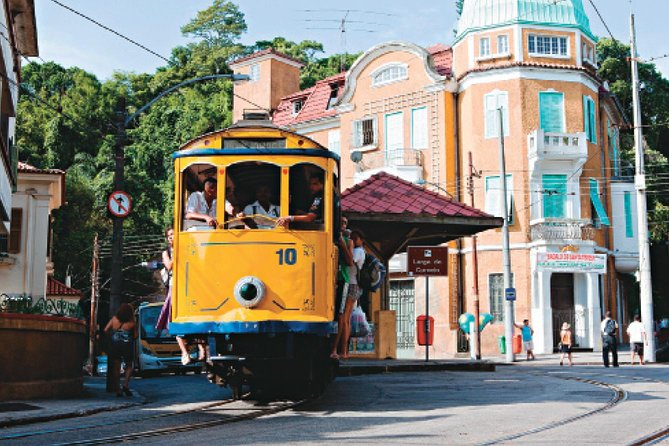
Santa Teresa is the warm-up act in the best way. The neighborhood feels like it has a personality: painter energy, old houses, and mansions from the early 1900s that still impress even from the sidewalk. This is also where you’ll hear the tram story.
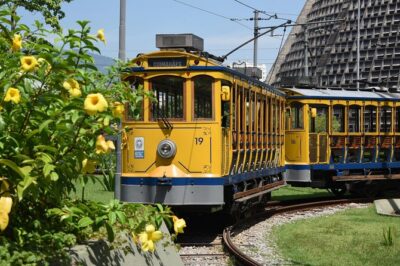
The area still has a tram line dating to 1897, and that detail isn’t just trivia. It’s a clue about how people once moved between uphill neighborhoods and the city center. The steep terrain made transport a defining part of the neighborhood’s identity.
What you can love here:
- You’ll get a sense of Santa Teresa’s creative side without needing a museum ticket.
- You’ll also see how the neighborhood’s layout and architecture connect to the way Rio grew.
The possible drawback is time. Santa Teresa is one of the most enjoyable places to linger, but the tour clocks you forward. One repeat theme from feedback is disappointment when people expect extra tram time or a ride. In this tour, the focus stays on viewing and walking through the neighborhood story, not on taking a full ride.
Stop 2: Parque das Ruínas and why Laurinda Santos Lobo matters
Next comes the Centro Cultural Municipal Parque das Ruínas—a short stop, but packed with meaning. This site began as the home of Laurinda Santos Lobo, known as a preeminent female supporter of the arts. Today it’s a cultural center, keeping her legacy alive.
The value here is that you’re learning why artists could thrive in Rio beyond the obvious galleries. Laurinda Santos Lobo’s story is a reminder that art support often comes from individuals, not only institutions. And because the stop is only about 20 minutes, you’re unlikely to get bored. You’ll get a quick hit of context and move on.
Also note: admission is listed as free for this stop, which makes it a good use of time.
Stop 3: Arcos da Lapa—water heritage turned city shortcut
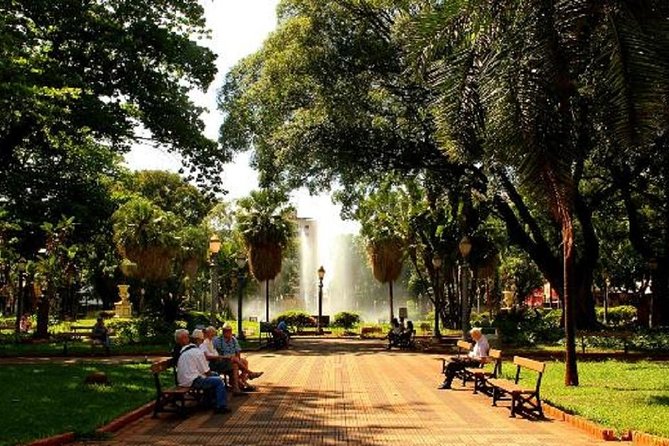
Arcos da Lapa is one of those Rio landmarks you recognize instantly once you see it. The arches were originally built to transport water, but now they’re part of everyday life—locals use the area and it functions as a kind of route between different parts of Santa Teresa.
This is a great moment for photos and for watching neighborhood flow. One half-day tour trick is to include at least one spot where you can pause and just look. Arcos da Lapa gives you that.
Your consideration: admission is listed as not included for this stop, so don’t assume entry into anything costs nothing. In practice, you’ll likely spend most of the time observing the arches and surrounding streets rather than buying museum-style tickets.
Stop 4: Praça XV de Novembro—historic center, civic power, and the ferry edge
Praça XV de Novembro sits in Rio’s historical core. You’ll see it surrounded by major civic buildings like Palácio Tiradentes (Legislative Assembly of Rio de Janeiro) and the Paço Imperial. There’s also a ferry terminal nearby that serves routes in the Rio de Janeiro and Niterói direction.
This stop helps you read the city’s center like a map. It’s not just a pretty square. It’s where government, history, and movement overlap. If you like understanding how cities work, this is a smart place to pause, look at the buildings, and imagine older days when waterfront access mattered even more.
Admission is free here, and the time on site is about 30 minutes, which gives you room for photos and a slow walk around the edge of the square.
Stop 5: Arco do Teles—old market streets and food-and-bar energy
Arco do Teles is a compact, atmospheric stop. It sits in an area that used to be the downtown market of Rio. Today, you’ll find small streets and alleys that feel built for wandering, with bars and small restaurants lining the way.
This stop is where the tour can feel more like a “walk in Rio” than a checklist. If you enjoy trying your way through a city, this is the kind of place where you’ll get ideas for dinner later.
It’s also free and only about 20 minutes, so I treat it like a taste of the neighborhood rather than a full meal stop.
Stop 6: Cinelândia—downtown architecture and a classic picture spot
Cinelândia is one of Rio’s best-known squares in the downtown area. You’re surrounded by historical buildings, and it’s an easy place to take photos without needing a ticket. This is also a helpful stop for people who want a clean break from walking uphill.
If your guide is especially strong, this is where they’ll connect the dots for you: modernization, culture, and the way public buildings signal national pride. In multiple feedback examples, guides like Wagner and Romeu are praised for energetic explanations and for making the day feel less like rushing.
Admission is listed as free for this stop, and it’s about 30 minutes—enough time to orient yourself before heading into the bigger institutional architecture area.
Stops 7–9: The outside views that teach you how Rio was built
The last set of stops takes a smart approach: you don’t enter the museums or major indoor sites, but you get time to enjoy the architecture from the outside.
Museu Nacional de Belas Artes (exterior focus)
The building was designed in 1908 by architect Adolfo Morales de los Rios to host the National School of Fine Arts. It was built during urban modernization carried out by mayor Pereira Passos in the period when Rio was the Federal Capital.
Even without going inside, it’s worth seeing because it signals the city’s shift toward modern institutions. You’re basically walking past a time capsule of early 20th-century ambition. The stop is about 10 minutes and entrance isn’t included.
Theatro Municipal do Rio de Janeiro (exterior focus)
The Theatro Municipal opened in 1909 and is considered one of the most important theaters in Brazil and across Latin America. The building has drawn international artists and major Brazilian cultural figures. A detail I like here: since the 1930s it’s maintained artistic independence and is described as the only Brazilian institution with its own choir, symphony orchestra, and ballet company.
You won’t go inside on this tour. You’ll admire the exterior and the atmosphere around it. It’s about 10 minutes. For many people, that’s plenty. For people who love opera or stage architecture, you may want to plan a separate visit on another day.
Biblioteca Nacional (exterior focus)
The Biblioteca Nacional is the biggest library in Latin America, founded in 1810 by D. João VI. It holds an archive of almost 9 million items, including rare books, manuscripts, original letters written by Princess Isabel, early newspapers, and even two copies of the Mainz Psalter Bible printed in 1492.
Again, you’re not going inside. But knowing what the building contains makes the exterior stop feel heavier and more meaningful. It’s about 10 minutes, with time to appreciate the scale.
The one big planning question: Do you want inside visits?
This tour is designed around exterior architecture and neighborhood walking. If you came hoping to go into museums or the theater, the schedule won’t fully satisfy you.
That’s not a flaw—it’s just a mismatch if you have a particular goal. The route is strongest when you want:
- neighborhood context for Santa Teresa
- street-level landmarks like Arcos da Lapa and Arco do Teles
- downtown orientation through major buildings in Cinelândia and around the institutional zone
- a guided explanation that connects it all into one narrative
If inside access is a priority for you, plan this tour as your “get oriented fast” day, then pick a second day for an indoor ticket where you can slow down.
Also, note that some days may affect what feels open. In feedback, some guides ran during holidays or Mondays when shops and certain small places were closed. The sightseeing parts still work, but the extra street browsing can be reduced. So I’d aim for a day when Rio’s everyday life feels active.
Who this tour suits (and who should choose another plan)
This works best if you:
- want a guided primer on Rio beyond the headline mountains and beach views
- like history explained in human terms
- enjoy photos plus short walks rather than long museum marathons
- prefer a small-group day with hotel convenience
It may not be ideal if you:
- have trouble walking on uneven cobblestones (Santa Teresa’s streets are part of the experience)
- need inside museum access as a must-do
- get very frustrated by fixed time limits, because some people feel the pace can be tight
A helpful detail from feedback: some guides, including Monica, were praised for adjusting walking distance when someone had mobility difficulty. So if you have any walking concerns, tell the operator or guide ahead of time if possible, and emphasize what pace and routes you need.
Guides and the difference that makes
This tour lives or dies on the guide. From the names that come up again and again—Renato, Wagner, Dario, Roger, Monica, Romeu, Wanessa, and Jack Daniel—you can see a pattern: guests like guides who explain clearly, stay energetic, and keep the day feeling personal.
One guide comparison that pops up is the difference between passionate history storytelling and a more driving-only approach. When the guide is engaged, the short stops feel connected. When the guide isn’t, the same route can feel like a series of quick snapshots.
So here’s my advice: if you care about explanations, book the tour and then use that power smart. Ask questions at the first stop. If your guide is good, you’ll get more out of every later landmark.
Should you book this Ancient Rio and Santa Teresa tour?
Yes, book it if you want an efficient, guided introduction to Santa Teresa and Rio’s downtown power-and-history zone. The price-to-time ratio is strong, the stops are well chosen for first-time orientation, and the tour’s structure helps you see the city’s story rather than just collecting images.
I’d skip or supplement it if you’re an indoor-museum person, or if cobblestone unevenness is a big problem for you. In that case, look for a private plan or a route designed around fewer stairs and smoother walking.
If you like the idea of standing under Arcos da Lapa, walking into the older market alleys around Arco do Teles, and then learning why the Biblioteca Nacional and Theatro Municipal matter, this tour is a great half-day use of time.
FAQ
How long is the Ancient Rio and Santa Teresa tour?
It runs about 4 hours.
Where do I get picked up, and is there drop-off afterward?
Pickup is from your hotel area, and the tour ends back at the meeting point listed for the activity.
What’s included in the $55 price?
The tour includes an air-conditioned vehicle and the guided experience. Some stops list free admission, but museum and theater entry is not included.
Do we enter the museums, theater, or library?
No. You spend time enjoying the architecture aspects from the outside at sites like the Museu Nacional de Belas Artes, Theatro Municipal, and Biblioteca Nacional.
Is lunch included?
No, lunch is not included.
Is the group small?
Yes. It’s capped at a maximum of 19 travelers per minivan.
More Tour Reviews in Rio de Janeiro






Santa Teresa and Lapa, Three More Ways





Fresh off the review desk: newer Rio de Janeiro tours we have been out on





Santa Teresa & Lapa, compared.
 ★ 4.5Christ the Redeemer, Sugarloaf, Selaron & BBQ LunchFrom $692,428 reviews
 ★ 4.7Pub Crawl in Lapa with Cachaça Tasting and Live SambaFrom $33881 reviews
 ★ 4.7Christ, Selaron Steps, and Tijuca Park TourFrom $68857 reviews
 ★ 4.5Santa Teresa, Lapa, and Cinelândia with Tram Ride and Selarón StepsFrom $60274 reviews
 ★ 4.4Historic Rio and Santa Teresa Half-Day TourFrom $47228 reviews
 ★ 4.3Corcovado, Sugarloaf Mountain, and Selarón Steps 6-Hour TourFrom $146167 reviews
 ★ 4.3Christ the Redeemer & Selarón Steps Half-Day TourFrom $58136 reviews
 ★ 4.2Christ the Redeemer and Escadaria Selarón Half-Day TourFrom $48103 reviews
Browse the lists this tour appears in