
Reviewed · COPACABANA & IPANEMA BEACHES
Surf lessons with local instructors in Copacabana/ipanema!
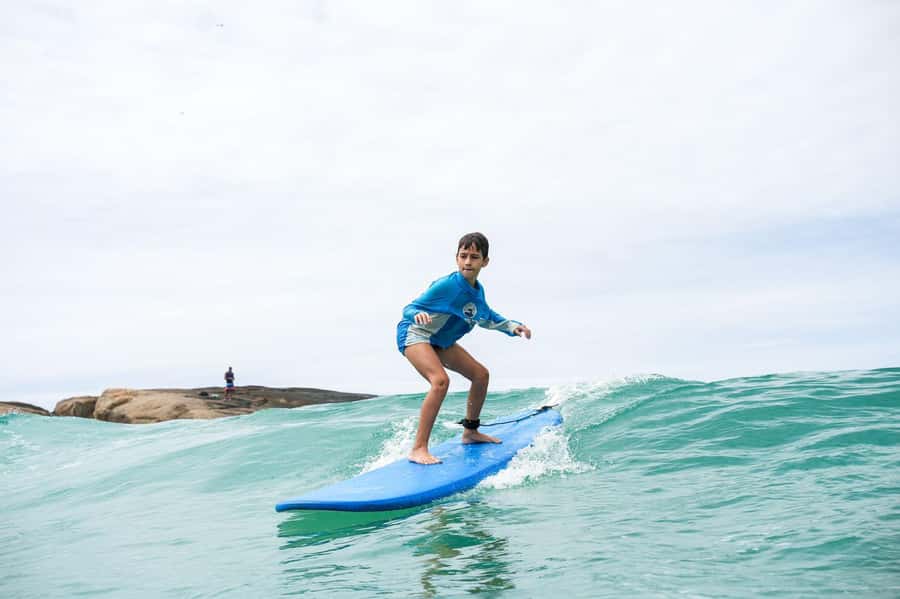
Surfing in Rio starts with a push and a plan. This lesson in Copacabana and Ipanema is built for your first contact with the ocean, with coaching that focuses on getting you up (and staying safe) as you move from the sand to the breaking waves.
What I like most is the step-by-step flow: stretching and getting your body and mind ready, then learning how to stand up and handle the surfboard properly. The second win is the group or private options, plus the fact that you go together to the outside with safety in mind so you can catch better waves without guessing.
One thing to consider: there’s an extra payment for the lesson that you pay directly at the meeting point, and there’s also a single day-of instruction step where you should message the teacher in advance, so don’t show up blind.
In This Review
- Key things you’ll notice right away
- Copacabana and Ipanema Surf Lessons: What This One-Hour Class Is Really About
- Price and Logistics: The $10 Booking vs. the 200 Reais Paid at the Meeting Point
- Meeting Point and the WhatsApp Step That Prevents Surf Day Chaos
- What Happens First: Stretching, Mind Prep, and Getting Your Board Ready
- Going to the Outside: Best Waves, Safety, and Not Wasting Your Lesson
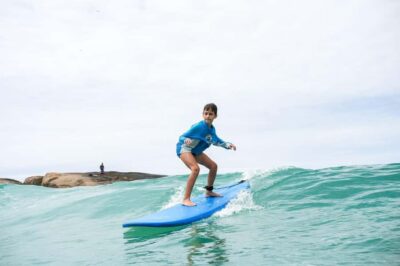
- In the Water: The Real Surf Moment (Up or Down, You Learn)
- Group vs. Private Lessons: Choosing the Right Fit for Your Comfort Level
- Equipment Included: What You Get and Why It Matters
- What to Bring: Simple Checklist for a Comfortable Rio Surf Morning
- Who This Is Best For (and Who Should Skip It)
- How to Make the Most of Your One Hour
- Should You Book This Copacabana/Ipanema Surf Lesson?
- FAQ
- What’s the duration of the surf lesson?
- Where is the meeting point?
- Do I need to message the teacher before the lesson?
- Is the 200 reais payment included in the price?
- What equipment is included?
- Is it a group lesson or can it be private?
- Can I get photos or videos from the lesson?
- What should I bring to the lesson?
- What’s the cancellation policy?
Key things you’ll notice right away
- Real ocean coaching, not just on-shore demos
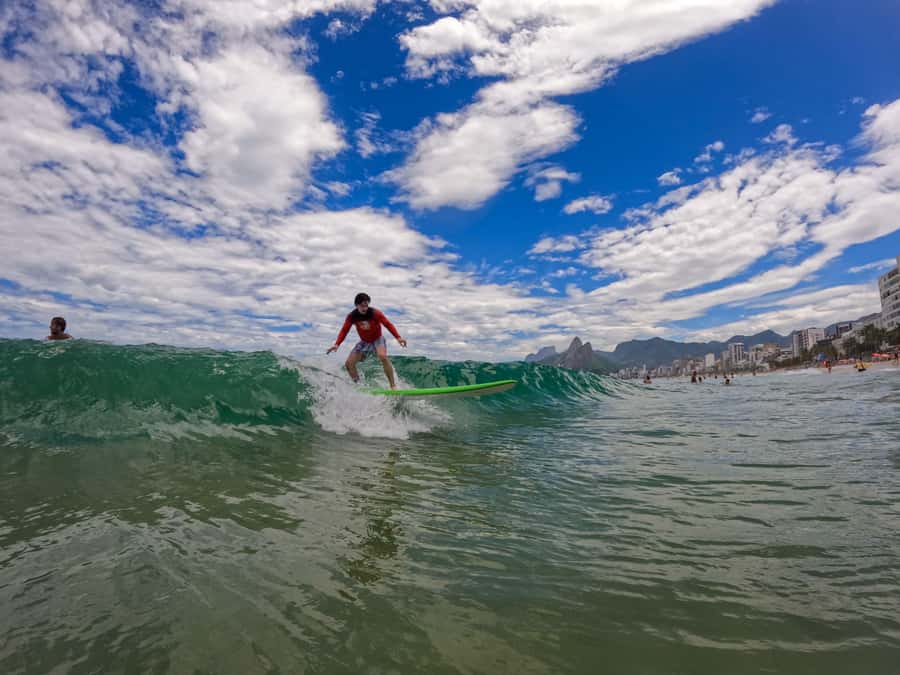
- Learn to get up and handle the board safely
- Go outside to the break together with safety measures
- After-lesson skills: how to come back in the water safely
- Gear is included, and optional photos/videos can be added
- Small practical detail that matters: WhatsApp the teacher one day before
Sand underfoot on Copacabana and Ipanema
- Rio de Janeiro: Beginner Samba Lesson in Ipanema★ 4.9 · 1,071 reviews
- Rio de Janeiro: Samba Class in Copacabana★ 4.6 · 262 reviews
- Samba Class in Copacabana★ 4.5 · 52 reviews
- Surf lessons: in Arpoador in Ipanema.★ 4.7 · 35 reviews
Copacabana and Ipanema Surf Lessons: What This One-Hour Class Is Really About
This is a beginner-friendly surf lesson that targets the two questions you probably have before you even book: Can I actually stand up? And what should I do so I do not panic when the waves start doing wave things?
The structure is straightforward. You start on the beach with stretching and body preparation, then you train your first contact skills in a controlled way. That matters because in surfing, technique is muscle memory, not confidence speeches. You’re not just watching. You’re practicing how to move with the board and how to react when the ocean pulls the rug out from under you.
Then you move to the more exciting part: going to the outside to find the best waves, with instructors positioned around safety and direction. The goal is simple. You spend your limited lesson time where surfing is actually happening, not standing on shore wondering when your turn will come.
And yes, you’ll fall. A lot. But the lesson is clearly aimed at making that part fun instead of scary. The included equipment and the coaching style are there to help you keep trying, not to shut you down.
Price and Logistics: The $10 Booking vs. the 200 Reais Paid at the Meeting Point
The headline price listed for the activity is $10 per person. But there is also an additional cost you pay for the class—200 reais per person—at the meeting point before the lesson.
Here’s how to think about value. If you only look at the $10, you might assume it covers everything. It does not. If you budget only the $10, you’ll feel surprised at the beach. If you budget the $10 plus the 200 reais, the math starts making sense: you’re paying for instruction plus the surf setup and instructor time during that one-hour session.
The payment method note is practical: it can be cash in Reais and it can be by card with an additional 5% at the meeting point. I’d come prepared with both options in mind. If you hate last-minute decisions, bring cash.
One more reason this matters: the equipment is included, and the lesson is time-based. You’re not buying a casual chat. You’re buying an instructor-led window where you get coached through getting up, handling the break, and practicing safe movement in the sea.
Meeting Point and the WhatsApp Step That Prevents Surf Day Chaos
The meeting point is simple: the guide or tour/class representative will be there waiting for you. That’s good.
But the lesson also comes with an important instruction: you should send a WhatsApp message to the teacher one day before to confirm the lesson date and time.
This is the kind of small step that can save your entire day. Surf lessons depend on timing, tide, and conditions. If you miss the confirmation, you could end up wandering the beachfront while the session moves on.
One downside popped up in at least one booking experience: the person could not find the guide at the start and had to re-buy a course elsewhere. I cannot promise that will happen to you, but I can say this: confirm the details in advance and keep the teacher’s contact handy. Then you’ll be far less likely to turn a fun plan into a stressful search.
Tip I’d use if I were in your shoes: message the teacher the day before and again right before you leave your hotel. Short message. Clear details.
More waves and flat-water paddles off the beaches


What Happens First: Stretching, Mind Prep, and Getting Your Board Ready
Most first-timers expect the lesson to begin with waves. It starts with you.
Before you get near the water, you do stretching and get your body and mind prepared for first contact with surf. That might sound basic, but it’s smart. Surf uses your shoulders, core, and legs in quick bursts. If you show up cold and stiff, you’ll burn energy faster and feel more awkward when you try to stand up.
Then you learn the early mechanics:
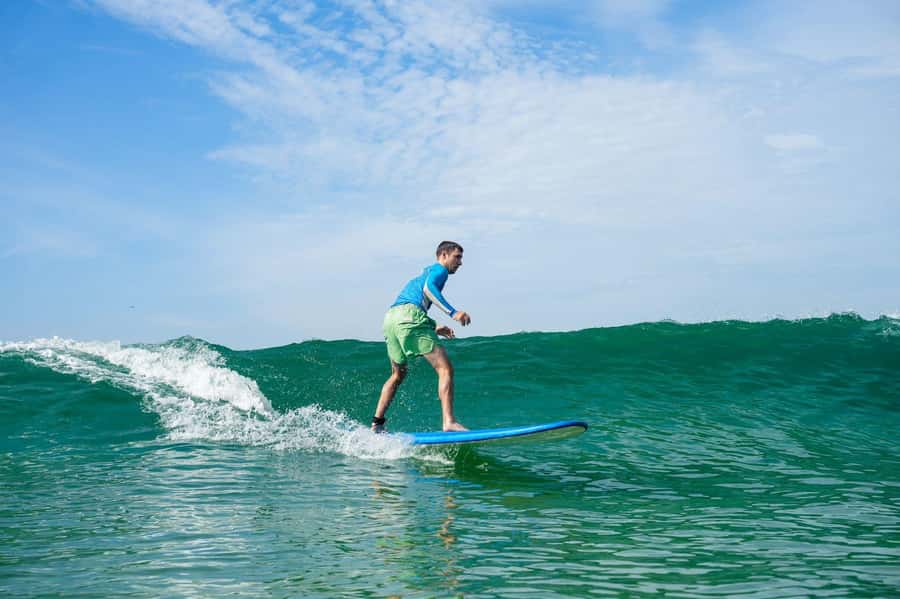
- How to get up on the surfboard
- How to position your body for the first push
- How to take care of yourself in the sea before you chase the fun part
If you’ve never been in ocean water with waves breaking, your instincts might fight you. In a lesson like this, you learn what to do with your body when the ocean has momentum and you are not in control. That mental training is underrated, and it’s why your falling and getting up tends to improve fast once you get guided.
Going to the Outside: Best Waves, Safety, and Not Wasting Your Lesson
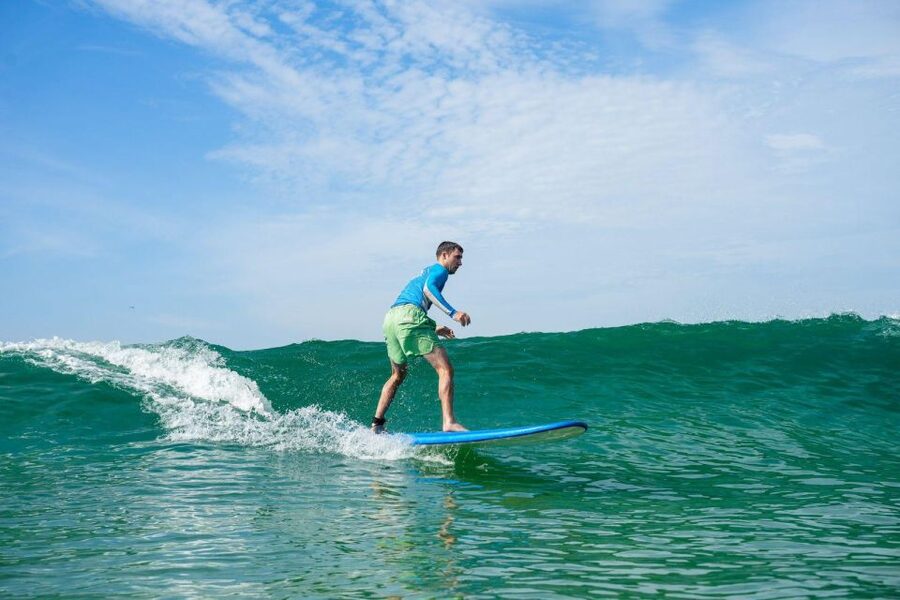
After the initial practice, the instructors guide you together to the outside to get the best waves, with safety always in the plan.
Why go outside? Because waves closer in can be messy or weak, depending on conditions. The lesson specifically mentions that once you’re out there, surfers are placed on the best waves. This is one of the most practical parts of the experience: you’re not doing random paddling and hoping for a miracle. You’re getting guided to where your chances are better.
And safety is not just a word here. The lesson teaches what to do when you go beyond the break, and then it teaches how to come back in the water safely. That is the difference between a first-timer day that feels like survival and a first-timer day that feels like progress.
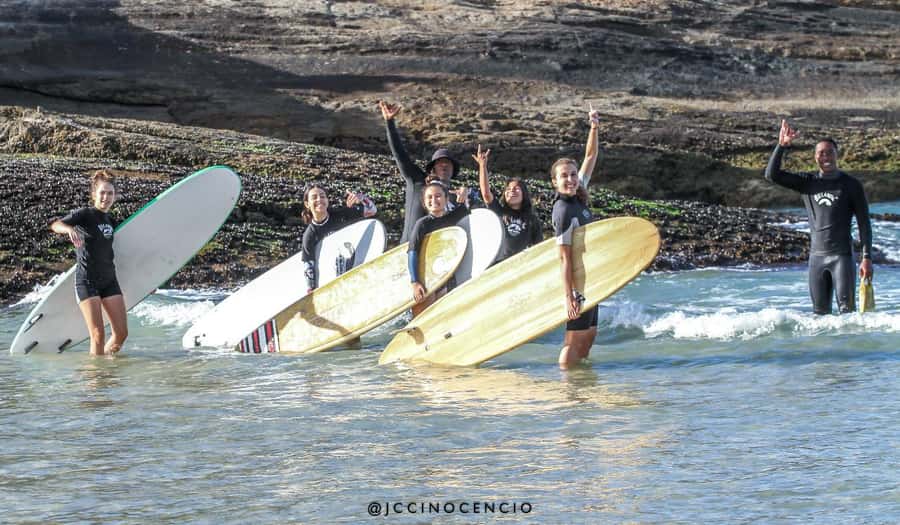
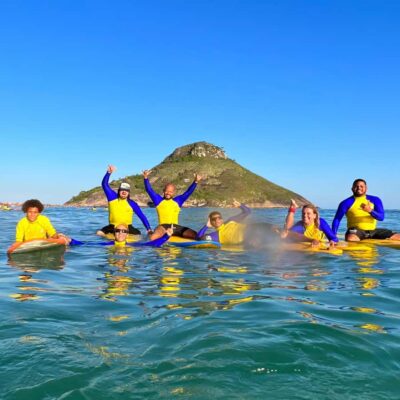
Also, there’s a real bonding feeling when you travel with the group to the outside. You’re not alone, and you’re not guessing. You’re part of a coached flow.
In the Water: The Real Surf Moment (Up or Down, You Learn)
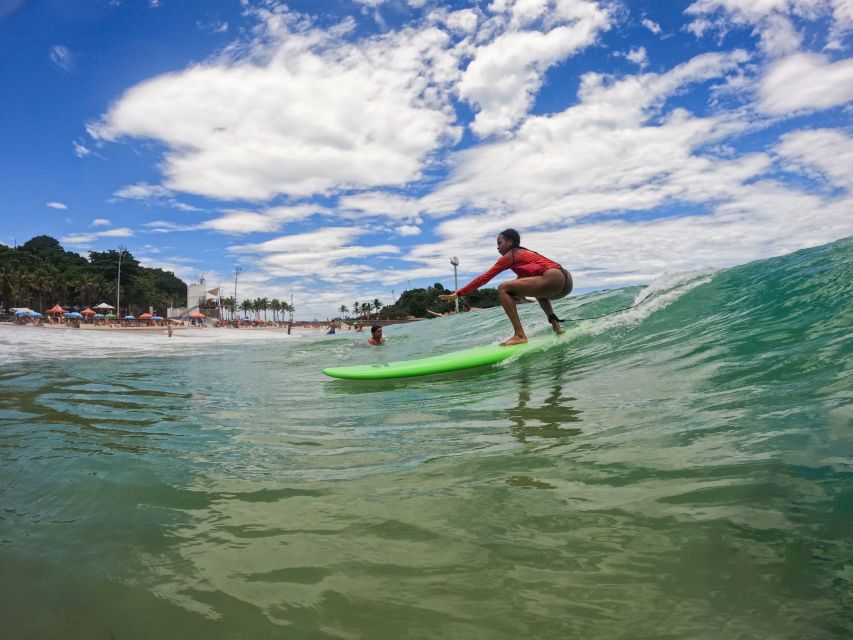
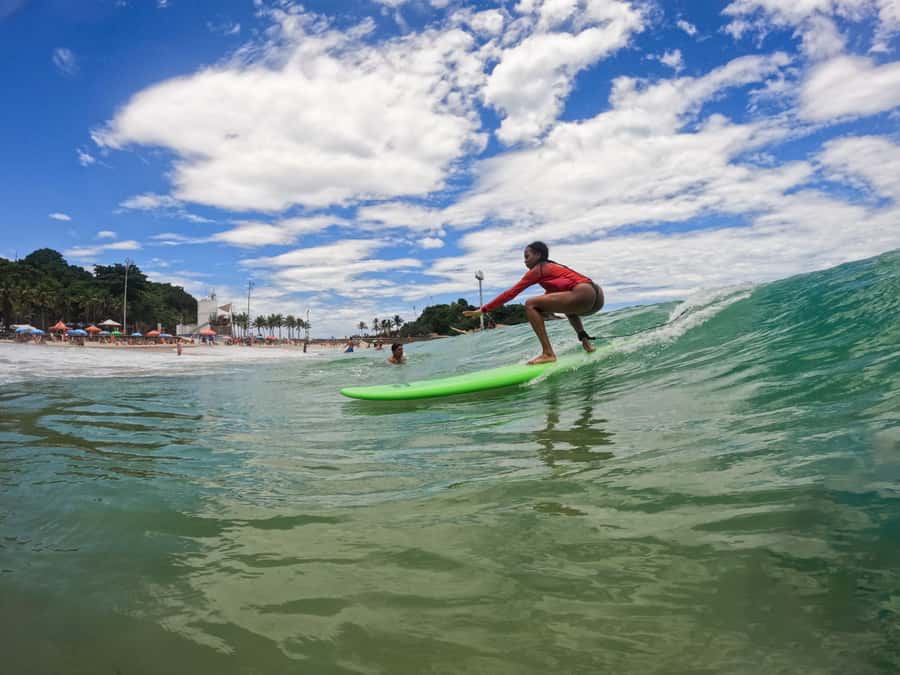
Once you’re out at the break area, your session turns into a series of attempts.
Your best early wins come from two things:
- Practicing the stand-up sequence long enough that it starts to feel repeatable.
- Learning how to handle the board and your body when waves hit, lift, and push.
The lesson specifically mentions the key moments:
- You enjoy getting up on the surfboard
- You also enjoy falling, because the experience is built to keep the fun going
- You do it with instructors teaching you the right way to move through the sea
Here’s the practical truth: even if you do not catch many waves in the first minutes, you’re still getting trained. Each attempt teaches something. The instructors’ job is to guide you so the learning happens fast, not painfully slow.
Group vs. Private Lessons: Choosing the Right Fit for Your Comfort Level
You can do this as a group lesson or a private session.
A group lesson can be a great value if you want motivation from other beginners and you do not mind sharing attention. It also helps you relax because you’ll see others getting similar challenges and improving at different speeds.
Private is for when you want tighter coaching and faster adjustments. If you already feel anxious about the water, private lessons can reduce uncertainty. You also tend to get more direct correction, because the instructor has fewer people to manage.
If you’re the type who freezes when things get chaotic, I’d lean toward private. If you’re flexible and just want to get on the board and learn, group is likely a good match.
Equipment Included: What You Get and Why It Matters

This class includes the key gear so you can focus on learning rather than shopping.
You get:
- Surfboard
- Leash
- Clothes (provided for the lesson)
- A sand stand to store your bags
- Instructors of surf
- Motivation and hands-on guidance
The leash is the big deal for first-timers. When you wipe out, it helps keep the board close so you can reset without turning into a swim-or-search mission.
The bag storage detail is also genuinely useful. Sand and bags can become a mess quickly. Having a dedicated way to store belongings means you can move efficiently between beach prep and water time.
And if you want extra memories, the lesson offers photos and videos from the classes with an extra payment. That can be nice if you want proof you actually did it, or if you want to review body position and progress.
What to Bring: Simple Checklist for a Comfortable Rio Surf Morning
You do not need a huge list. You need smart basics.
Bring:
- Change of clothes
- Beachwear
- Biodegradable sunscreen
- Cash
A few notes I’d follow:
- Change clothes is non-negotiable. Wet clothes after ocean time can ruin the rest of your day.
- Biodegradable sunscreen is called out specifically, so follow it. It’s better for the environment and it’s part of the lesson expectations.
- Cash matters because the additional 200 reais is paid at the meeting point, and cash is one of the accepted options.
If you forget sunscreen, you’ll feel it later in the sun. If you forget cash, you might end up stressed right before you get into the water.
Who This Is Best For (and Who Should Skip It)
This surf lesson is best for:
- People who want beginner coaching with local instructors
- First-timers who benefit from step-by-step practice
- Travelers who like active learning in a real setting (sand practice plus outside break time)
It also works well if you want that mix of challenge and fun: stand up when it clicks, laugh when it does not, and get taught how to handle the ocean safely.
It is not suitable for babies under 1 year. That’s the only specific age limitation provided.
If you have major mobility limits or serious medical constraints, you should check with the provider first. The lesson includes time in the sea and the break area, so it is not a gentle walk-through. You’ll be doing physical movements and water handling.
How to Make the Most of Your One Hour
One hour sounds short. That’s why preparation helps.
Here’s what will improve your odds:
- Confirm with the teacher via WhatsApp one day before
- Arrive ready to stretch and get into the first contact drills
- Listen on the first attempts. Most people learn faster after they stop guessing
- Treat falling as part of the plan, not as a failure
Also, choose the lesson type that matches your personality. Group is great if you want a shared experience. Private is great if you want direct corrections without waiting your turn.
If you go in with a calm mindset, your brain will stop fighting the ocean. Then the physical learning can take over.
Should You Book This Copacabana/Ipanema Surf Lesson?
I’d book it if you want beginner surfing coaching in Rio that focuses on real ocean time, not just beach theory. The included equipment and the fact that you go outside with instructors are the big strengths. The lesson structure—stretching and setup, learning to get up, then practicing outside with safety and return skills—sets you up for actual progress.
I would think twice if you hate logistics or you assume the low displayed price covers everything. Plan on the 200 reais per person payment at the meeting point, and do the WhatsApp confirmation so you do not lose time on the beach trying to find the guide.
If you show up prepared, this can be a seriously fun way to experience Rio beyond the viewpoint. And if you’re lucky, that first successful stand-up moment will make the rest of your trip feel lighter.
FAQ
What’s the duration of the surf lesson?
The activity lasts 1 day, and it includes 1 hour of surf lesson.
Where is the meeting point?
The guide of the tour/class will be there waiting on you at the meeting point. The exact location isn’t further described in the provided details.
Do I need to message the teacher before the lesson?
Yes. You should send a WhatsApp message to the teacher one day before the lesson date to confirm the time.
Is the 200 reais payment included in the price?
No. The 200 reais per person is listed as an extra cost with the class, paid at the meeting point before the lesson.
What equipment is included?
The lesson includes surfboard, leash, clothes, and a stand on the sand to store your bags, along with the instructors.
Is it a group lesson or can it be private?
Both are available. The lessons can be in groups or private sessions.
Can I get photos or videos from the lesson?
Yes. Photos and videos are available from the classes for an extra payment.
What should I bring to the lesson?
Bring change of clothes, beachwear, biodegradable sunscreen, and cash.
What’s the cancellation policy?
Free cancellation is available up to 24 hours in advance for a full refund.
More Tour Reviews in Rio De Janeiro






More Surf and Paddle Sessions





More Days on Copacabana and Ipanema




Fresh off the review desk: newer Rio De Janeiro tours we have been out on





Copacabana & Ipanema Beaches, compared.
 ★ 4.9Beginner Samba Lesson in IpanemaFrom $251,071 reviews
 ★ 4.6Samba Class in CopacabanaFrom $25262 reviews
 ★ 4.5Samba Class in CopacabanaFrom $3552 reviews
 ★ 3.7Stand-Up Paddle – Copacabana Beach SunriseFrom $7039 reviews
 ★ 4.7Surf lessons: in Arpoador in Ipanema.From $3335 reviews
 ★ 5.0Pedra Do Telegrafo and Grumari Beach with PhotosFrom $7331 reviews
 ★ 4.2Barra da Tijuca Walk & Food Tour with DrinksFrom $019 reviews
 ★ 4.7Yoga + Sound Healing – Ipanema ParkFrom $2812 reviews
Browse the lists this tour appears in