
Reviewed · SANTA TERESA & LAPA
Rio de Janeiro: Bossa Nova Walking Tour with Guide
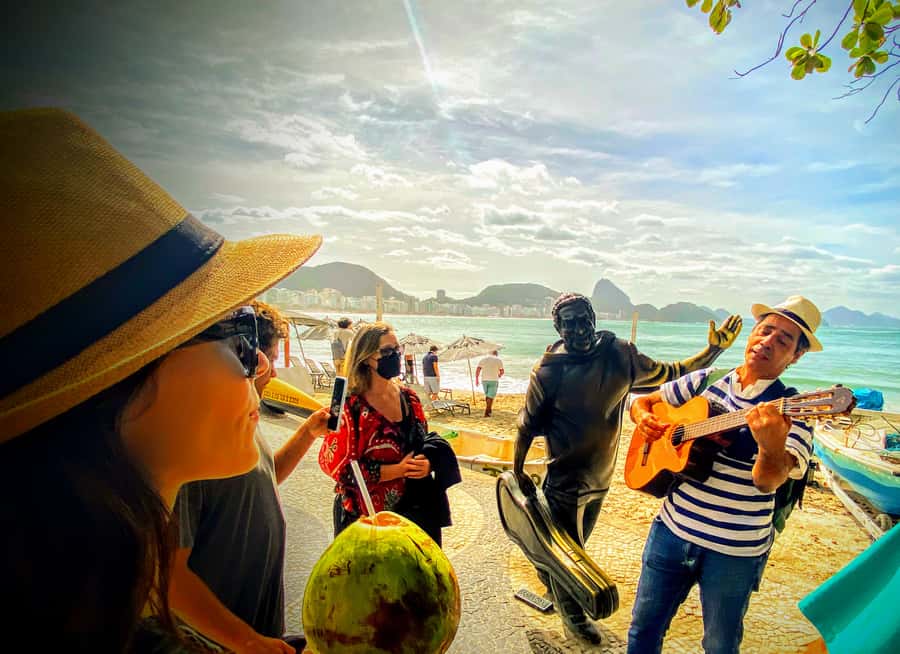
Bossa Nova sounds different on your feet. This 3-hour walk turns famous Rio landmarks into a real music lesson, with live performances along the route and a guide who can explain the style while playing. I like that it is not just photos and facts; the music breaks help the history land.
You also get a focused circuit through Ipanema and Copacabana, including places linked to the composers and performers you keep hearing about, like Tom Jobim, Vinícius de Moraes, and João Gilberto. It is a great way to understand how the sound developed in Rio’s 50s to 60s atmosphere without getting lost in a museum.
One thing to consider: this is mostly walking and it is not set up for kids under 8 or for people with mobility impairments or wheelchair use. And if you are hoping for nonstop music, you may wish you heard more songs during the stops.
In This Review
- Key moments worth planning for
- Bossa Nova on Foot: what 3 hours buys you
- Starting at Praça Nossa Senhora da Paz: the meeting point rhythm
- The Ipanema-to-Copacabana walk: why the route matters
- Stop-by-stop: turning landmarks into Bossa Nova clues
- 1) Praça Nossa Senhora da Paz: the setup class
- 2) Quiet corners and “wait, how did that connect?” photo stops
- 3) Cantagalo and Praça General Osório: neighborhood texture
- 4) Av. Atlântica, 3968: the beach-adjacent vibe
- 5) Estátua de Dorival Caymmi: composer-at-a-point
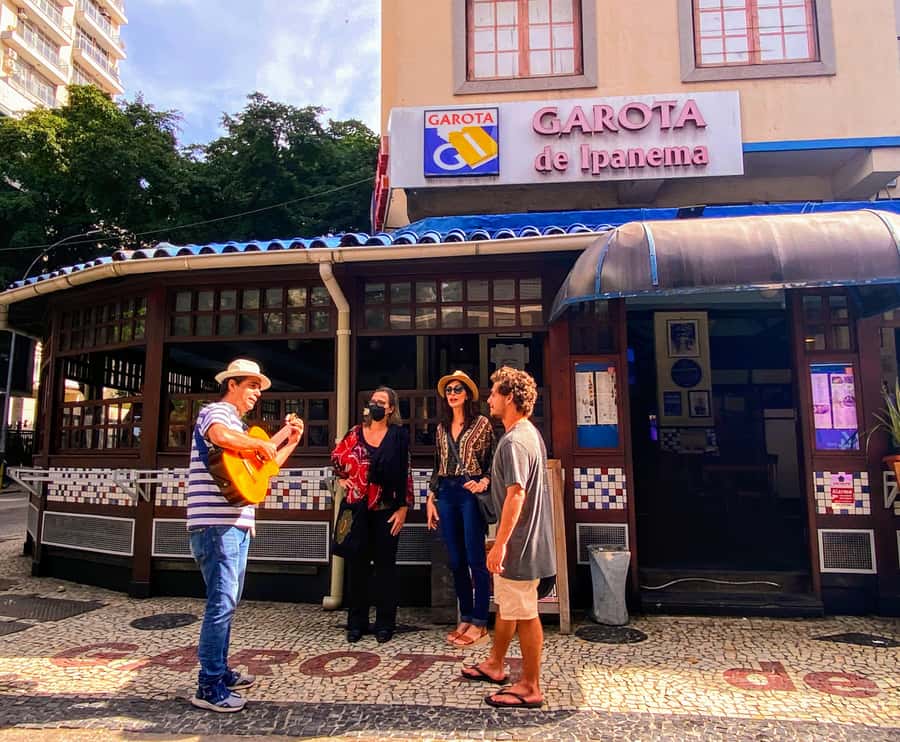
- 6) Garota de Ipanema and Arpoador: the famous title, in context
- 7) Estátua de Tom Jobim and Casa de Cultura Laura Alvim: the modern bridge
- 8) A local bar and the finish at Restaurante e Bar Garota de Ipanema
- Live music with the guide: what it does right
- Languages and group size: ask questions without feeling rushed
- Price and value: $49 makes sense if you want both story and music
- Practical tips that make the tour easier
- Who should book this Bossa Nova tour?
- Should you book Rio Bossa Experience?
- FAQ
- FAQ
- How long is the Rio de Janeiro Bossa Nova Walking Tour?
- How much does the tour cost?
- Where do I meet the guide?
- Do I need to book a specific time?
- What languages are offered on the tour?
- Is there live music during the tour?
- What is included in the price?
- What is not included?
- What should I bring?
- Is it suitable for children or mobility needs?
- What is the cancellation policy and payment options?
Key moments worth planning for
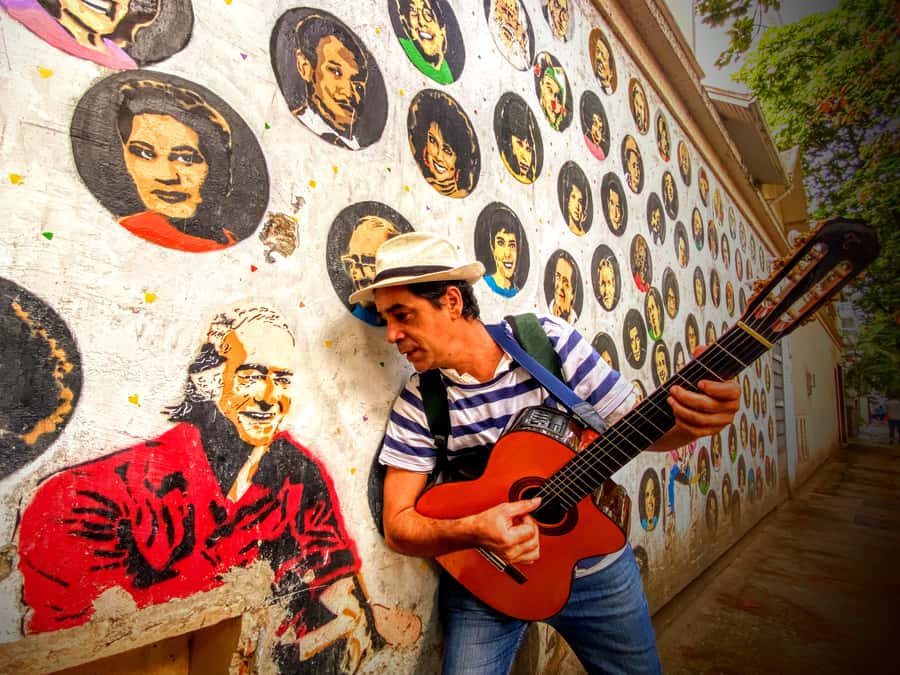
- A guide who plays: your host is also a musician and singer, bringing guitar and other instruments into the story.
- Live Bossa Nova on the route: you hear the music, not just read about it.
- Street circuit in Ipanema and Copacabana: beaches, bars, and the corners tied to the style’s creators.
- Clear composer connections: you connect names like Tom Jobim and Dorival Caymmi to specific Rio touchpoints.
- Short photo stops with context: you move fast, but you get reasons for each stop.
- Small-group feel available: you can opt for private or small groups if you want a calmer pace.
More of bohemian Santa Teresa and Lapa
- Rio: Christ the Redeemer, Sugarloaf, Selaron & BBQ Lunch★ 4.5 · 2,428 reviews
- Rio de Janeiro: Christ, Selaron Steps, and Tijuca Park Tour★ 4.7 · 857 reviews
- Santa Teresa, Lapa, and Cinelândia with Tram Ride and Selarón Steps★ 4.5 · 274 reviews
- Rio de Janeiro: Historic Rio and Santa Teresa Half-Day Tour★ 4.4 · 228 reviews
Bossa Nova on Foot: what 3 hours buys you
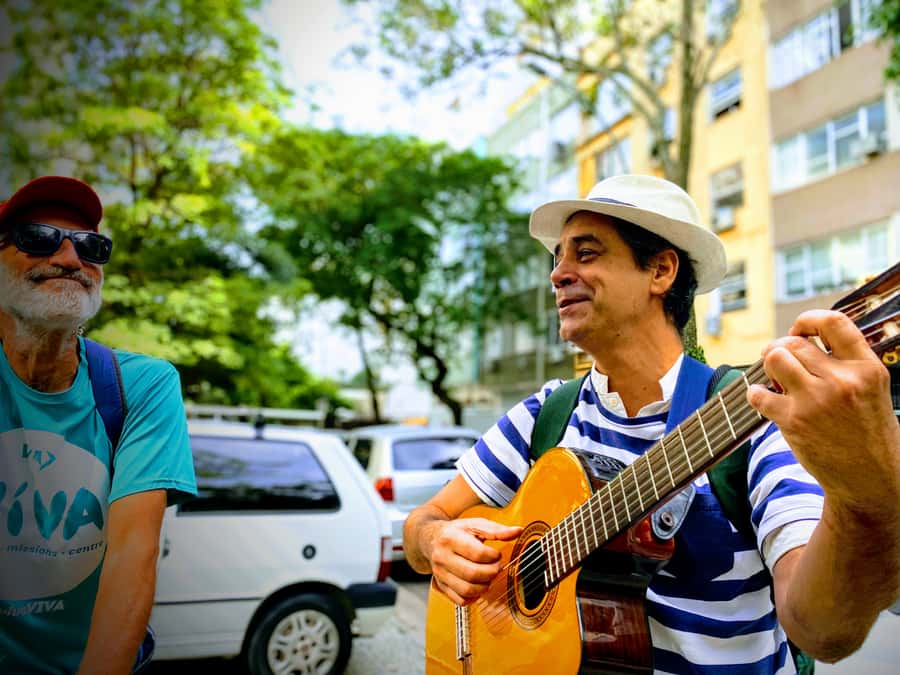
At $49 per person, you are paying for two big things: a live walking guide and live music from the musician-guide during the tour. That matters, because this is not a self-guided route where you read plaques and hope you guess the right historical connections. Here, the guide threads the story through what you are actually seeing, including music style origins and key players.
The format is built for momentum. You cover a circuit that stays within Ipanema and Copacabana and hits about 10 different main stops, mixing viewpoints, streets, and music-related landmarks. The time moves quickly—plan to stay present and ready to walk.
You should also know the tour runs in an active, outdoors setting and includes short class-and-photo moments. Comfortable shoes are not optional here; the pace is part of the experience.
Starting at Praça Nossa Senhora da Paz: the meeting point rhythm
You meet at Praça Nossa Senhora da Paz in Ipanema, near exit A of the metro station. On the night before, you receive an email at 20:00 with the exact meeting point inside the square and guidance on how to find your guide.
That email detail is worth taking seriously. In a place with lots of foot traffic, being even a few minutes off can mean you’re searching while the group is already walking.
The good news: your start point is simple and in Ipanema, so you can line it up with your other beach-and-neighborhood plans. Just give yourself buffer time so you’re not sprinting in comfortable shoes you regret wearing.
The Ipanema-to-Copacabana walk: why the route matters
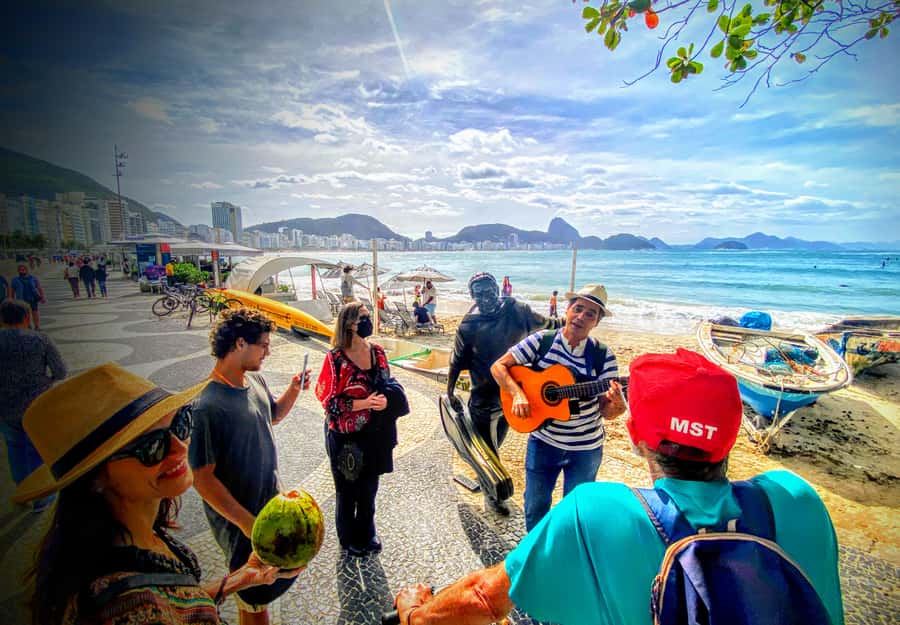
Bossa Nova is often taught like it is only music. This tour makes it feel like what it is: music tied to a specific Rio mood, specific streets, and the people who lived and worked there.
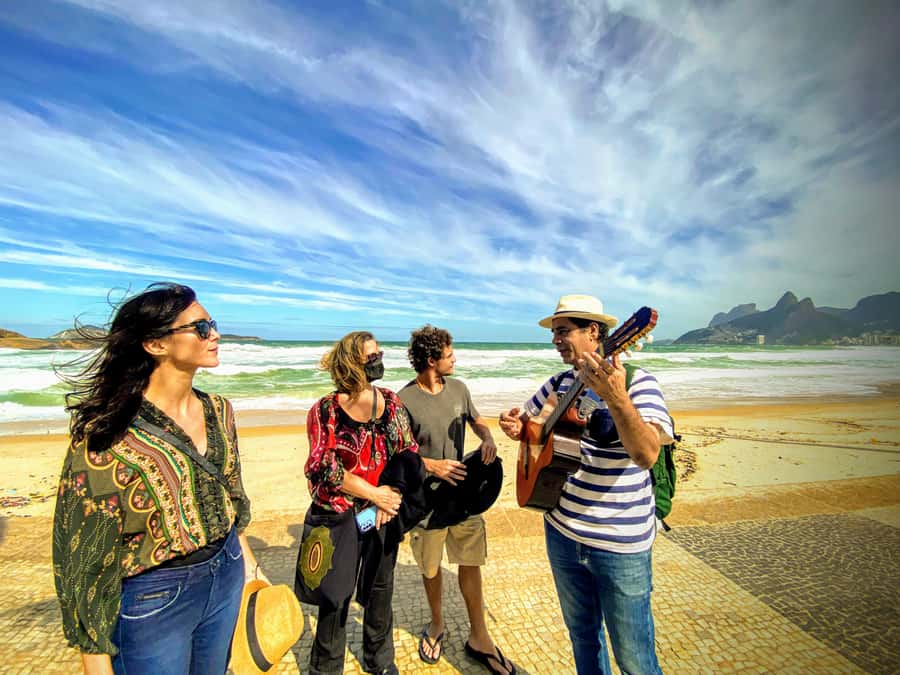
Walking between Ipanema and Copacabana gives you two benefits at once. First, you see how the neighborhoods change block by block. Second, you get to connect the sound to actual places—bars, beach-adjacent spots, and corners linked to composition and performance.
This route is also built around storytelling in motion. You are not just hearing about the 50s and 60s; you are getting the “why” behind it while you stand in the right kind of street setting.
And yes, the scenic moments matter. There are planned photo and viewpoint stops along the way, including the stretch near Av. Atlântica where you get a better feel for how the music and the sea-side lifestyle fit together.
Still browsing Rio De Janeiro? These are the ones we go back to





Stop-by-stop: turning landmarks into Bossa Nova clues
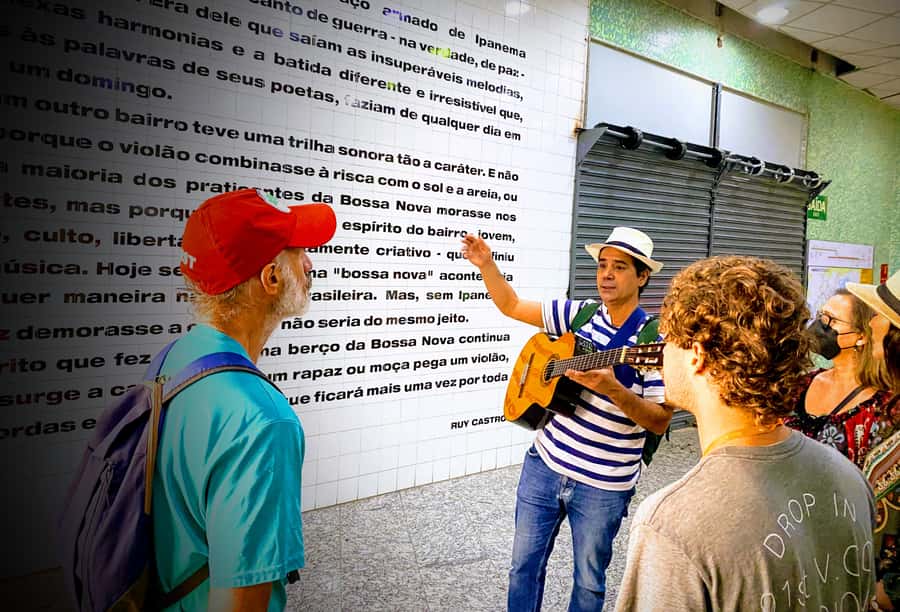
The route layers short segments together: a quick class, photo stops, guided walking, and occasional live music moments. Here is how the major stops play out and what each one is doing for you.
1) Praça Nossa Senhora da Paz: the setup class
You begin with a class at Praça Nossa Senhora da Paz for about 20 minutes. This is where you get the framework—how Bossa Nova developed, where it started, and who the key names are. It’s also where the musician-guide role matters: since your guide can play, you get a smoother jump from explanation to listening.
If you are a first-timer, this part helps you avoid the common problem of hearing names and not understanding the connections.
2) Quiet corners and “wait, how did that connect?” photo stops
After the initial setup, the tour moves into a series of short stops—each around 15 minutes—built around guided sights and photo moments. You’ll hit a stop described as a quieter corner, then Rua Nascimento Silva, then another stop framed as a secret side location.
These segments are less about one single famous landmark and more about atmosphere. They’re the tour’s way of showing how Bossa Nova grew in real street life—where musicians likely met, practiced, and played. The guide’s job here is to turn ordinary-looking blocks into meaningful context.
The potential drawback: these are shorter stops. If you want slow, deep sightseeing with lots of time standing still, the tour’s pace may feel a bit brisk.
3) Cantagalo and Praça General Osório: neighborhood texture
Next you pass through Cantagalo and Praça General Osório, with another sequence of photo and guided moments (about 15 minutes at each stop). This is where the tour starts to feel more like a guided walk through Rio’s musical geography rather than a list of celebrities.
You’ll also get scenic “on the way” bits near the beachfront approaches, so the story keeps flowing even while you are just moving between viewpoints.
4) Av. Atlântica, 3968: the beach-adjacent vibe
At Av. Atlântica, 3968, you get a longer photo stop segment (around 20 minutes) with scenic views on the way. For Bossa Nova, this is the Rio connection you expect: music culture that sits beside the ocean and the leisurely style that people associate with the era.
This is also where the tour’s format works best. Standing near the beachfront lets the guide tie the sound to lifestyle—how the music felt to listeners and why the tone matched the setting.
5) Estátua de Dorival Caymmi: composer-at-a-point
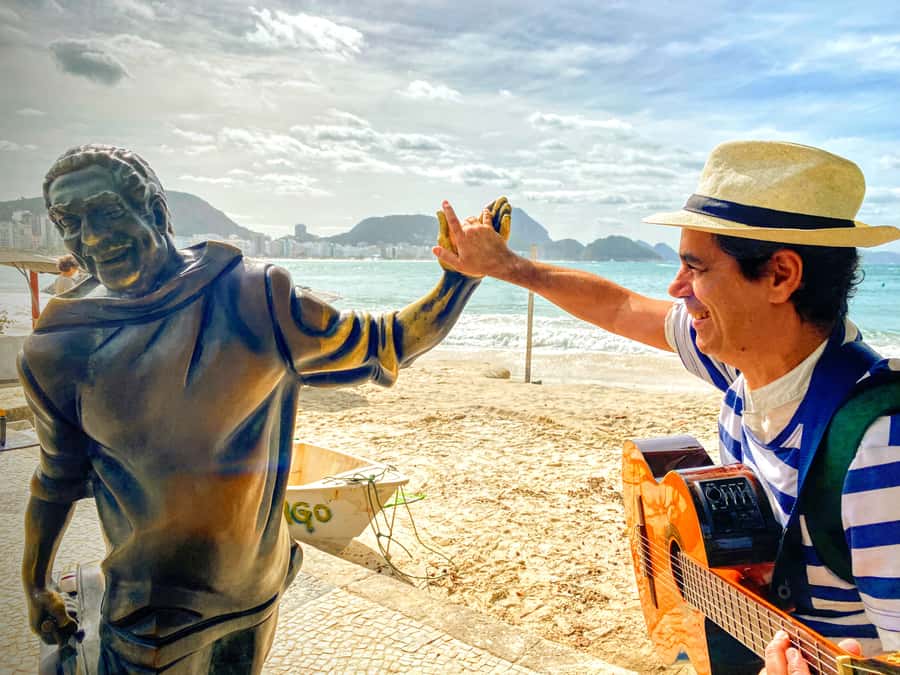
You then reach the Estátua de Dorival Caymmi for about 15 minutes. The statues are more than decoration here. They give you something tangible to attach to the story, so when the guide mentions composers and performers, you can connect the name to a specific place.
If you like learning through visual anchors, this stop helps a lot.
6) Garota de Ipanema and Arpoador: the famous title, in context
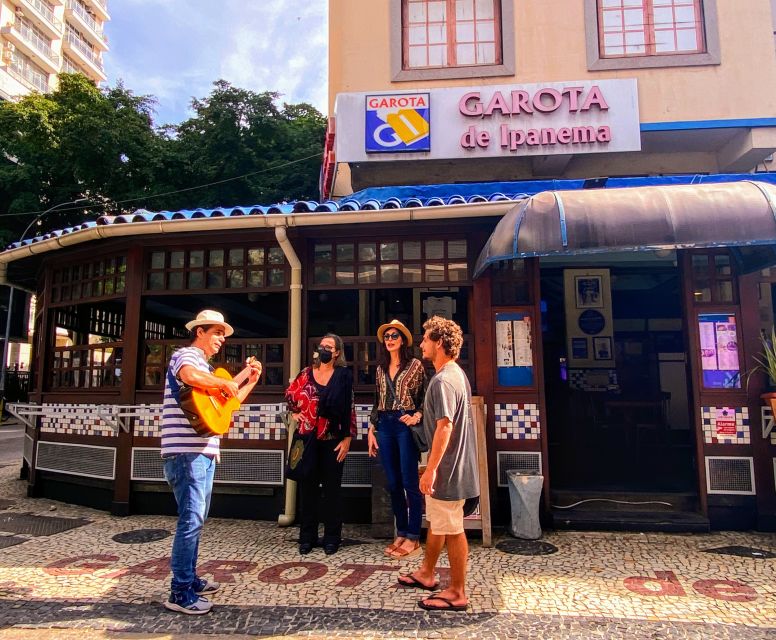
You stop at Garota de Ipanema for about 10 minutes, then later at Arpoador for about 10 minutes. These segments are short but powerful because they relate directly to the Rio identity people recognize worldwide.
Here, the guide’s live music moments add extra value. Hearing Bossa Nova right near the kind of coastline that inspired so many songs makes the title references feel less like trivia and more like lived culture.
7) Estátua de Tom Jobim and Casa de Cultura Laura Alvim: the modern bridge
Next is the Estátua de Tom Jobim (about 10 minutes), followed by Casa de Cultura Laura Alvim (about 5 minutes). These are your composer and culture anchors, and they help you see how the legacy continues beyond the classic recordings.
Casa de Cultura Laura Alvim is short on time, so you’ll get the gist rather than a long deep read. But it still helps you understand where the story continues today.
8) A local bar and the finish at Restaurante e Bar Garota de Ipanema
The tour ends with a local bar photo stop and then finishes at Restaurante e Bar Garota de Ipanema (with about a 15-minute local bar segment). This is where the tour’s theme wraps up naturally: Bossa Nova is not only something you listen to at home; it also belongs in a performance space with people around.
Food and drinks are not included, so you are not locked into buying. Still, you’ll likely have an appetite and you’ll know what to order from the vibe.
Live music with the guide: what it does right
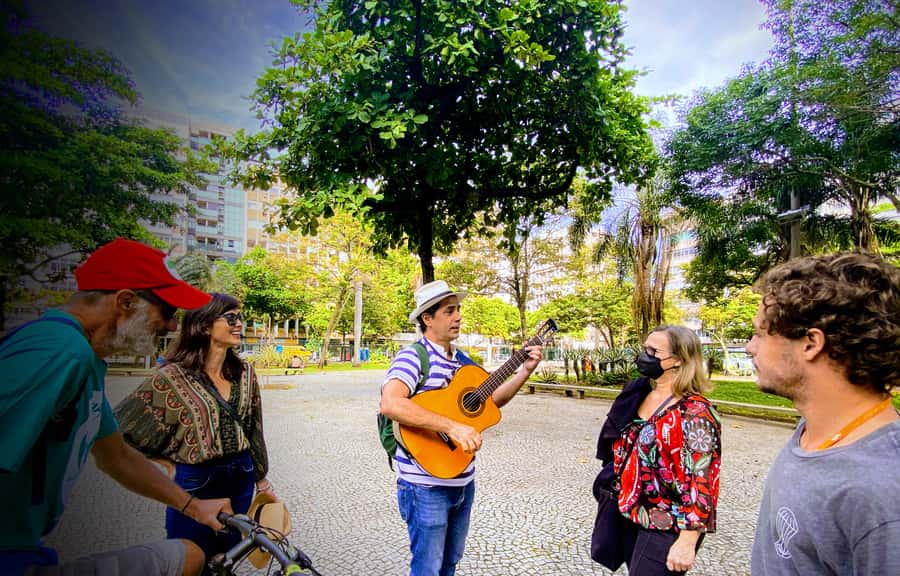
The biggest selling point is that your guide is also a musician and singer. You’re not stuck with a textbook voice. The guide plays guitar and some other instruments along the way, and there is a live Bossa Nova performance included.
That pairing is exactly why this works better than many walking tours. The explanation and the sound happen close together, so your brain connects the theory to the music before it fades.
In one account, the guide named Guilherme stood out for his friendly, personable style and his ability to teach the history clearly. Another guide named Gui was described as amazing and full of knowledge, which matches the tour’s structure: story first, then music moments to back it up.
One balanced note from experience: one person wanted to hear more music. So if you want long live sets, consider booking with the mindset that this tour provides music in breaks, not a full concert.
Languages and group size: ask questions without feeling rushed
The tour runs with languages Portuguese, Spanish, and English. That matters in Rio, where you can find lots of tours that only work well in one language.
Also, private or small groups are available. That can be a big deal if you are the type who asks side questions or wants your guide’s attention when you’re standing at a statue or viewpoint. Even in a larger group, the route is designed around frequent stops, so the guide still has time to explain.
Price and value: $49 makes sense if you want both story and music
Let’s talk value plainly. This tour includes:
- a guided walking tour
- live performance by the musician
It does not include food, drinks, or transport.
So your $49 is basically buying a guide plus music. If you like Bossa Nova and you also like learning how it connected to real places, it is a fair trade. If you only want to see the beachfront and snap photos, you could do it independently. But independent routes rarely deliver the “why” behind names like Tom Jobim and Vinícius de Moraes.
The tour is also only 3 hours, which is helpful. You get a lot of stops without spending an entire day tied to one plan.
Practical tips that make the tour easier
- Wear comfortable shoes. You’ll be walking throughout.
- Wear comfortable clothes. You’ll be outside and moving.
- Plan for a start-time check. Starting times depend on availability.
- Watch for the email the night before at 20:00. That message tells you the exact meeting point inside Praça Nossa Senhora da Paz and how to spot your guide.
And if you’re traveling with mobility needs, it is not suitable for wheelchair users or people with mobility impairments. That isn’t a minor issue here—it affects the entire format of the walk.
Who should book this Bossa Nova tour?
Book it if you:
- want the story of Bossa Nova tied to places you can actually see
- enjoy live music moments while you walk, instead of separating music from sightseeing
- like composer names and want context for who did what
- want a guide who can explain and perform, not only explain
Skip it if you:
- want a full-length concert style experience with lots of continuous music
- need a fully accessible route
- are bringing kids under 8
Should you book Rio Bossa Experience?
If you are curious about why Bossa Nova became Rio’s signature sound, this tour is a good bet. You’re getting a street-level history lesson plus live performance, with a route designed to connect the music to Ipanema and Copacabana.
My call: book it if you can handle 3 hours of walking and you want guided storytelling you can hear. If you hate walking, or you want long stretches of uninterrupted music, choose a different format.
FAQ
FAQ
How long is the Rio de Janeiro Bossa Nova Walking Tour?
The tour lasts 3 hours.
How much does the tour cost?
It costs $49 per person.
Where do I meet the guide?
The meeting point is Praça Nossa Senhora da Paz in Ipanema, near exit A of the metro station.
Do I need to book a specific time?
Starting times depend on availability, so you should check the schedule when you reserve.
What languages are offered on the tour?
The guide speaks Portuguese, Spanish, and English.
Is there live music during the tour?
Yes. A live performance by the musician is included.
What is included in the price?
You get a guided walking tour and the live performance of the musician.
What is not included?
Food, drinks, and transport are not included.
What should I bring?
Wear comfortable shoes and comfortable clothes.
Is it suitable for children or mobility needs?
It is not suitable for children under 8 years old. It is also not suitable for people with mobility impairments or wheelchair users.
What is the cancellation policy and payment options?
You can cancel up to 24 hours in advance for a full refund. You can also reserve now and pay later.
More Walking Tours in Rio De Janeiro






More Tour Reviews in Rio De Janeiro




Santa Teresa and Lapa, Three More Ways





Fresh off the review desk: newer Rio De Janeiro tours we have been out on





Santa Teresa & Lapa, compared.
 ★ 4.5Christ the Redeemer, Sugarloaf, Selaron & BBQ LunchFrom $692,428 reviews
 ★ 4.7Pub Crawl in Lapa with Cachaça Tasting and Live SambaFrom $33881 reviews
 ★ 4.7Christ, Selaron Steps, and Tijuca Park TourFrom $68857 reviews
 ★ 4.5Santa Teresa, Lapa, and Cinelândia with Tram Ride and Selarón StepsFrom $60274 reviews
 ★ 4.4Historic Rio and Santa Teresa Half-Day TourFrom $47228 reviews
 ★ 4.3Corcovado, Sugarloaf Mountain, and Selarón Steps 6-Hour TourFrom $146167 reviews
 ★ 4.5Ancient Rio and Santa Teresa Tour with Hotel pick-up and drop-offFrom $55154 reviews
 ★ 4.3Christ the Redeemer & Selarón Steps Half-Day TourFrom $58136 reviews
Browse the lists this tour appears in