
Reviewed · SANTA TERESA & LAPA
Bossa Nova Walking Tour
Bossa Nova follows you down Rio streets. This Bossa Nova walking tour brings the music to life with live guitar as you stroll past landmark corners tied to the sound of Rio.
I especially like how the guide turns the history into something you feel, not just hear. With a max of 8 people and a guide-musician named Gui, the pace stays personal and the singing feels part of the walk.
One thing to plan for: transport and food/drinks/water are not included, so you’ll want to handle your own timing for water and snacks and keep the day simple.
In This Review
- Key things to know before you go
- Why this Bossa Nova walk works better than a lecture
- Price and what you really get for $48.03
- Meeting points, timing, and what to plan for
- Stop 1: Praca Nossa Senhora da Paz and the opening guitar set
- Stop 2: Praca General Osorio and the Hippie Fair link
- Stop 3: Copacabana Beach and the sound of the movement
- Stop 4: Dorival Caymmi statue and the Bahia connection
- Stop 5: Parque Garota de Ipanema and the story around the song
- Stop 6: Tom Jobim statue and the composer spotlight
- Stop 7: Casa de Cultura Laura Alvim and culture beyond the beach
- How the guitar makes the history stick
- Who this tour suits best
- Quick checklist before you book
- Should you book the Bossa Nova Walking Tour?
- FAQ
- How long is the Bossa Nova Walking Tour?
- How much does the tour cost?
- What is included in the tour price?
- What is not included?
- Where does the tour start and end?
- Is there an admission fee for the stops?
- What is the maximum group size?
- What happens if the weather is poor?
- Are service animals allowed?
- Where is the meeting point?
Key things to know before you go

- Live guitar at every major stop, so the music isn’t an add-on.
- Small group size (up to 8 people) makes it easier to ask questions and stay connected.
- A guide who explains while performing, so the stories land with the songs.
- Iconic Ipanema and Copacabana landmarks connected to major Brazilian music names.
- No paid admission tickets at the listed stops, since each stop is marked free.
- Tour ends at Garota de Ipanema, a natural place to keep the night going.
More of bohemian Santa Teresa and Lapa
- Rio: Christ the Redeemer, Sugarloaf, Selaron & BBQ Lunch★ 4.5 · 2,428 reviews
- Rio: Pub Crawl in Lapa with Cachaça Tasting and Live Samba★ 4.7 · 881 reviews
- Rio de Janeiro: Christ, Selaron Steps, and Tijuca Park Tour★ 4.7 · 857 reviews
- Santa Teresa, Lapa, and Cinelândia with Tram Ride and Selarón Steps★ 4.5 · 274 reviews
Why this Bossa Nova walk works better than a lecture
This tour is built around one simple idea: you learn Brazilian music faster when you hear it in the exact streets where the names and songs live. Instead of a sit-and-listen format, you keep moving through Ipanema’s world and you get guitar and singing right as the guide points to each location.
What makes it feel practical is the balance. You get enough context to understand why the place matters, but you also get music that keeps it from turning into a classroom. If you like songs as much as stories, this style fits.
Price and what you really get for $48.03
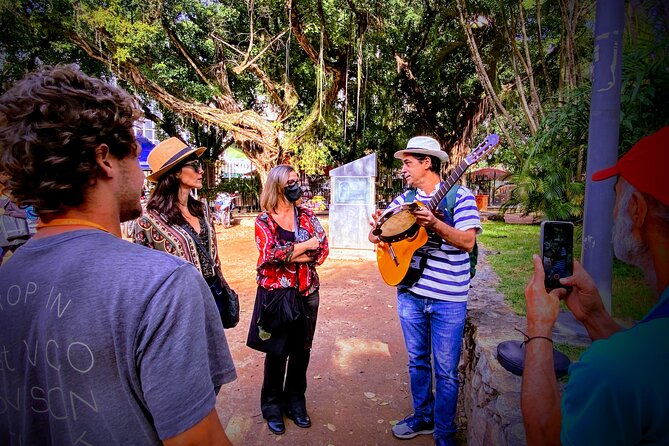
At $48.03 per person for about 3 hours, you’re paying for more than a walking guide. The ticket value also includes the tour guide plus a live guitar performance, which changes the feel of the experience.
It’s also a fair price for a small-group format. A cap of 8 people means the musician can keep the set flowing and the guide can keep the story clear without rushing you out the door.
If you’re comparing to cheaper walking tours, the difference is straightforward: here, the music is part of the itinerary. If you care about sound and not just sightseeing, that’s where the money goes.
Meeting points, timing, and what to plan for
You’ll start in Ipanema at Nossa Senhora da Paz / Ipanema (Rio de Janeiro, RJ 22411-001). The tour ends at Restaurante e Bar Garota de Ipanema, R. Vinícius de Moraes, 49, in Ipanema.
The meeting area is also described as the corner of Vinícius de Moraes and Prudente de Morais, which is useful if you’re using maps or street corners to orient yourself. The tour is near public transportation, so you shouldn’t need to worry about finding a private transfer just to arrive.
Two practical notes shape your planning:
- You’re on foot for about 3 hours, and transport isn’t included.
- Food, drinks, and water aren’t included, so plan your own refresh breaks before or after.
Also, the tour runs best with good weather. If it’s canceled due to poor weather, you’ll get offered a different date or a full refund.
Still browsing Rio de Janeiro? These are the ones we go back to





Stop 1: Praca Nossa Senhora da Paz and the opening guitar set
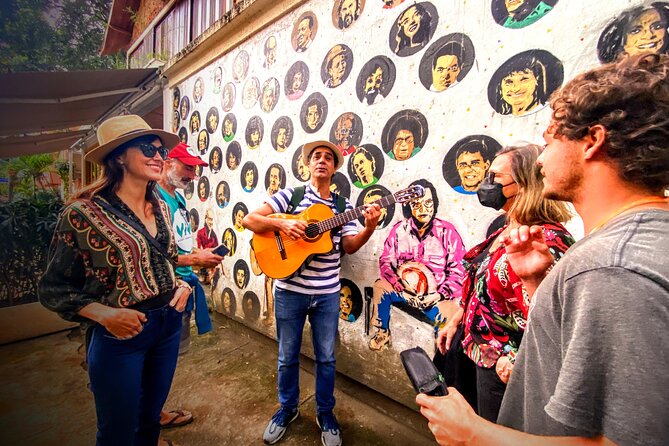
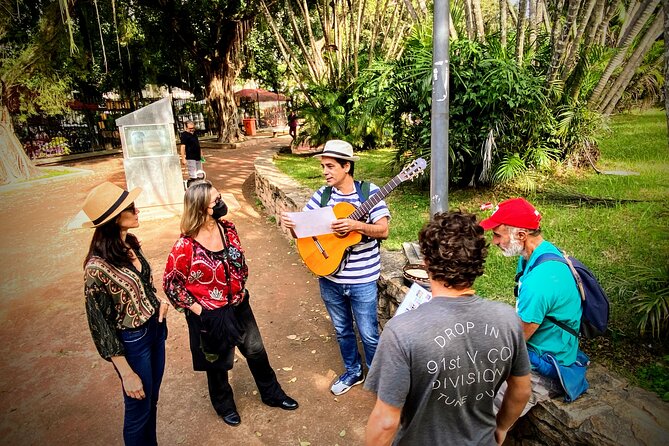
The first stop is Praca Nossa Senhora da Paz, where you start with a welcome and a briefing. This is where the guide sets the tone: Brazilian music history, then live guitar performance, so the tour feels like a story you can hear from the start.
This opening matters because it frames what you’re about to see. Before you hit the beach and the music landmarks, you get a basic map of how the sound connects to Rio’s culture. Then the guitar gives you a reference point you can carry into the next stops.
Tip for your first minutes: arrive ready to listen. Even if you think you know bossa nova already, this start helps you catch the connections the guide will keep returning to.
Stop 2: Praca General Osorio and the Hippie Fair link
From there you move to Praca General Osorio, where the guide connects the area’s Hippie Fair to the bossa nova moment. You get another guitar performance, again timed to the explanation.
What I like about this stop is that it treats music as something social. Instead of only focusing on composers and songs, it connects the sound to the public life around it—where people gather, where culture gets exchanged, and where new styles take shape.
The downside is also predictable: if you expected only beach and statue photos, this stop is more about atmosphere than scenery. It’s worth it for the context, but go with the right mindset.
Stop 3: Copacabana Beach and the sound of the movement
Next comes Copacabana Beach, which the guide highlights as important for the bossa nova movement. You’ll hear an explanation, followed by live guitar performance.
Copacabana can be a postcard even when you’re standing still, so this stop works on two levels. You get the visual energy of the coast, and you also get the music context for why those beaches matter in Brazilian culture.
This is also a good moment to notice how the tour handles contrast. You’re going from square life (with the Hippie Fair connection) to the open beach vibe, and the guide uses the guitar to keep the story tied together.
Stop 4: Dorival Caymmi statue and the Bahia connection
At the Estatua de Dorival Caymmi, the guide brings in a key musical link: the music from Bahia and how it relates to bossa nova. Then you get more guitar singing.
This stop is ideal if you want more than names. It gives you a pathway to understand where different regional influences feed into the styles you hear in Rio. Even if you’re not a deep music-history person, the structure makes it easy to follow.
One small consideration: statues are quick photo stops. You’ll get the explanation and performance, but don’t expect a long scenic pause here. The tour keeps moving.
Stop 5: Parque Garota de Ipanema and the story around the song
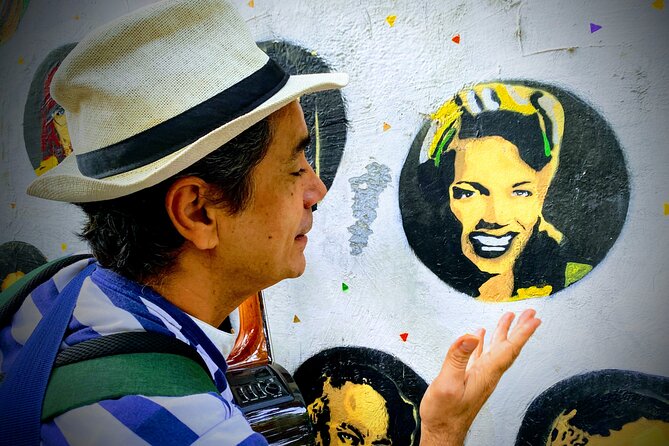
Then you reach Parque Garota de Ipanema, focused on who the Girl from Ipanema represents. You’ll hear the explanation and the guide-guitar performance tied to this theme.
This is where the tour becomes extra fun for people who recognize the lyrics but haven’t traced the meaning behind the imagery. It’s also a strong moment for first-timers because Ipanema identity is so visible here, and the music connection makes that identity feel more specific.
If you’re the type who likes to take photos while still paying attention, this stop is a sweet spot. You can capture the setting without losing the music context.
Stop 6: Tom Jobim statue and the composer spotlight
At the Estatua de Tom Jobim, the focus shifts to Antonio Carlos Jobim. You get another explanation and guitar performance.
This is a classic way for a walking tour to bring structure: place → person → song. It’s not only about memorizing who did what. It helps you understand why certain names keep showing up when people talk about bossa nova in Rio.
If you’re curious about the composer side of the music, this stop is likely your favorite. If you’re more into the feel of the songs than the credits, don’t worry. The guide keeps the performance central.
Stop 7: Casa de Cultura Laura Alvim and culture beyond the beach
The final stop is Casa de Cultura Laura Alvim, where you learn about Laura Alvim and her importance to Brazilian culture and music. You’ll end this segment with another guitar performance.
I like that the last stop widens the frame. The tour starts in squares and beach spaces, then it closes with a cultural center, which reminds you that music isn’t only street life—it’s also institutions, preservation, and people who keep culture visible.
When the tour ends at Garota de Ipanema, it feels like a natural wrap. You can grab a drink or continue your night without needing to re-navigate the area.
How the guitar makes the history stick
The most praised aspect of this tour is the live music itself. The guide often performs while explaining, which means the songs aren’t separated from the story. One highlight from the experience is how the guide’s guitar set stays confident and musical, with at least one performer noted for using a guitar made in Grenada, Spain.
That matters because you’re not only getting information. You’re getting sound cues: melody, rhythm, and the emotional shape of the music while you learn where it connects to Rio.
The guide style also tends to be interactive. The tour doesn’t feel like you’re being delivered a monologue. You’re part of the walk as you listen and absorb, which makes the full 3-hour stretch feel less long.
Who this tour suits best
This is a great fit if you:
- Like music tours where the sound is live and tied to the street locations.
- Want an Ipanema-focused walk that also touches Copacabana.
- Prefer a small group setting where the guide can keep the vibe personal.
If you’re hoping for a pure sightseeing route with no music focus, you might find it less satisfying. This tour is built around guitar singing and music explanations, so the walking is in service of the sound.
It also works for different levels of music knowledge. The guide brings the story in a way that’s accessible even if you’re not a bossa nova expert.
Quick checklist before you book
- You’re paying for guide + live guitar performance, so plan your time to actually listen.
- Bring your own plan for water and snacks, since those aren’t included.
- If you’re sensitive to weather changes, watch forecasts since the tour requires good weather.
- Since the group max is 8 people, it’s worth booking when your dates are firm.
Should you book the Bossa Nova Walking Tour?
I’d book it if you want Rio that feels musical, not museum-like. This tour gives you iconic stops around Ipanema and Copacabana while keeping the learning anchored to live guitar and singing.
Pass if you’re mainly hunting for long scenic pauses, or you don’t want to spend a focused chunk of your afternoon on music explanations. Also, if you hate walking and don’t want to manage water on your own, the no-transport and no-food setup is a deal-breaker.
FAQ
How long is the Bossa Nova Walking Tour?
It lasts about 3 hours.
How much does the tour cost?
The price is $48.03 per person.
What is included in the tour price?
You get a tour guide and a live guitar musician performance.
What is not included?
Transport is not included, and food, drinks, and water are not included.
Where does the tour start and end?
It starts at Nossa Senhora da Paz / Ipanema, Rio de Janeiro, RJ 22411-001. It ends at Restaurante e Bar Garota de Ipanema, R. Vinícius de Moraes, 49, Ipanema, Rio de Janeiro, RJ 22411-010.
Is there an admission fee for the stops?
No. Each listed stop is marked as having free admission tickets.
What is the maximum group size?
The tour has a maximum of 8 people.
What happens if the weather is poor?
The tour requires good weather. If it is canceled due to poor weather, you will be offered a different date or a full refund.
Are service animals allowed?
Yes. Service animals are allowed on this experience.
Where is the meeting point?
The meeting point is in Ipanema near the corner of Vinícius de Moraes and Prudente de Morais, at the start location near Nossa Senhora da Paz / Ipanema.
More Walking Tours in Rio de Janeiro






More Tour Reviews in Rio de Janeiro




Santa Teresa and Lapa, Three More Ways





Fresh off the review desk: newer Rio de Janeiro tours we have been out on





Santa Teresa & Lapa, compared.
 ★ 4.5Christ the Redeemer, Sugarloaf, Selaron & BBQ LunchFrom $692,428 reviews
 ★ 4.7Pub Crawl in Lapa with Cachaça Tasting and Live SambaFrom $33881 reviews
 ★ 4.7Christ, Selaron Steps, and Tijuca Park TourFrom $68857 reviews
 ★ 4.5Santa Teresa, Lapa, and Cinelândia with Tram Ride and Selarón StepsFrom $60274 reviews
 ★ 4.4Historic Rio and Santa Teresa Half-Day TourFrom $47228 reviews
 ★ 4.3Corcovado, Sugarloaf Mountain, and Selarón Steps 6-Hour TourFrom $146167 reviews
 ★ 4.5Ancient Rio and Santa Teresa Tour with Hotel pick-up and drop-offFrom $55154 reviews
 ★ 4.3Christ the Redeemer & Selarón Steps Half-Day TourFrom $58136 reviews
Browse the lists this tour appears in