
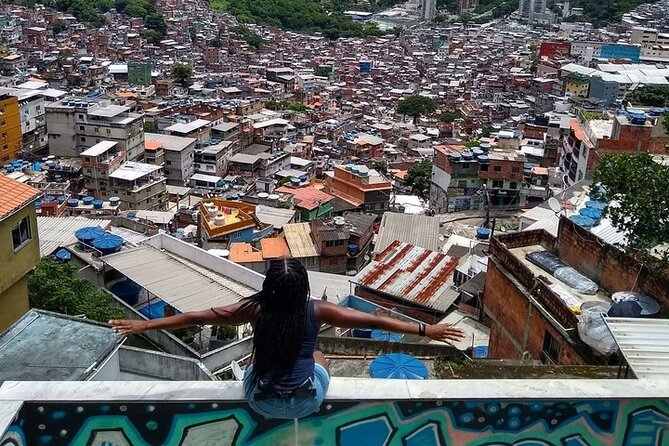
Reviewed · FAVELA COMMUNITY TOURS
Rocinha Walking Tour: Get a Feel for the Brazil’s Largest Favela (Shared Group)
Rocinha changes how you see Rio. This small-group walking tour (capped at 10) lets you spend time in the alleys with a Rocinha resident guide, including Carlos-style introductions that make the neighborhood feel human, not like a postcard. I love the mix of daily-life walking plus real stops where art, work, and community spaces show up. I also love that you get spectacular viewpoint time over Rio without doing everything yourself.
One thing to consider: you’ll be moving through tight streets and there’s an uphill moto-taxi segment, so it’s best if you’re comfortable with moderate walking and short rides on narrow paths.
In This Review
- Key takeaways before you go
- Why Rocinha is different from the usual Rio sightseeing
- Meeting at Copacabana and getting there with metro tickets
- Your Rocinha guide: how Carlos makes it feel personal
- The Salocin walking segments: alleys, daily life, and a handcraft center
- The moto-taxi climb and Morro do Laboriaux viewpoint
- Wark’s graffiti studio and the Wark Institute story
- A home visit with Mrs. Maria and the view over São Conrado
- Price and value: why $100 can make sense here
- Who should book this Rocinha walking tour
- Should you book it or pass?
- FAQ
- How long is the Rocinha Walking Tour?
- What group size is this tour?
- Where do I meet the tour?
- Is the guide bilingual?
- What transportation is included?
- Is food included?
- Are there any ticket costs at the stops?
- What fitness level do I need?
- Can I cancel for a full refund?
Key takeaways before you go

- Max 10 people means you’re not lost in a crowd, and your guide can actually talk with you
- Local Rocinha leadership brings context you can’t copy from a guidebook
- Moto-taxi ride included saves time and adds a little adrenaline on the climb
- Handcraft stops support residents making jewelry, decor, and souvenirs you can buy directly
- Wark’s studio + Wark Institute connects graffiti, education, and real opportunities in Rocinha
- Viewpoints like Morro do Laboriaux give you a high vantage over beaches and the Tijuca Forest slopes
More community-led walks through Rocinha
- Rio de Janeiro: Rocinha Favela Walking Tour with Local Guide★ 4.8 · 3,052 reviews
- Rio De Janeiro: Half-Day Rocinha Favela Walking Tour★ 4.7 · 2,272 reviews
- Rio: Favela Rocinha Tour with Local Guide & Secret Spots★ 4.7 · 218 reviews
- Favela Tour The Original, Rocinha & Vila Canoas since 1992★ 4.5 · 113 reviews
Why Rocinha is different from the usual Rio sightseeing
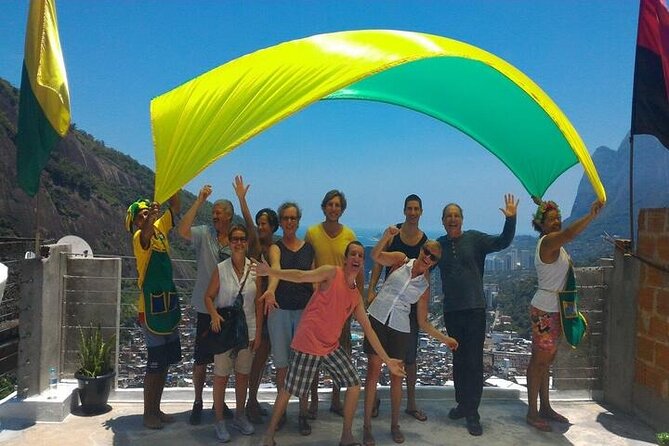
Rio is famous for its beaches and postcard landmarks, but Rocinha shows the city from street level. You’re not just looking from a distance. You’re walking through the neighborhood and learning how daily life works, how people connect, and how creativity shows up in unexpected places.
What I like about this kind of tour is the pace. A big bus tour can make places feel like they exist for tourists. Here, you’re guided to understand Rocinha as a real community with routines, workplaces, and local artists.
And yes, you still get the views. That combo matters: you see daily life up close, then you step into spots where you can look out over Rio and get your bearings.
Meeting at Copacabana and getting there with metro tickets
You start near Praça Cardeal Arcoverde in Copacabana (R. Barata Ribeiro). The tour includes subway/metro tickets, which is a practical plus because it removes the guesswork of getting to the start of the walking portion.
The tour ends back at the same meeting point, which makes planning easier. I also like that the time commitment is straightforward: about 3 hours total, with different segments built in so you’re not stuck walking non-stop.
Bring the usual urban-walking basics: comfortable shoes and a small bag you can keep close. You won’t need anything fancy, but you do want to move easily.
Your Rocinha guide: how Carlos makes it feel personal
This is led by a licensed bilingual private guide, and the big point is that the guide is from Rocinha. That isn’t a marketing detail. It changes what you notice, because you’re hearing how people experience the neighborhood, not just how an outsider explains it.
In the way this tour is described, the guide’s role feels more like host than lecturer. Carlos, for example, is noted for speaking very good English and for introducing visitors to family and friends as you pass by. When a guide brings you into those everyday moments, you get a sense of community instead of a one-way information dump.
Safety is handled by the guide and the plan: you follow a route on foot, use the included moto-taxi for the uphill portion, and keep moving as a group of up to 10. You still use common sense—stay with the group, keep your phone secured, and don’t wander ahead—but the structure is designed to keep things calm and manageable.
More tours led by the people who live there

The Salocin walking segments: alleys, daily life, and a handcraft center
The walking portion is where Rocinha stops being an idea and turns into a place you can picture. One segment takes you down the alleys for about an hour, giving you a close view of how people live day to day. This isn’t just architecture spotting. It’s about seeing how communities function—where people move, where conversations happen, and how the neighborhood flows.
Next, you’ll spend time in community-centered spaces connected to crafts. You’ll visit centers for handicraft production and then walk through the shopping area toward a handcraft fair. You’ll have a chance to see (and buy) things like jewelry, decorative objects, and souvenirs made by residents.
A practical note: this part can be stimulating. If you get uncomfortable in busy shopping areas, pace yourself. The value here is that you’re not being rushed; you’re being guided through where people work and sell, and you can choose what to support with your purchases.
If you want a simple way to be a good visitor, treat the craft stops like you’d treat a studio visit: ask questions, look carefully, and remember that buying supports the people creating what you see.
The moto-taxi climb and Morro do Laboriaux viewpoint
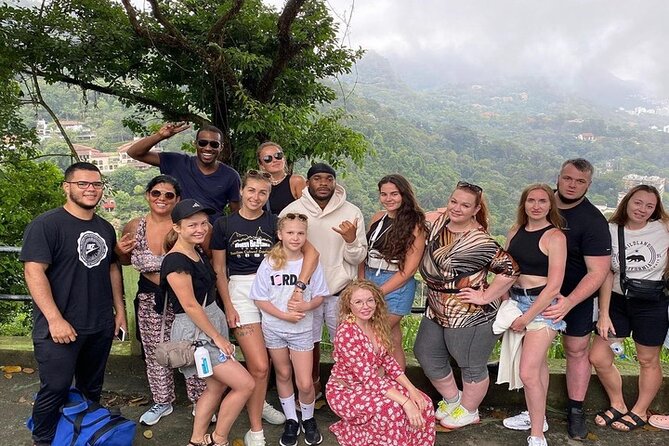
One of the most memorable parts is the included moto-taxi ride uphill—about 20 minutes. It’s described as narrow-alleys riding with real adrenaline. That means you should prepare your body for a short, bumpy ride rather than a smooth ride like you’d find in a taxi line.
Then you reach Morro do Laboriaux, where you spend about 30 minutes at the highest point in the favela. The payoff is the view: you get a privileged look over Rio, including beaches and the slopes of the Tijuca Forest.
This is where the tour earns its “wow” factor without turning the neighborhood into a theme park. You’re not doing a rooftop photo stop from a distance. You’re seeing how elevation changes your understanding of the city.
If you’re prone to motion sickness, consider that the moto-taxi is uphill and on tight routes. And bring a camera strap or something secure. You’ll want your hands free for quick picture moments.
Wark’s graffiti studio and the Wark Institute story
Graffiti in Rio can be just visual noise for some people. Here, you’re guided to understand graffiti as a pathway. You visit the studio of Wark, a Rocinha native described as a pioneer in the graffiti movement in Brazil’s largest favela.
The story is bigger than street art. Wark’s work attracted attention from prominent Brazilian leaders, including a mention of Lula da Silva, and his exhibitions draw interest across the city. There’s also a practical angle: the tour notes that he receives hundreds of reais for his works, which puts numbers behind the idea that art can turn into income.
Even better, Wark founded the Wark Institute, a school for young people in Rocinha to learn and practice art. That matters because it links creativity to opportunity, not just expression.
When you visit, the value is in how you’re positioned: you’re not just looking at walls. You’re seeing a creator’s workspace and learning how an art movement connects back to education and the neighborhood itself.
One consideration: some visitors may come expecting a quick photo moment. Plan for a real conversation instead. The best part is listening to the context.
A home visit with Mrs. Maria and the view over São Conrado
The final stop is intimate. You visit the home of Mrs. Maria, someone who has lived in Rocinha for 32 years. The time is about 10 minutes, and you spend it in a place with an honest, powerful feeling: from her house slab, you get a striking view of São Conrado beach and the favela itself.
This isn’t a long performance. It’s short, personal, and it leaves an impression fast. What makes it worthwhile is the perspective shift. You go from art, shops, and viewpoints to a home view where Rio is part of someone’s everyday reality.
Be respectful here. Keep your voice steady, don’t block the entrance or windows, and treat the visit like a shared moment, not a stage set.
Price and value: why $100 can make sense here
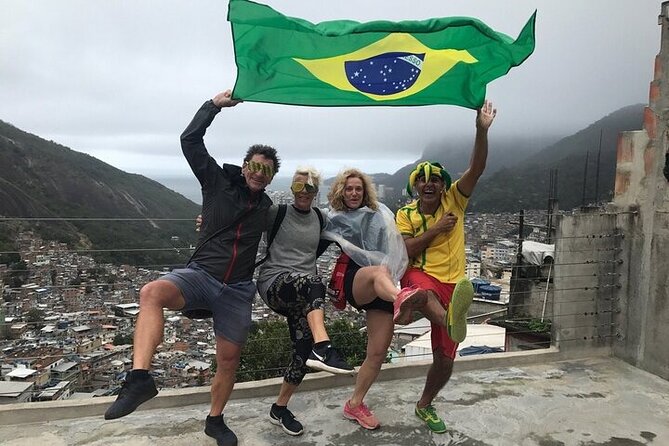
At $100 per person for about 3 hours, this isn’t a bargain-basement tour. But it also isn’t just paying for footsteps and a generic narration.
The included items add real value:
- Licensed bilingual private guide
- Subway/metro tickets
- Moto-taxi ride uphill
- Taxes and handling charges (VAT included)
You’re also getting a capped group size of 10, which is a big quality lever. In a neighborhood like Rocinha, overcrowding is the enemy of understanding. A small group means more guide attention and more time for questions.
Food and drinks are not included, so you may want to plan around that. If you’re hungry, you’ll need to grab something before or after the tour rather than expecting it mid-route.
If you want to judge value quickly, treat the $100 as payment for access plus context plus local logistics. The viewpoint and the craft/art stops are part of the experience, not just “nice extras.”
Who should book this Rocinha walking tour
This tour is a strong fit if you want:
- A local-led view of Rio beyond the usual sights
- Big viewpoints plus street-level daily life
- Art connections you can actually understand, like Wark and the Wark Institute
- A small-group format where the guide can talk with you
You might think twice if you prefer mostly flat walking or you get stressed by close streets and quick transitions. The route includes alleys and an uphill moto-taxi segment, so moderate physical fitness is part of the deal.
It also suits visitors who appreciate respectful cultural encounters. If you’re the type who asks good questions and listens, you’ll get more out of every stop.
Should you book it or pass?
If your goal is to see Rocinha as a real neighborhood, not a rumor or a scare story, this tour is worth serious consideration. The combination of a Rocinha resident guide, small group size, included transport, and stops tied to community crafts and art gives you a fuller picture than a quick driving tour.
Before you book, do two things:
- Wear shoes you trust on uneven, tight streets.
- Decide what you want from the day: learning and views, not a fast checklist of photos.
If that sounds like your kind of Rio day, book it.
FAQ
How long is the Rocinha Walking Tour?
It runs about 3 hours (approx.), with different segments for walking, riding, and viewpoint time.
What group size is this tour?
The tour has a maximum of 10 travelers, which keeps it small and personal.
Where do I meet the tour?
The meeting point is Praça Cardeal Arcoverde on R. Barata Ribeiro in Copacabana, Rio de Janeiro. The start location is listed as Cardeal Arcoverde / Copacabana Praça Cardeal Arcoverde – R. Barata Ribeiro – Copacabana, Rio de Janeiro – RJ, 22040-030, Brazil.
Is the guide bilingual?
Yes. The tour includes a licensed bilingual private guide.
What transportation is included?
The tour includes subway/metro tickets and an included moto-taxi ride up to the top of Rocinha hill.
Is food included?
No. Food and drinks are not included.
Are there any ticket costs at the stops?
The stop details state Admission Ticket Free for each listed stop, so there are no extra admission tickets noted for those visits.
What fitness level do I need?
The tour notes that travelers should have a moderate physical fitness level.
Can I cancel for a full refund?
Yes. Cancellation is free up to 24 hours in advance for a full refund.
More Tour Reviews in Rio de Janeiro






More Community-Led Tours



More Community Walks in Rocinha



Fresh off the review desk: newer Rio de Janeiro tours we have been out on





Favela Community Tours, compared.
 ★ 4.8Rocinha Favela Walking Tour with Local GuideFrom $363,052 reviews
 ★ 4.7Rio De Janeiro: Half-Day Rocinha Favela Walking TourFrom $352,272 reviews
 ★ 4.9Favela Santa Marta Top Tour with Local GuideFrom $28488 reviews
 ★ 4.6Favela Santa Marta Tour with Resident GuideFrom $27220 reviews
 ★ 4.7Favela Rocinha Tour with Local Guide & Secret SpotsFrom $43218 reviews
 ★ 4.5Vidigal Favela Tour and Two Brothers HikeFrom $88121 reviews
 ★ 4.5Favela Tour The Original, Rocinha & Vila Canoas since 1992From $33113 reviews
 ★ 5.02h30 circuit in the Vidigal FavelaFrom $5088 reviews
Browse the lists this tour appears in