
Reviewed · FAVELA COMMUNITY TOURS
Rio de Janeiro: Favela Santa Marta Tour with Resident Guide
Rio’s favelas don’t fit in a postcard. This Santa Marta tour is a real neighborhood walk led by Gilson Fumaça, who grew up there and knows the stories behind the streets, the views, and the community projects that keep people moving forward.
I like that the tour is built around social, cultural, and environmental purpose, not just sightseeing. You’ll learn how residents see the favela’s economic and cultural development, and you’ll visit places tied to education and inclusion—without the awkward feeling that you’re using people as background for your photos.
One heads-up: this experience is not for you if stairs are a problem. Expect plenty of walking and steps, and in hot weather that can be a lot.
In This Review
- Key things you’ll remember from Santa Marta
- Why Santa Marta feels different from the usual Rio favela tour
- Meet Gilson Fumaça: a local guide with serious community credibility
- The 150-minute route: cable car, viewpoints, and community stops
- Cable car segment: the quick reality check of Rio geography
- View point photo stop
- R. da Paciência, 4: scenic pass + visit
- Favela scene stop: culture on display, not behind glass
- Local restaurant visit
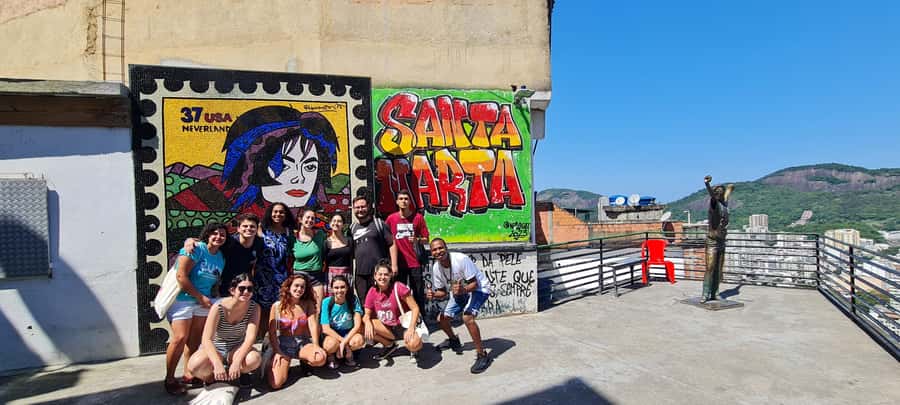
- Michael Jackson Square: break time and shopping
- The Michael Jackson connection isn’t just trivia
- Gilson’s home and Instituto Gilson Fumaça: why the visit matters
- Safety, comfort, and what to bring in Rio’s heat
- Price and value: why $27 can be fair (and when it might not be)
- Who should book this Santa Marta tour
- Should you book Favela Santa Marta Turismo Comunitário e Social?
- FAQ
- How long is the Rio de Janeiro Favela Santa Marta tour?
- Where do I meet the guide for the Santa Marta tour?
- What’s included in the price?
- What languages is the live guide available in?
- Is this tour suitable for wheelchair users or people with mobility impairments?
- What are the cancellation and payment options?
Key things you’ll remember from Santa Marta
- A guide who lives there: Gilson Fumaça isn’t visiting the favela for work—he grew up in Santa Marta and runs community initiatives from inside the neighborhood.
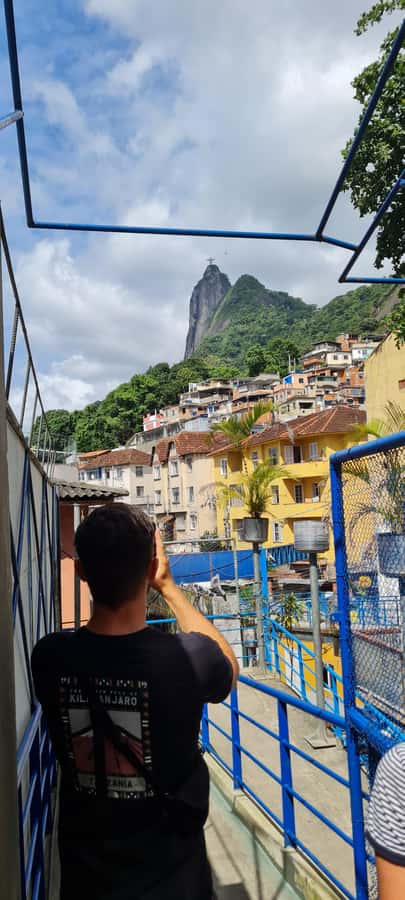
- The route includes big Rio views: cable car time, viewpoints, and photo stops with sights of landmarks like Christ the Redeemer and Sugarloaf on clear days.
- You’ll connect to culture and daily life: from local hangouts and a favela scene stop to downtime at Michael Jackson Square.
- History shows up in unexpected places: you’ll hear about Queen Elizabeth II’s 1968 visit and how Santa Marta ended up in Michael Jackson’s They Don’t Care About Us (1996).
- Access to real spaces: the tour can include a look at Gilson’s home and the wider work of Instituto Gilson Fumaça.
- Support with a purpose: the tour is structured so your booking feeds back into community programs.
Up the hillside in Vidigal and Santa Marta
- Rio de Janeiro: Favela Santa Marta Tour with Resident Guide★ 4.6 · 220 reviews
- Rio de Janeiro: Vidigal Favela Tour and Two Brothers Hike★ 4.5 · 121 reviews
- 2h30 circuit in the Vidigal Favela★ 5.0 · 88 reviews
- Rio de Janeiro: Private Sunrise Tour at Mirante Dona Marta★ 4.7 · 81 reviews
Why Santa Marta feels different from the usual Rio favela tour
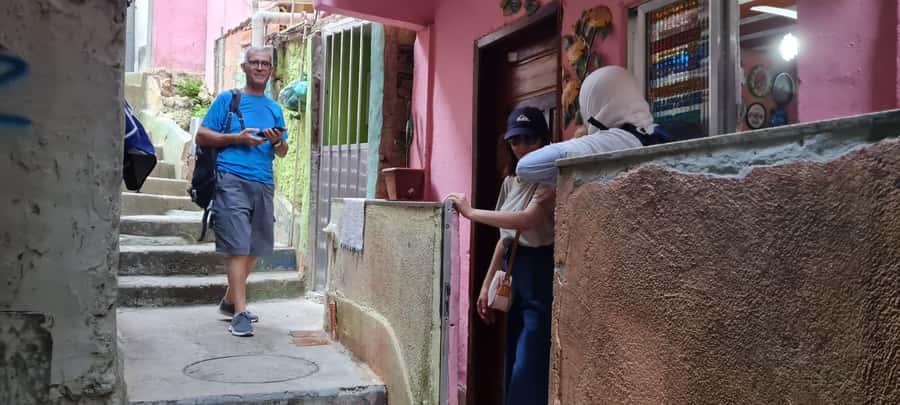
If you’ve only seen Rio favelas through TV or crime headlines, Santa Marta can feel like a course correction. The setting is still the setting—tight streets, crowded community spaces, and everyday hustling—but this tour reframes what you think you’re looking at.
What makes it work is the guide’s relationship to the place. Gilson isn’t presenting a script. He’s explaining how it feels to live there: what families worry about, what kids look forward to, and what residents are building through education and local projects. That tone matters because it changes the whole vibe. Instead of you staring at a place you do not understand, you’re learning how residents understand it themselves.
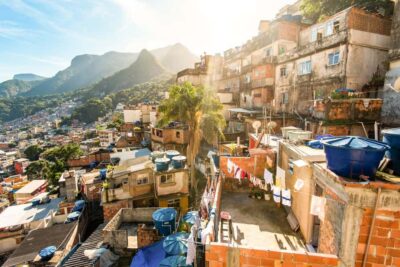
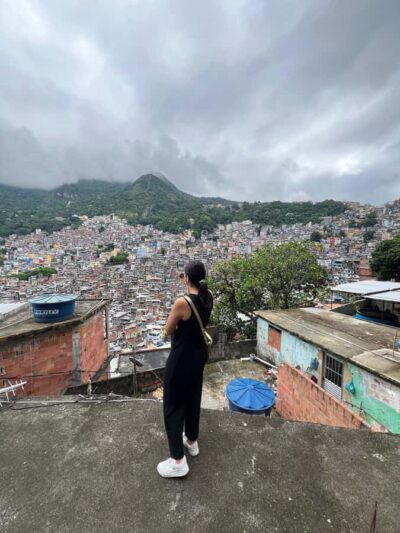
And yes, you also get classic Rio scenery. The itinerary is designed so you’re not stuck in alleys the whole time. You’ll get viewpoints and photo stops, plus a cable car segment that gives you a fast, iconic perspective of the geography—Rio’s hills, its density, and the way neighborhoods cling to the slopes.
Meet Gilson Fumaça: a local guide with serious community credibility
Gilson Fumaça is the kind of guide you want when you care about authenticity. He was born and raised in Santa Marta and has been a credited tourism guide tied to the Ministry of Tourism, with more than 30 years of involvement in community and social projects.
His story is part of the reason the tour hits so hard. He doesn’t just talk about the favela as an idea; he shares his own path—childhood, youth, and adult life. That personal thread helps you understand why residents in Santa Marta talk about struggle and resistance while still celebrating wins. It’s not a sad performance and it’s not a sales pitch. It’s day-to-day reality with context.
There’s also something practical here: Gilson knows the neighborhood connections that keep you moving smoothly. Many guests come in nervous about safety. On this tour, you start with a safety briefing, and you’ll feel the steadiness of being guided by someone who belongs in the space—not someone dropping in from outside.
The 150-minute route: cable car, viewpoints, and community stops
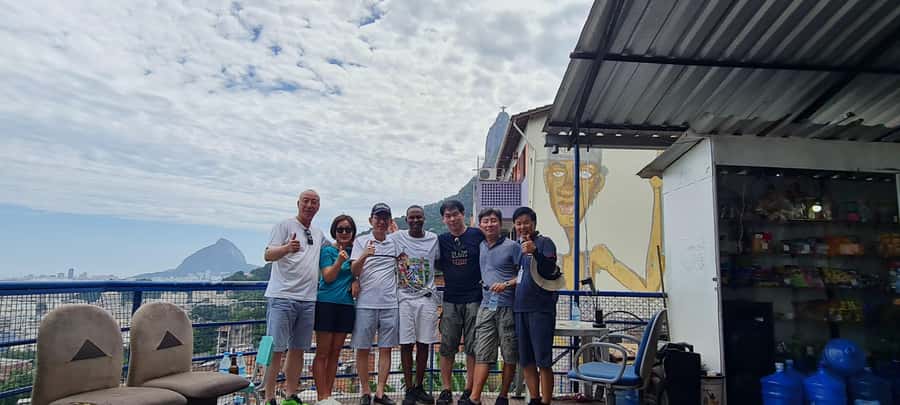
The tour runs about 150 minutes, and it moves at a pace that gives you time to look, ask, and take photos without turning everything into a sprint.
You typically begin at R. São Clemente, 320 at the Tourist Information point (this can vary slightly depending on the option you book). Then you’ll start with a 10-minute safety briefing. This is not the boring kind of briefing. It’s the kind that helps you understand how to behave, where to watch your footing, and how to stay comfortable.
From there, the route includes:
More tours led by the people who live there
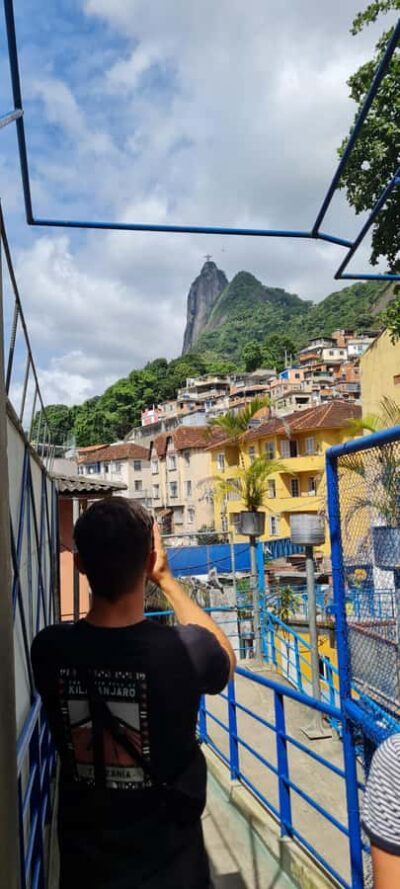
Cable car segment: the quick reality check of Rio geography
There’s a cable car stop (about 20 minutes) early in the experience. Even if you’ve ridden one of Rio’s iconic systems before, this one feels different because it places you above the neighborhood you’re about to walk through. You see the hills as more than scenery—you see the terrain that shaped daily life.
View point photo stop
Next comes a viewpoint/photo stop (around 10 minutes). This is where you’ll likely take a few photos to match what you’re hearing. On a clear day, the big landmarks can show up sharply, and that makes the story feel connected to the city instead of separated from it.
R. da Paciência, 4: scenic pass + visit
You’ll stop at R. da Paciência, 4 for another photo stop and visit (about 10 minutes), including scenic views on the way. This part helps you see how the neighborhood flows—where sightlines open up, where turns narrow things down, and how residents mark important spots in their own way.
Favela scene stop: culture on display, not behind glass
Then you’ll reach the Favela Scene visit (around 15 minutes). It’s short, but it’s often the kind of stop where your perspective shifts. Instead of treating Santa Marta like a backdrop, it gives you something to watch and understand as part of local life and community identity.
Local restaurant visit
The itinerary includes a local restaurant visit (about 20 minutes). This is one of those practical experiences that also does cultural work: you see how social time works in the neighborhood. It’s also a good chance to cool off and reset—especially if the weather is pushing heat.
Michael Jackson Square: break time and shopping
You’ll have break time at Michael Jackson Square (around 15 minutes), with free time and shopping. This is where the tour connects pop culture history to the exact streets you’re walking.
If you’re curious about why Michael Jackson shows up in Santa Marta in the first place, the guide’s stories make it clear. You’ll hear about the 1996 filming of They Don’t Care About Us, and you’ll also learn about other historical connections residents remember, like Queen Elizabeth II’s 1968 visit.
The Michael Jackson connection isn’t just trivia
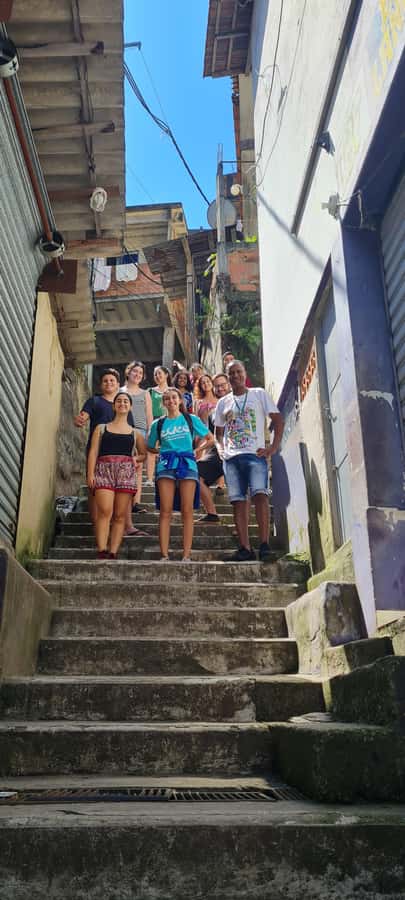
Pop-culture history can feel like filler on tours. On this one, it’s more than trivia because it gives Santa Marta a documented, globally recognized moment—something residents can point to without outsiders explaining them to death.
When Gilson talks about the Michael Jackson video, you’re not just getting the title. You’re hearing what that kind of attention meant for people on the ground. One guest highlight that stands out is how the guide’s involvement and neighborhood connections are part of the story; it’s the difference between hearing history in general terms and seeing how it sits inside the community’s own memory.
Michael Jackson Square is also a useful break point. Even if you’re not shopping, the pause helps you digest what you’ve learned so far. You’re more likely to remember names, places, and themes when you aren’t rushing.
Gilson’s home and Instituto Gilson Fumaça: why the visit matters
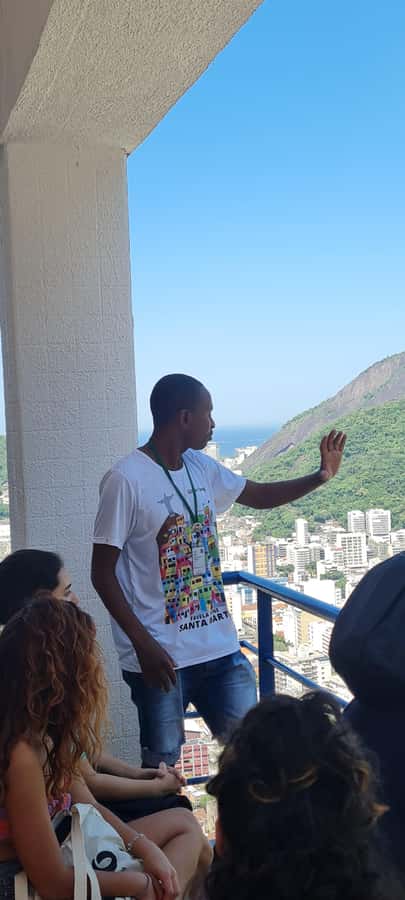
Some tours promise authenticity but avoid real-life rooms. This one leans into reality.
You may visit Gilson’s home, including time with his mother, Maria Helena, who is known for collecting watches—400-plus clocks throughout the house. The details are charming, but the bigger value is how the visit reframes your idea of what a favela home looks like and how space works inside the neighborhood. The home includes three floors, with a host lodging setup on the second level, and a social rooftop space with food and drinks plus city views of landmarks like Christ the Redeemer and Sugarloaf.
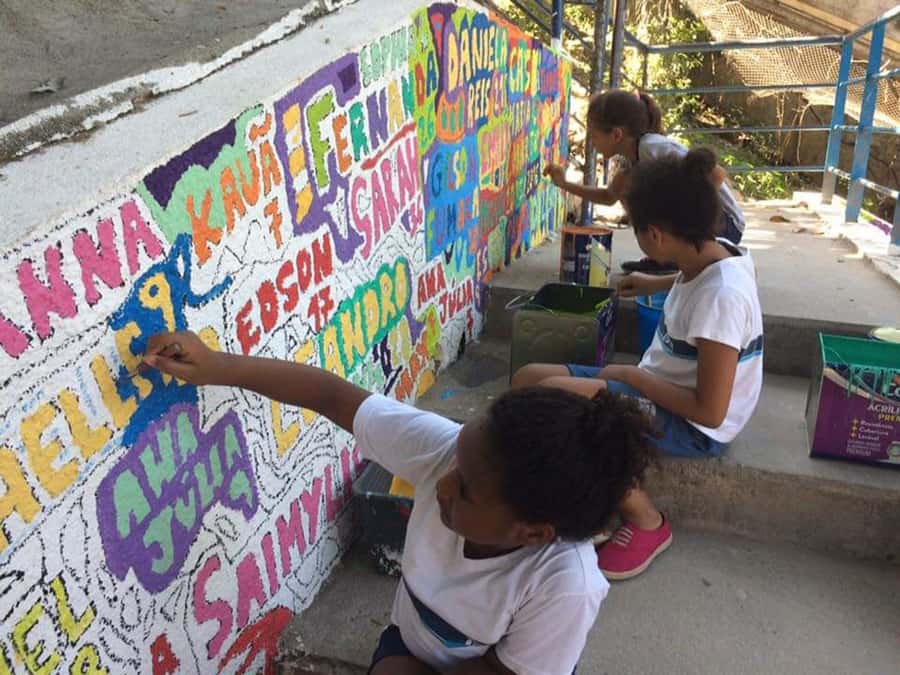
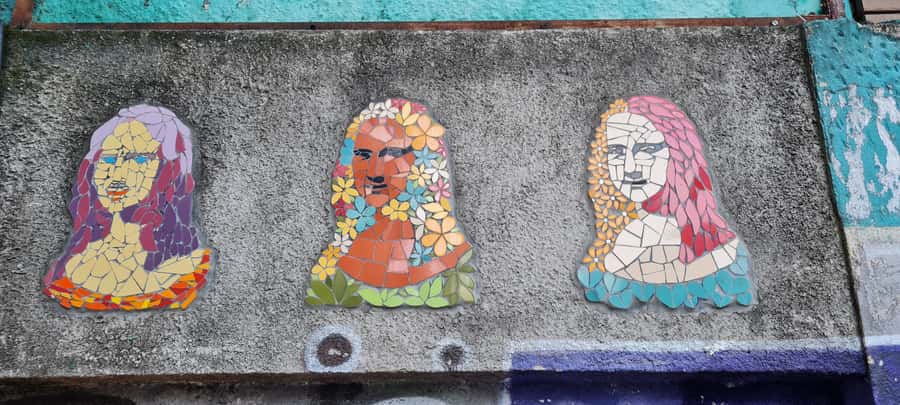
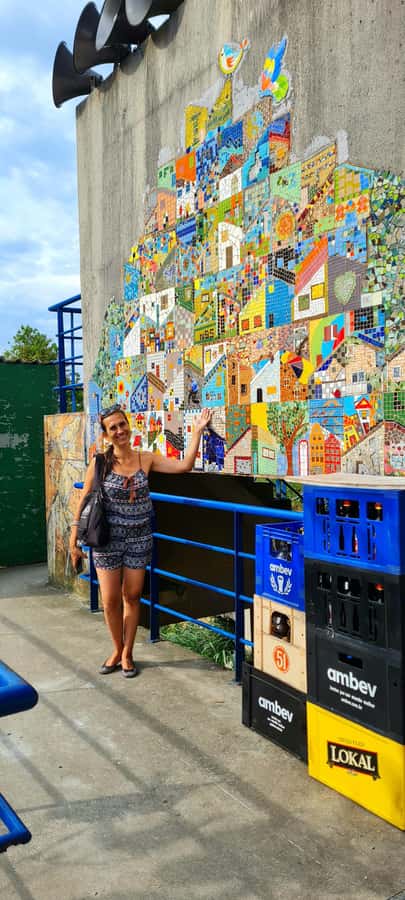
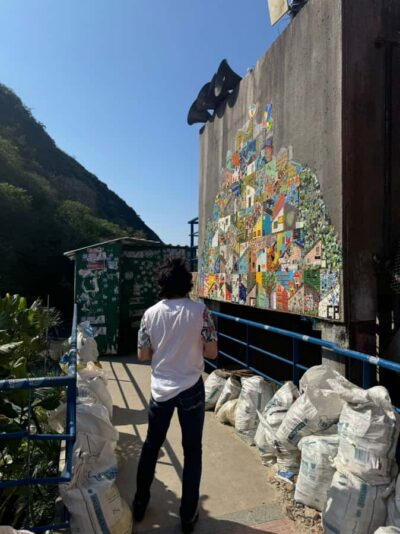
Then there’s the community work: the Instituto Gilson Fumaça and related educational, linguistic, and environmental projects. You’ll hear about programs tied to inclusion—things like art and music, plus language learning (including English and Spanish). There are also references to projects like wall mosaics and other community activities, which is how education becomes visible in the neighborhood instead of something imported from outside.
This is where your money starts to feel like more than a ticket price. One rider highlighted that a portion of earnings returns to community projects. Even if you’re not tracking exact percentages, the tour is clearly designed so guests are not just observing—they’re supporting the systems residents run.
Safety, comfort, and what to bring in Rio’s heat

I can’t pretend every visitor feels comfortable going into a favela. That worry is normal, especially if your only reference point is bad news. The good part here is that safety is part of the structure: you get a briefing, and the guide stays connected to the neighborhood at every step.
That said, comfort is not automatic. This tour includes walking and many steps. One guest even mentioned it felt too demanding in extreme heat and that some people cut it short to return to the cable car.
So here’s how you can stack the odds in your favor:
- Wear comfortable shoes with grip. You’ll be moving over uneven surfaces.
- Bring sun protection. Even shaded areas can still feel hot.
- Plan your energy. If you’re older or easily fatigued, tell the guide early so you can pace.
Also note: the tour is not suitable for people with mobility impairments and not for wheelchair users. If you need accessibility accommodations, you’ll want to choose a different Rio activity.
Price and value: why $27 can be fair (and when it might not be)
At around $27 per person for about 150 minutes, this can feel like a bargain or a splurge depending on what you expect from a tour.
Here’s the value logic:
- You’re paying for a resident guide with deep neighborhood connections.
- You’re paying for access to community spaces and stories that outsiders usually don’t get.
- You’re paying for a route with viewpoints and a cable car segment that helps you understand the geography.
- You’re supporting education and inclusion projects tied to Instituto Gilson Fumaça and the broader Santa Marta community work.
If your idea of value is only scenic views, you may feel the tour is “too personal.” But if you want a Rio experience that goes beyond the main postcard map, the structure makes sense. You’re getting context, not just photos.
The only time I’d pause is if your goal is a lightweight, sit-down sightseeing loop. This is walking and listening, with stops that ask for your attention. It’s better matched to curious travelers than to people who want zero effort.
Who should book this Santa Marta tour
This is a strong fit if:
- you want a responsible favela tour with a community-built purpose
- you care about how locals talk about social and cultural change
- you’re comfortable walking and can handle steps in warm weather
- you like guides who share personal history, not just facts
It may not be your best choice if:
- you have mobility limitations or use a wheelchair
- you want a fully relaxed sightseeing pace
- you’re likely to struggle with heat and long stair sections
Should you book Favela Santa Marta Turismo Comunitário e Social?
If you’re on the fence, I’d use this simple checklist.
Book it if you want Rio in two layers: the skyline and the lived reality beneath it. The tour’s core advantage is Gilson Fumaça—someone rooted in Santa Marta who can explain what you’re seeing, why it matters, and what residents are building next.
Skip it if you need step-free access or if you want a mostly passive experience. The tour has structure and movement, and it’s best enjoyed with comfortable shoes and a flexible mindset.
If you do book, aim for a day that’s not too murky. Clear visibility can make the viewpoint moments far more satisfying, especially when you’re looking toward big landmarks.
FAQ
How long is the Rio de Janeiro Favela Santa Marta tour?
The tour lasts about 2 hours to 150 minutes.
Where do I meet the guide for the Santa Marta tour?
Meeting point is at R. São Clemente, 320, Tourist Information, though the exact meeting point may vary depending on the option booked.
What’s included in the price?
You get a local guide and bottled water.
What languages is the live guide available in?
The live guide speaks English, Spanish, and Portuguese.
Is this tour suitable for wheelchair users or people with mobility impairments?
No. It is not suitable for people with mobility impairments and it’s not for wheelchair users.
What are the cancellation and payment options?
You can cancel up to 24 hours in advance for a full refund. You can also reserve now & pay later to keep your plans flexible.
More Tour Reviews in Rio De Janeiro






More Community-Led Tours



More of Vidigal and Santa Marta




Fresh off the review desk: newer Rio De Janeiro tours we have been out on





Favela Community Tours, compared.
 ★ 4.8Rocinha Favela Walking Tour with Local GuideFrom $363,052 reviews
 ★ 4.7Rio De Janeiro: Half-Day Rocinha Favela Walking TourFrom $352,272 reviews
 ★ 4.9Favela Santa Marta Top Tour with Local GuideFrom $28488 reviews
 ★ 4.7Favela Rocinha Tour with Local Guide & Secret SpotsFrom $43218 reviews
 ★ 4.5Vidigal Favela Tour and Two Brothers HikeFrom $88121 reviews
 ★ 4.5Favela Tour The Original, Rocinha & Vila Canoas since 1992From $33113 reviews
 ★ 5.02h30 circuit in the Vidigal FavelaFrom $5088 reviews
 ★ 5.0Half Day Hiking Tour Morro Dois Irmaos and Favela VidigalFrom $5365 reviews
Browse the lists this tour appears in