
Reviewed · SANTA TERESA & LAPA
Rio Downtown Tour with Selaron Metropolitan Cathedral and more
Three hours can change your Rio map. This is a fast, well-paced taste of downtown Rio with the Selarón Steps and Mosteiro de São Bento as the big emotional hits. You’ll also get sweeping stops along Avenida Presidente Vargas, the modern Cathedral, and the views from Aterro do Flamengo. The only real catch: it’s a whirlwind, so you’ll spend more time looking from the street than wandering deeply at every stop.
I like that the tour stays small (max 19 travelers) and runs with hotel pickup in Copacabana, Ipanema, and Leblon. Guides like Monica, Victoria, Sabina, Arthur and Andre, and Vincent Thomas are known for keeping the story clear and the route moving—so you come away with context, not just photos. Just keep your expectations aligned with the clock: traffic and short photo stops mean you should choose this tour for orientation and highlights, not a slow, laid-back afternoon.
In This Review
- Key highlights that make this tour worth your afternoon
- A fast intro to Rio’s core: downtown landmarks without the full-day commitment
- Pickup in Copacabana, Ipanema, or Leblon: less stress, more sightseeing time
- Mosteiro de São Bento: a working abbey with tiles, iron, and old-school quiet
- Metropolitan Cathedral of Saint Sebastian: Mayan-pyramid vibes and surprisingly good acoustics
- Avenida Presidente Vargas and the downtown power line: palaces, squares, and big-stadium context
- Fort Copacabana: a public military base with the Army Historical Museum
- Lapa arches and Rua do Lavradio: old structures plus late-night street life energy
- Escadaria Selarón: the world-famous steps, and why the colors hit
- Aterro do Flamengo: bay views plus Outeiro da Glória, WWII memory, and modern art surroundings
- Rua do Lavradio and the Lapa pulse: when you have time to wander a little
- Is this tour rushed? Yes, but it’s also the point
- Guides and small-group feel: why the narration changes everything
- Value check: is $74.50 a smart use of your time in Rio?
- Should you book this Rio Downtown tour?
- FAQ
- Where does the tour start and how does pickup work?
- What time does the tour begin?
- How long is the Rio Downtown Tour?
- What’s included in the price?
- Which admissions are included or free?
- How many people are on the tour?
- Can I cancel for a refund?
Key highlights that make this tour worth your afternoon

- Hotel pickup in Zona Sul: Easy start from Copacabana, Ipanema, or Leblon, with an air-conditioned ride to downtown.
- Mosteiro de São Bento stops you can actually enter: A real working Benedictine abbey, still active since the late 1500s.
- Metropolitan Cathedral that feels otherworldly: Mayan-pyramid inspired shape, plus standout stained glass and acoustics.
- Lapa area in the mix: Get the Arcos da Lapa vibe and the Rua do Lavradio food-and-antiques street energy.
- Selarón Steps with the backstory: Not just colorful tiles—Jorge Selarón’s long obsession and national-flag colors.
- Aaterro do Flamengo viewpoints: Quick hits at places like the WWII memorial, the Modern Art Museum area, and Church of Outeiro da Glória.
More of bohemian Santa Teresa and Lapa
- Rio: Christ the Redeemer, Sugarloaf, Selaron & BBQ Lunch★ 4.5 · 2,428 reviews
- Rio: Pub Crawl in Lapa with Cachaça Tasting and Live Samba★ 4.7 · 881 reviews
- Rio de Janeiro: Christ, Selaron Steps, and Tijuca Park Tour★ 4.7 · 857 reviews
- Santa Teresa, Lapa, and Cinelândia with Tram Ride and Selarón Steps★ 4.5 · 274 reviews
A fast intro to Rio’s core: downtown landmarks without the full-day commitment
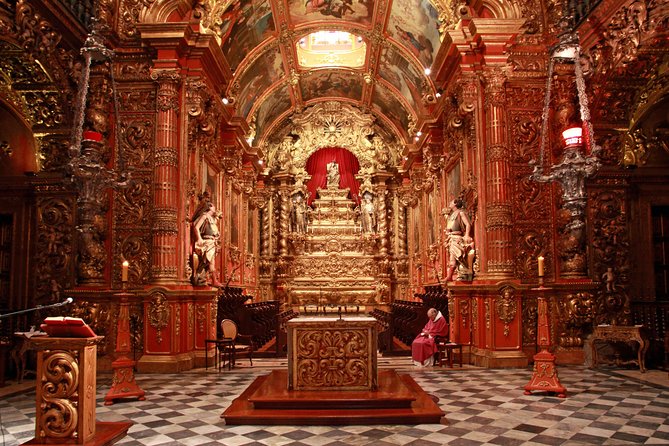
This tour is built for people who want the big Rio “wow” moments in one afternoon. You start with the historic religious heart of downtown, then pivot to the City’s power-corridor architecture along Avenida Presidente Vargas. After that, you sweep through Lapa and finish along Aterro do Flamengo, where the bay and the skyline help everything feel connected.
That structure matters. Rio can feel split into separate worlds—Copacabana is one mood, Lapa another, Flamengo a third. This route stitches those moods together so you can understand where you’re standing and why the city looks the way it does.
Pickup in Copacabana, Ipanema, or Leblon: less stress, more sightseeing time
You’ll be picked up from your hotel in Copacabana, Ipanema, or Leblon, then driven by a minivan (air-conditioned). The stated start time is 1:30 pm. The tour ends back at the meeting point area, with drop-off back at your hotel for selected hotels.
Practical tip: because this tour is timed tight, being punctual at pickup helps. Downtown Rio traffic can be unpredictable, and short stops mean you’ll feel delays more than you would on a slower tour.
Also, keep in mind that the Maracanã and stadium-style stops are outside only. You’re there for quick photos and context, not for a full stadium visit.
Mosteiro de São Bento: a working abbey with tiles, iron, and old-school quiet
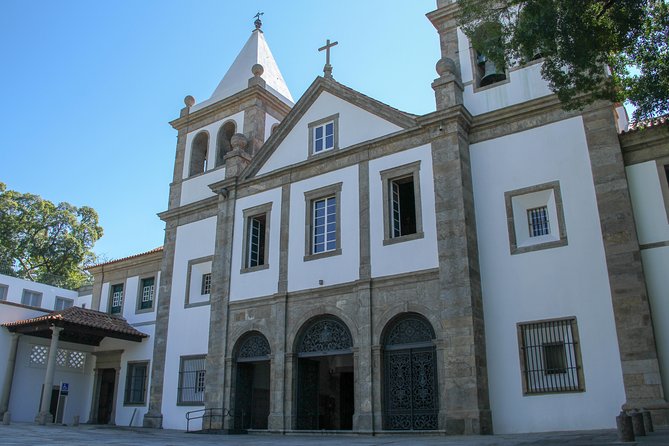
The Mosteiro de São Bento (Monastery of St. Benedict) is one of those places where the building itself teaches you how old Rio once was.
The abbey was founded by Benedictine monks who arrived from Bahia in 1590, and it’s still operational today. That living component is a big deal. You’re not just looking at ruins; you’re stepping into a functioning religious space.
What makes the entrance area worth your attention is the architecture. The façade ties to a Mannerist project, with a centralized edifice and three archways at the entrance, plus a triangular gable. Two towers flank the entry, each crowned with pyramidal spires. Inside, you pass through an entrance archway to a tiled porch and iron gates dating to the nineteenth century.
You get about 30 minutes here, and the admission ticket is included. If you care about historic Rio beyond the famous murals and monuments, this stop gives you that anchor.
Old downtown Rio, a few more ways to see it



Metropolitan Cathedral of Saint Sebastian: Mayan-pyramid vibes and surprisingly good acoustics
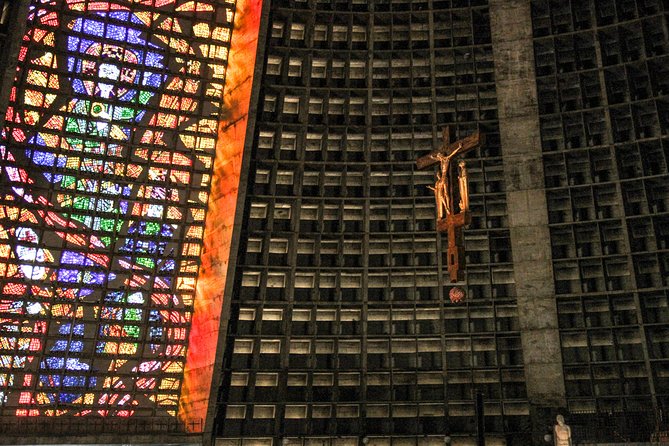
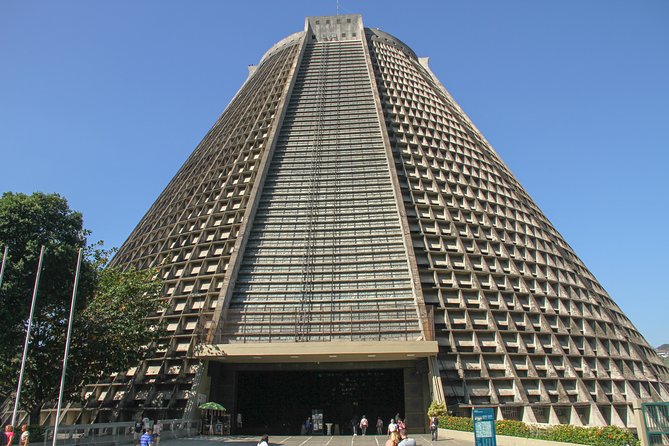
Next comes the Metropolitan Cathedral of Saint Sebastian. The shape is conical, and it’s inspired by Mayan pyramids from Mexico. The idea is that the form helps create a sense of proximity to God. That’s the spiritual explanation—what you’ll notice first is how dramatic it looks against the skyline.
Inside, the stained glass windows run from floor to ceiling and form a cross at the top. The tour description also points out acoustics described as heavenly, which tells you this space is designed for sound as much as sight.
You’ll have around 30 minutes here, and admission is free. In a tight 3-hour schedule, it’s a strong use of time because it’s both visually striking and different from the older stone feeling of São Bento.
Avenida Presidente Vargas and the downtown power line: palaces, squares, and big-stadium context
From the Cathedral zone, the route connects to the wider downtown story. You’ll see Maracanã Stadium and the Sambadromo, then head down Avenida Presidente Vargas, a major artery where Rio’s civic and institutional buildings crowd together.
Along that avenue, you’ll pass by or view from the vehicle:
- Central Railway Station
- Duque de Caxias Palace
- Itamaraty Palace
- Campo de Santana
- Tiradentes Square
- Avenida Chile
This is one of the tour’s smartest choices if you’re new to Rio. Those stops explain how the city grew and where the government-and-transport muscle is located. Without a route like this, you might hit the Cathedral and the steps, but miss the “how Rio runs” geography.
Then there’s Maracanã. You won’t go inside. The plan is a quick stop outside with photos near Bellini’s statue. You’ll spend about 15 minutes. If you’re a football fan, that’s still enough to orient yourself—even if you won’t get the full stadium experience.
Fort Copacabana: a public military base with the Army Historical Museum
Later, you’ll reach Fort Copacabana, described as a military base at the south end of Copacabana that defines the district’s identity. The good part for visitors is that it’s open to the public.
The area includes the Museu Histórico do Exército (Army Historical Museum) and a coastal defense fort. Even if you don’t go deep in every corner during the tour timing, it’s a memorable contrast to the city’s more playful beachfront image.
This stop also balances the route. After religious architecture and urban streets, you get a reminder that Rio’s coastline has long been a strategic line—history you can feel in the landscape of defenses.
Lapa arches and Rua do Lavradio: old structures plus late-night street life energy
The tour includes the Lapa area, including the famous aqueduct commonly called Arcos da Lapa. The Carioca Aqueduct sits in the city center and has an important functional history: since the end of the 19th century, it has served as a bridge for a popular tram that connects the city center with Santa Teresa uphill (the Santa Teresa Tramway).
You’ll see the arches as part of the downtown-to-Lapa transition. It’s not just a photo wall. It’s an example of how Rio mixed engineering with everyday movement.
Then you shift toward Rua do Lavradio in Lapa. This is known for antique shops, bars, and restaurants that attract people constantly. The tour also notes a street fair on the first weekend of each month, when national and foreign tourists and locals gather.
You’ll have about 20 minutes here. That’s enough time to feel the vibe and grab a quick look, but not enough for a full sit-down meal unless you’re okay with skipping something else.
Escadaria Selarón: the world-famous steps, and why the colors hit
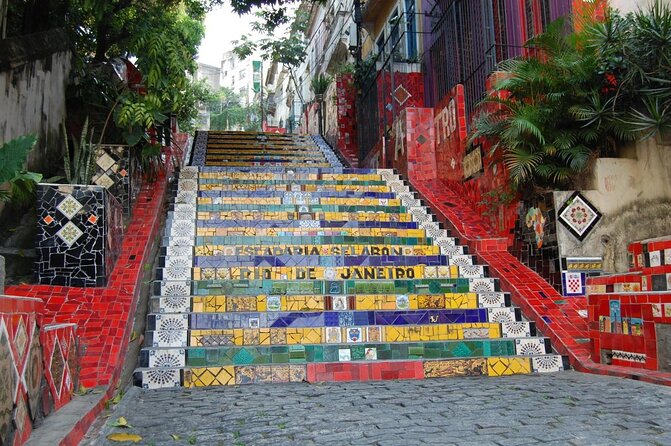
No Rio downtown route feels complete without the Escadaria Selarón. These steps are famous worldwide, but the story is what makes them matter.
They’re the work of Chilean-born artist Jorge Selarón, who framed them as a tribute to the Brazilian people. In 1990, he started renovating dilapidated steps in front of his house. Neighbors initially mocked his color choices as he covered the tiles in fragments of blue, green, and yellow—the colors of the Brazilian flag.
At first, it was described as a side project tied to his main passion: painting. But it became an obsession. He sold paintings to fund the work because money ran out, and the task turned long and exhausting until he covered the entire set of steps with tiles, ceramics, and mirrors.
You’ll get about 30 minutes at the steps, and admission is free. If you want to get photos without rushing, go early in your allotted time window. The steps get crowded quickly, and short time blocks mean you should decide fast whether you’re here for photos, quiet looking, or both.
Aterro do Flamengo: bay views plus Outeiro da Glória, WWII memory, and modern art surroundings
From Lapa and the steps, the route rolls along Aterro do Flamengo, a large waterfront park built on reclaimed land from the bay. It covers nearly 300 acres (about 1.2 km²) and was completed in 1965. The gardens are attributed to landscape designer Roberto Burle Marx.
This is where the tour becomes more than sightseeing. You see Rio’s coastline and understand why the city’s neighborhoods and viewpoints feel tied together by water.
You’ll also pass by or see:
- Church of the Outeiro da Glória
- Monument to the Fallen in World War II
- Museum of Modern Art (surroundings/area)
Even with short stops, this stretch helps you recalibrate. It gives you sky, water, and breathing space before you return to the hotel.
Rua do Lavradio and the Lapa pulse: when you have time to wander a little
If you finish the tour and still have energy, you’ll be in the right mental zone to walk. Rua do Lavradio’s antique shops and bar-and-restaurant scene are the kind of place where you can feel the street culture without needing tickets.
Because your time inside the tour is limited, think of this part as a sample. You’re getting the reason people come back, not the entire night out.
If you’re traveling with a tight schedule—like you’re only in Rio for a short stop between bigger sights—this is one of the best ways to get the city’s rhythm without burning daylight.
Is this tour rushed? Yes, but it’s also the point
The tour is designed as a highlights pass. Many stops run 15–30 minutes, and a good chunk of the time is spent on the ride between neighborhoods. That has two effects:
- You’ll see more than you would by jumping around on your own.
- You won’t have the long, slow “let’s hang out here” experience at every single place.
This matters most at the Selarón Steps and inside São Bento / the Cathedral. They’re the most emotionally satisfying stops, so spending only around half an hour can feel short if you love lingering.
On the other hand, the limited timing is what keeps the day manageable and helps you fit downtown into a beach-focused schedule.
Guides and small-group feel: why the narration changes everything
The small-group size (up to 19) is not just a number. It gives your guide room to keep the group organized and still offer context.
From the guide comments associated with this tour, people like Monica and Victoria are described as engaging and passionate about local storytelling. Others (like Sabina and Vincent Thomas) are noted for clear English and making sure the route feels smooth. Arthur and Andre are mentioned as a strong team—handling traffic efficiently and adding architecture and history context on the move.
Even if you only catch bits and pieces while riding between stops, the difference is real: you end up understanding what you’re looking at, rather than just collecting landmarks.
Value check: is $74.50 a smart use of your time in Rio?
At $74.50 per person for about 3 hours, the value mostly comes from three things.
First: hotel pickup and an air-conditioned vehicle. That saves time and effort, especially when downtown traffic can eat your schedule.
Second: included admission where it counts. Mosteiro de São Bento includes the ticket, and the Metropolitan Cathedral is free. Those are meaningful savings compared to paying as you go.
Third: you’re packing the major downtown hits into one afternoon. São Bento, the Cathedral, Maracanã views, Lapa arches, Selarón Steps, and Aterro do Flamengo viewpoints all show up in one tight run.
If you only have a small window of time—or you want a fast orientation layer so you can explore on your own later—this pricing structure makes sense.
Should you book this Rio Downtown tour?
If you want an efficient, single-afternoon snapshot of downtown Rio—religious architecture, civic streets, Lapa murals and arches, and bayfront views—then yes, this is a strong choice. It’s built for people who want highlights, clear context from a guide, and a manageable 3-hour plan.
Skip it (or book it with the right expectations) if you hate short stops or you’re hoping for a slow wander at the steps and monuments. This route moves. That can feel perfect—or slightly too fast—depending on your style.
FAQ
Where does the tour start and how does pickup work?
You’ll have hotel pickup from selected hotels in Copacabana, Ipanema, or Leblon (Zona Sul). The meeting point listed is Hilton Rio de Janeiro Copacabana, Av. Atlântica, 1020, Copacabana, Rio de Janeiro, RJ 22010-000. The tour ends back at the meeting point area.
What time does the tour begin?
The start time is 1:30 pm.
How long is the Rio Downtown Tour?
The duration is approximately 3 hours.
What’s included in the price?
The tour includes a professional guide, hotel pickup and drop-off (selected hotels), and transport by air-conditioned minivan.
Which admissions are included or free?
The Mosteiro de São Bento includes an admission ticket (about 30 minutes). The Metropolitan Cathedral of Saint Sebastian is listed as admission ticket free. Maracanã is not included (you only view it from outside).
How many people are on the tour?
The maximum group size is 19 travelers.
Can I cancel for a refund?
Yes. Free cancellation is available up to 24 hours in advance of the experience’s start time for a full refund.
More Tour Reviews in Rio de Janeiro






More of Historic Downtown Rio






Santa Teresa and Lapa, Three More Ways




Fresh off the review desk: newer Rio de Janeiro tours we have been out on





Santa Teresa & Lapa, compared.
 ★ 4.5Christ the Redeemer, Sugarloaf, Selaron & BBQ LunchFrom $692,428 reviews
 ★ 4.7Pub Crawl in Lapa with Cachaça Tasting and Live SambaFrom $33881 reviews
 ★ 4.7Christ, Selaron Steps, and Tijuca Park TourFrom $68857 reviews
 ★ 4.5Santa Teresa, Lapa, and Cinelândia with Tram Ride and Selarón StepsFrom $60274 reviews
 ★ 4.4Historic Rio and Santa Teresa Half-Day TourFrom $47228 reviews
 ★ 4.3Corcovado, Sugarloaf Mountain, and Selarón Steps 6-Hour TourFrom $146167 reviews
 ★ 4.5Ancient Rio and Santa Teresa Tour with Hotel pick-up and drop-offFrom $55154 reviews
 ★ 4.3Christ the Redeemer & Selarón Steps Half-Day TourFrom $58136 reviews
Browse the lists this tour appears in