
Reviewed · TIJUCA FOREST & WATERFALLS
Rio de Janeiro: Tijuca Forest Challenge Hike Full-Day Trip
A jungle workout with real Rio views. This full-day Tijuca Forest challenge hike hits rough trails, big elevation, and multiple payoff moments like Cascatinha Taunay and later Cascata da Baronesa. I especially like the small group size (max 6) and the off-the-beaten-track trail feel that makes the forest feel more like the real thing than a boxed-in highlight tour. The main drawback: food and drinks aren’t included, so you’ll want to pack snacks and plan your water.
You’ll start with hotel pickup in Rio’s South Zone and spend about 9 hours on the move, with roughly 4 to 5 hours of actual hiking. It’s guided in English or Portuguese by a bilingual team, and names like Gustavo, Ricardo, Pietro, Tito, Roberto, and Alex pop up often in the mix—people consistently praise guides for storytelling that connects Brazil’s history to what you’re walking past.
In This Review
- Key things that make this hike worth your day
- Why Tijuca Forest is more than a break from the city
- The day at a glance: pickup, rainforest walking, and a waterfall finish
- The core workout: 10.4 km and 848 m up to Taquara Hill views
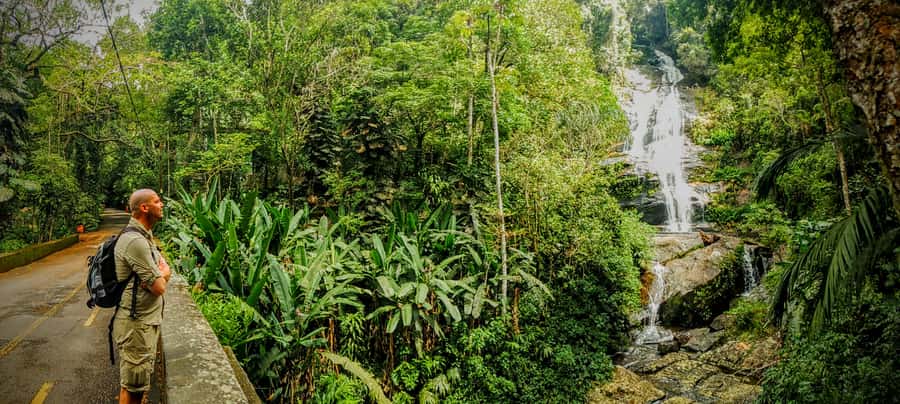
- Cascatinha Taunay and the first rainforest lesson stops
- Coffee-farm ruins, grottos, and the moment the trail gets real
- Waterfalls and the towel-and-bathing-suit payoff
- Bat cave stop and why the small group pace helps
- Vista Chinesa on working days: the bonus summit add-on
- Fitness reality check: who should (and shouldn’t) do this hike
- Gear that actually matters in the Tijuca jungle
- Price and value: what $86 includes (and what you must add)
- Who should book this challenge hike?
- Should you book the Rio de Janeiro Tijuca Forest Challenge hike?
- FAQ
- How long is the hike?
- What is the total distance?
- How much elevation gain is there?
- Is Vista Chinesa included every day?
- What waterfalls are included?
- Are food and drinks included?
- What languages are the guides?
- How big is the group?
- Where does pickup happen?
- What should I bring?
Key things that make this hike worth your day
- A 10.4 km (6.5 mi) circuit with 848 m (2,782 ft) of climbing that earns its viewpoints the hard way
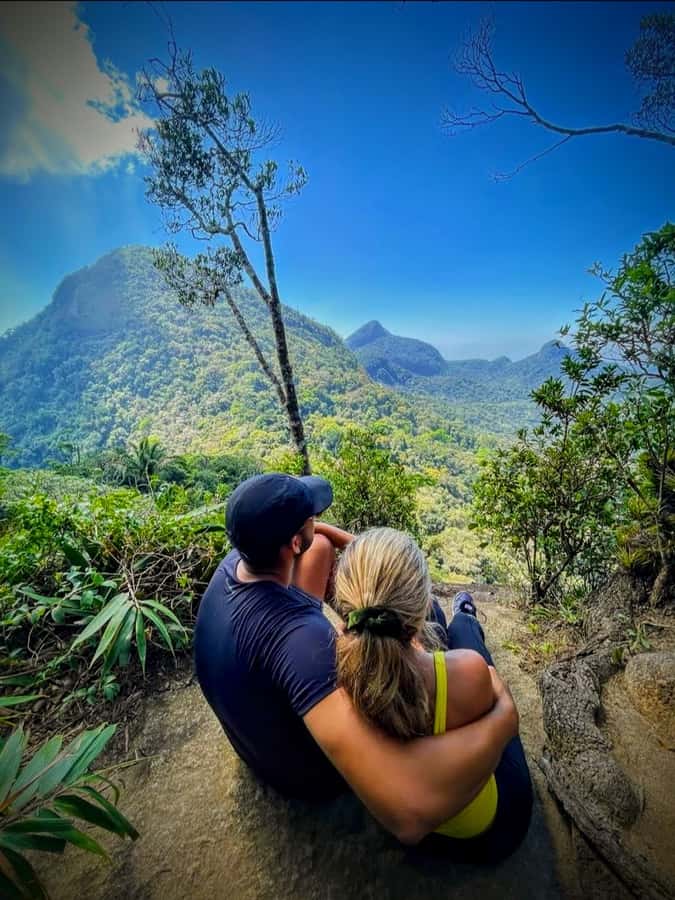
- Taquara Hill area views (Taquara Hill is 100 m higher than Christ Redeemer) on clear days, with different directions of sightlines
- Cascatinha Taunay plus Cascata da Baronesa, with waterfall flow that can change depending on recent rain
- Hidden trails, old coffee-farm ruins, grottos, and the bat cave, so you’re not just walking the most obvious paths
- Vista Chinesa summit is added on working days only, since it’s closed for vehicles on weekends/holidays
- Small-group pace control, which many people appreciate when the terrain gets steep
Deeper into the Tijuca forest and its waterfalls
- Rio de Janeiro: Christ, Selaron Steps, and Tijuca Park Tour★ 4.7 · 857 reviews
- Rio de Janeiro: Guided Jeep Tour through Tijuca Rainforest★ 4.3 · 740 reviews
- Jeep Adventure: Guided Tour through Tijuca Rain Forest★ 4.0 · 554 reviews
- Rio: Tijuca Forest Small Group Hike to Caves and Waterfalls★ 4.9 · 536 reviews
Why Tijuca Forest is more than a break from the city
Rio is famous for postcard views. But Tijuca Forest National Park is the part that makes Rio feel like it has a heartbeat.
This hike is built around one of the biggest urban forests on the planet—so you get a rare combo: you’re still in Rio, yet you’re walking through rainforest that feels far from sidewalks. The best part isn’t just the trees and trails. It’s the way the route is timed and sequenced so you repeatedly earn a new view, then drop back into thick shade.
And the tour’s guiding style matters. People consistently single out guides like Gustavo, Ricardo, Pietro, Tito, Roberto, and Alex for connecting the forest to Brazil’s history—especially the period when coffee farms once occupied parts of the area before reforestation in the 1800s. That turns the hike from scenery viewing into real place understanding.
One quick note: the forest can be foggy or rainy. That doesn’t ruin the day here—it changes what you see at the viewpoints. Even on bad weather days, you’re still out on the trails, with wildlife encounters often possible.
The day at a glance: pickup, rainforest walking, and a waterfall finish
Plan on a full-day trip (about 9 hours). Pickup happens from designated South Zone areas—places like Flamengo, Copacabana, Ipanema, Botafogo, Leblon, Leme, Santa Teresa, Glória, and Catete. If you’re outside the pickup map, you’ll be directed to a nearby meeting point instead.
From there, the rhythm of the day is simple:
- Start with a short introduction and an early stop at Cascatinha Taunay (a guided visit and sightseeing stop).
- Move into Tijuca National Park and begin the main hike blocks.
- Work your way up and down through lesser-used trails, with several stops for photos, viewpoints, and short guided segments.
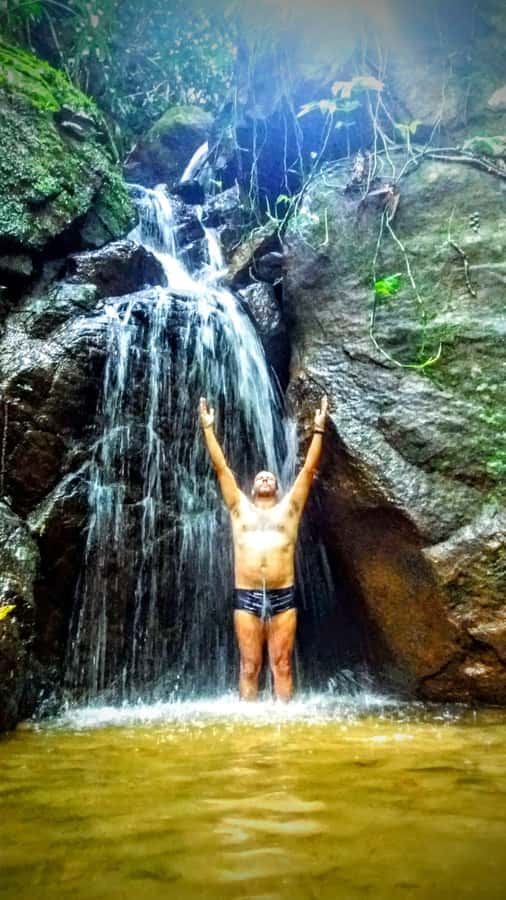
- Refill your energy at the end with waterfall time—bring a towel and bathing suit because you’ll have a chance to cool off, even if the water flow depends on rainfall.
- On working days only, finish with Vista Chinesa added back into the plan (vehicles don’t access it on weekends/holidays).
Transport is included to and from the South Zone. What’s not included is food and drinks—so the day’s comfort depends on you bringing snacks and enough water.
The core workout: 10.4 km and 848 m up to Taquara Hill views
This is not a casual stroll. The hike is listed as hard, and the numbers back that up: 10.4 km (6.5 mi) total with 848 m (2,782 ft) of elevation gain over about 4 to 5 hours round-trip.
What that means in real life:
- You’ll be walking uphill, then downhill again—often on rough, uneven ground.
- You’ll feel it in your legs even if you’re a decent walker, because the route is designed for a challenge level, not an easy “nature walk.”
- The climbs aren’t just long; they include steep segments where careful footing matters.
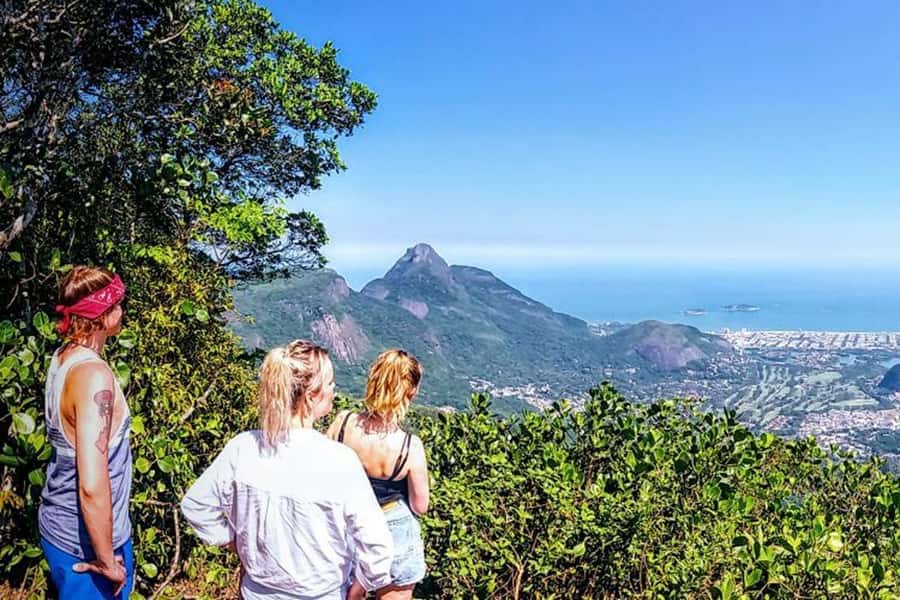
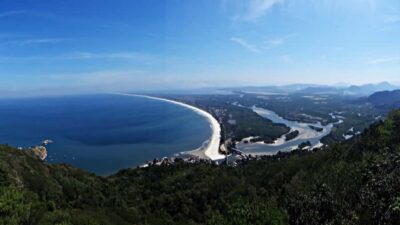
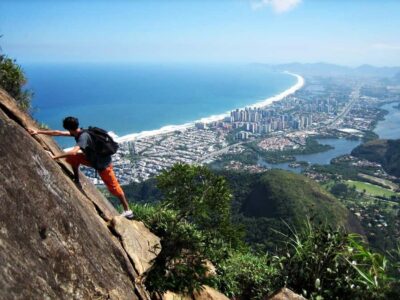
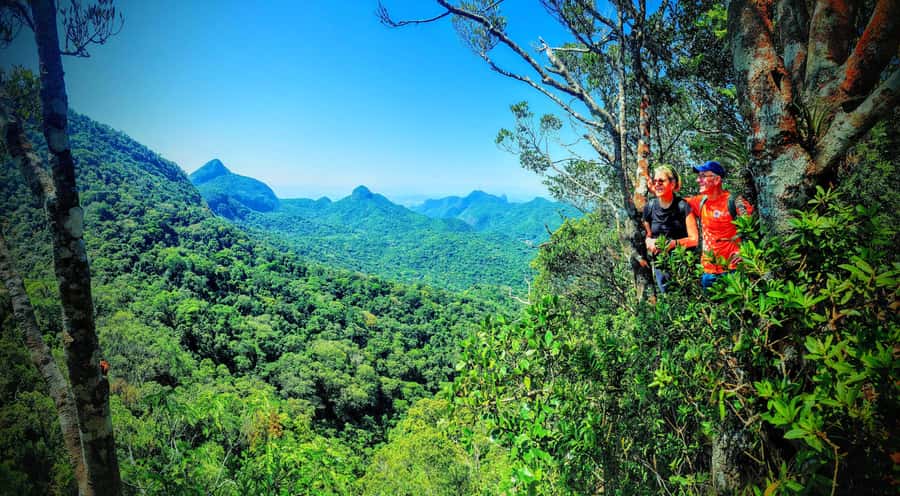
The big reward is tied to the Taquara Hill area, around 814 m (2,670 ft). It’s about 100 m higher than Christ Redeemer, and on clear days you get two different view angles: one toward the forest valley and another toward the West side of Rio, including coastline and lagoons.
Even if it’s cloudy, you still get the most important thing: the viewpoint stops. The reward might be mist instead of sharp horizon lines, but you’ll still have moments where you step out of dense green and look outward.
Still browsing Rio De Janeiro? These are the ones we go back to

Cascatinha Taunay and the first rainforest lesson stops
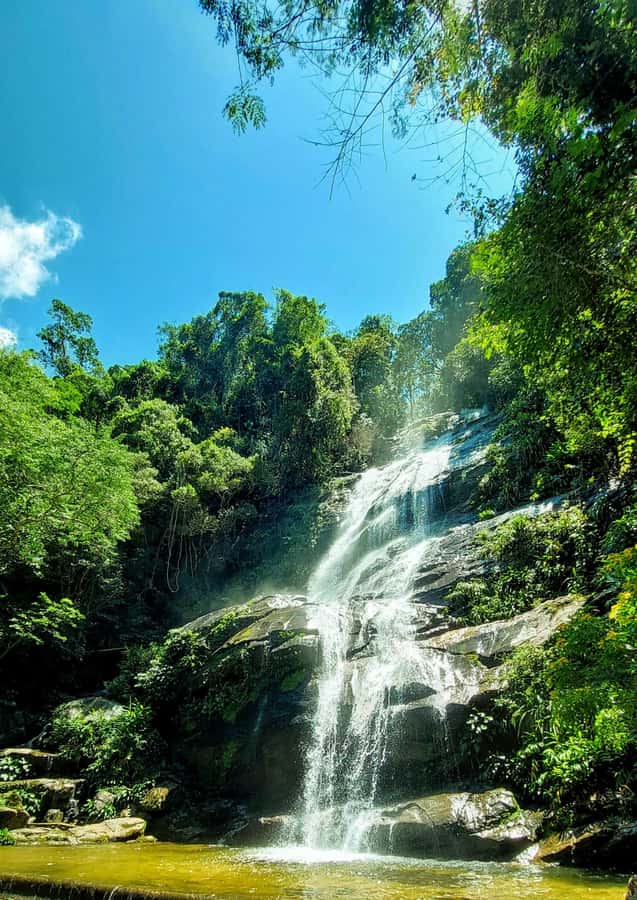
The day begins with Cascatinha Taunay—a guided stop that sets the tone. It’s not just a photo break. You get background context for what you’re about to hike through and why the area matters.
From there, you enter Tijuca National Park for guided segments. You’ll hear about:
- how Rio’s rainforest ecosystem works,
- what used to exist there (including the coffee-farm era),
- and how the area changed after reforestation efforts began in the 1800s.
One detail I like about this kind of start: it prevents the common mistake of treating rainforest hikes like a checklist of rocks and roots. Instead, you’re learning what to look for—plants, shapes, and the history layered into the place.
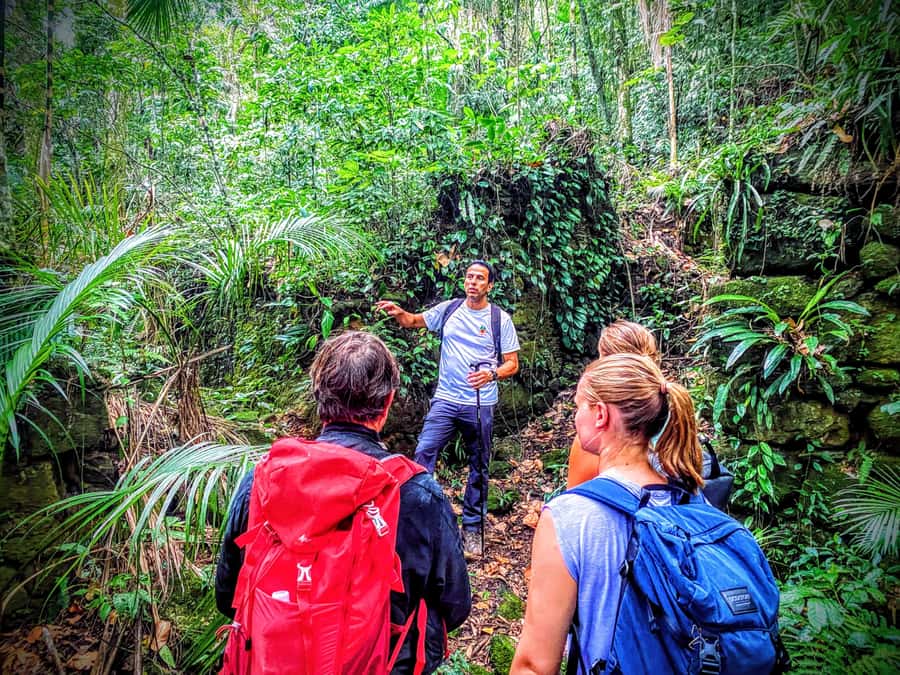
You’ll also start breaking your walking into manageable blocks. After roughly an hour of uphill/downhill hiking, the route reaches the ruins of an old coffee farm. That stop matters because it’s a physical reminder that this wasn’t always “wild rainforest.” The forest is alive now—but it’s alive after major human history.
Coffee-farm ruins, grottos, and the moment the trail gets real
After you leave the coffee-farm ruins area, the route moves into deeper forest. This is where the hike starts to feel more like an expedition than sightseeing.
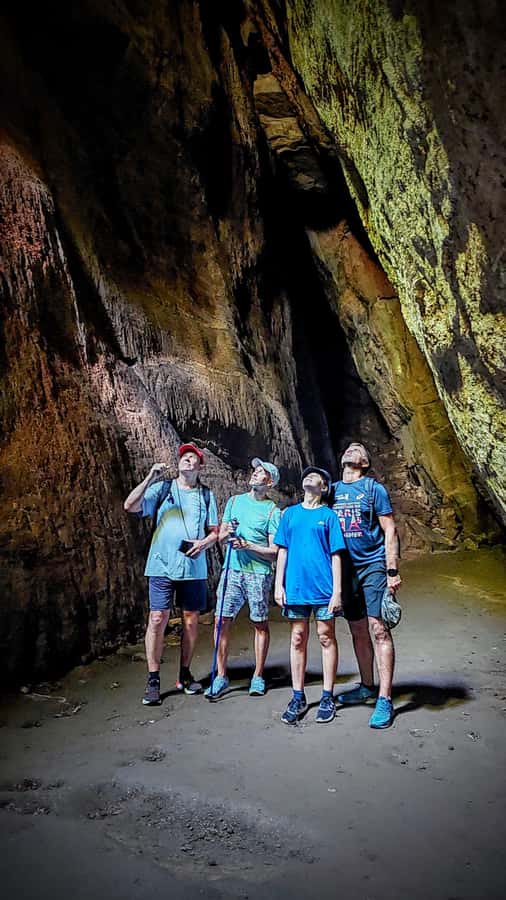
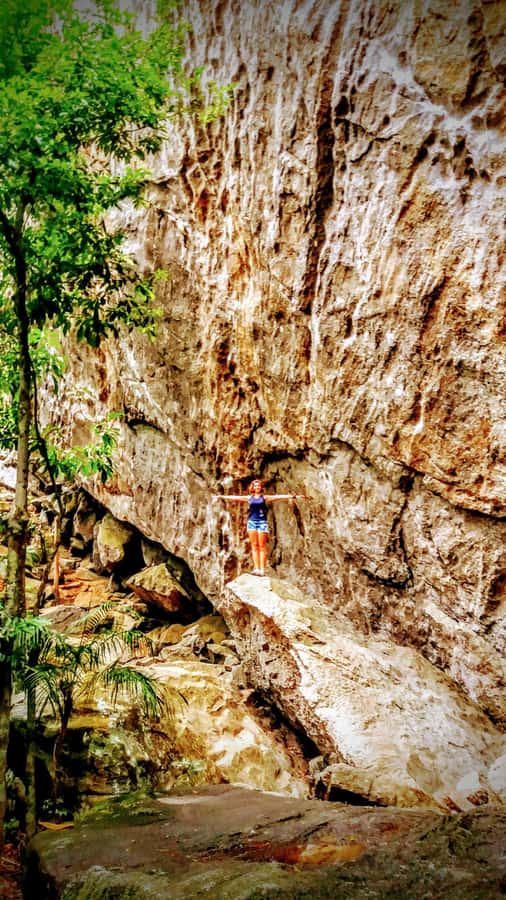
You’ll encounter grottos and a cave area. The guides point out features you’d probably miss if you were hiking on your own, even if you’re a confident navigator. That’s a big part of the value: the route isn’t the most crowded one, and the guide helps you notice what you’re passing.
This portion also tends to change your experience of the forest. Early on, you’re adjusting to climbing and shade. Later, the ground feels more “under the canopy,” with fewer open sightlines and more time spent moving through thick greenery.
A small practical point: wear shoes with real grip. Some sections are rough enough that traction matters more than padding. Good footwear also makes the short steep climbs less stressful.
Waterfalls and the towel-and-bathing-suit payoff
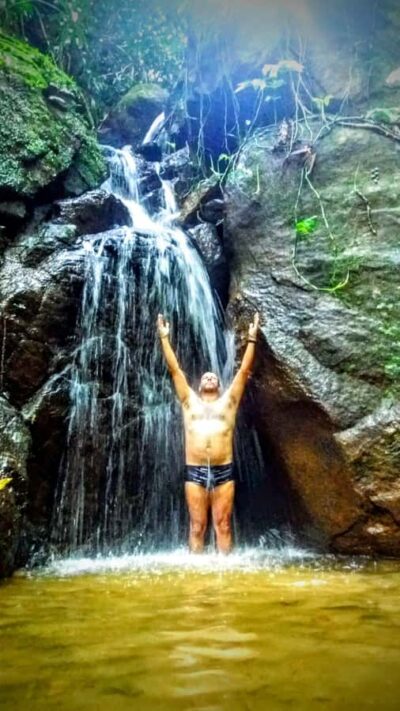
The tour includes a waterfall stop where you can cool off after the hike. The instruction to bring a towel and bathing suit isn’t optional if you want the full experience.
The important caveat: water flow varies depending on recent rain. So you might get a strong shower, or it might be more of a refreshing splash. Either way, it’s a morale boost after hours of effort.
You’ll visit Cascata da Baronesa as well, with a guided visit and time to look around. It’s one of the stops that breaks up the day with a clear “you earned this” feeling.
If you’re prone to getting cold after water exposure, pack a small layer you can pull on afterward. The tour gives you the chance to refresh, but the forest air and post-hike chill can be real.
Bat cave stop and why the small group pace helps
One of the most distinctive parts of the itinerary is the bat cave visit (a guided stop). Even if you don’t see bats at that exact moment, you’ll understand why this is the kind of micro-habitat the forest supports—and why a guide’s eyes make the difference.
Because the group is capped at a maximum of 6 people, you’re more likely to:
- move at a pace that fits the terrain,
- pause where needed (without feeling rushed by a bigger crowd),
- and get more personal attention from the guide on footing and timing.
That small-group factor also shows up in how guides adapt. People mention that guides adjust pace for hikers who aren’t as fast as expected, while still getting everyone back in time. It’s a big deal on a hard route: you want flexibility, not a rigid march.
Vista Chinesa on working days: the bonus summit add-on
On working days only, the tour includes a stop at Vista Chinesa. On weekends and holidays, Vista Chinesa is closed for vehicles, so this part won’t be included.
If your day lands on a working day, this can be a satisfying add-on because it changes the view game after the forest segment. You’ll be thinking differently at that point—you’ve climbed through dense green, cooled off at waterfalls, and then you get another chance to look out across Rio from higher ground.
If it’s closed, no worries. The main structure of the day already gives you multiple viewpoints in the rainforest circuit.
Fitness reality check: who should (and shouldn’t) do this hike
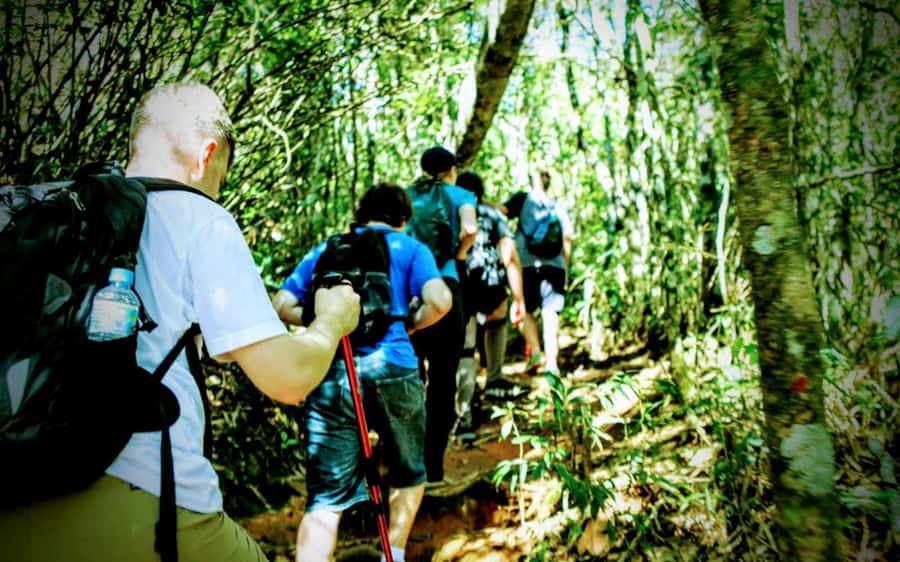
This is a hard hike with a steep vertical component and rough terrain. The tour is not recommended for children under 14, and it’s not suitable for wheelchair users.
It’s also not for people with a history of cardiovascular or pulmonary conditions, or other health issues incompatible with difficult physical activity. The operator can refuse participants who they believe can’t endure the hike—so be honest with yourself before you book.
For most visitors who are reasonably fit, the key to enjoying it is preparation:
- Plan to walk for hours, not minutes.
- Bring enough water for a full day, since water isn’t included.
- Carry insect repellent—this is the rainforest.
- Bring snacks because there’s no food provided, and hunger can wreck your energy fast.
If you’re used to moderate hikes, you’ll still feel this one because the elevation gain is substantial. If you’re coming from sea-level beach time, treat this like a workout class you signed up for on purpose.
Gear that actually matters in the Tijuca jungle
This isn’t a “pack light and hope” tour. You’ll want:
- Hiking shoes with good grip
- Sun hat and sunglasses
- Sunscreen
- Insect repellent
- Snacks (since food isn’t included)
- Water (since drinks aren’t included)
- A towel and bathing suit for the waterfall refresh
Also, no luggage or large bags are allowed. If you’re carrying a daypack, keep it compact and easy to manage on uneven trails.
One more practical angle: the forest often means shade, but the ground can still be hot. Even in shade, you can get dehydrated. That’s why bringing water is non-negotiable.
Price and value: what $86 includes (and what you must add)
At $86 per person, you’re paying for a lot of the “hard parts” of logistics:
- a bilingual guide (English or Portuguese),
- insurance (you must provide passport details and birth date),
- and transportation with hotel pickup and drop-off in the South Zone.
What you need to budget separately:
- food
- water and drinks
So the value depends on how you handle that gap. If you show up with snacks and water, you’ll feel like you got your money’s worth quickly—because you’re not just hiking; you’re also learning and getting guided access through a route that’s not the usual crowd funnel.
Small group size is also part of the value story. A max of 6 people means the day often feels more personal and less chaotic on steep, narrow trail segments.
Who should book this challenge hike?
I’d point you toward this tour if:
- you want a full-day nature experience in Rio that goes beyond the typical city stops,
- you like hikes where viewpoints feel earned,
- you enjoy history and want Brazil and Rio context while walking through the forest,
- and you’re comfortable with a hard route (4–5 hours of hiking, 848 m gain).
I’d skip it if:
- you want something easy or mostly flat,
- you need wheelchair access,
- you have health conditions that make hard activity unsafe,
- or you’re traveling with kids under 14.
If you’re an active solo traveler, this is one of the better ways to see Tijuca because you get guidance and pacing without feeling swallowed by big-tour crowds.
Should you book the Rio de Janeiro Tijuca Forest Challenge hike?
Book it if you’re excited by the idea of a real workout plus thoughtful guiding, and if you’ll come prepared with snacks, water, and the right shoes. The payoff here is the mix of big climbs, coffee-farm ruins, caves, waterfalls, and viewpoint moments—plus the chance to learn why this forest survived, regrew, and became the urban green giant it is.
Pass if you’re unsure about your ability on steep, rough trails or if you can’t handle a hard day outdoors. This one doesn’t pad your comfort. It rewards your effort.
FAQ
How long is the hike?
The hike takes about 4 to 5 hours round-trip, within a full day of about 9 hours total.
What is the total distance?
The total hiking distance is about 10.4 km (6.5 miles).
How much elevation gain is there?
The elevation gain is 848 meters (2,782 feet).
Is Vista Chinesa included every day?
No. Vista Chinesa is added only on working days. On weekends and holidays, it is closed for vehicles.
What waterfalls are included?
You’ll visit Cascatinha Taunay and later Cascata da Baronesa. You’ll also have time at a waterfall to cool off, and the water flow depends on rainfall.
Are food and drinks included?
No. Food, water, and drinks are not included.
What languages are the guides?
The guide is bilingual in English and Portuguese.
How big is the group?
This is a small-group hike with a maximum of 6 people.
Where does pickup happen?
Pickup is provided from designated hotels in Rio’s South Zone areas, and if pickup isn’t possible from your exact address, you’ll be given a nearby meeting point.
What should I bring?
Bring hiking shoes, sunscreen, sun hat, sunglasses, insect repellent, water, and snacks. Also bring a towel and bathing suit for the waterfall refresh.
More Hiking & Trekking in Rio De Janeiro




More Tour Reviews in Rio De Janeiro





More of the Tijuca Forest

Fresh off the review desk: newer Rio De Janeiro tours we have been out on




Tijuca Forest & Waterfalls, compared.
 ★ 4.7Christ, Selaron Steps, and Tijuca Park TourFrom $68857 reviews
 ★ 4.3Guided Jeep Tour through Tijuca RainforestFrom $90740 reviews
 ★ 4.0Jeep Adventure: Guided Tour through Tijuca Rain ForestFrom $88554 reviews
 ★ 4.9Tijuca Forest Small Group Hike to Caves and WaterfallsFrom $69536 reviews
 ★ 4.7Paraty: Jungle Waterfalls and Cachaça Distillery Jeep TourFrom $37491 reviews
 ★ 4.5Half-Day Jeep Tour at Floresta da TijucaFrom $60353 reviews
 ★ 4.34-Hour Botanical Garden & Tijuca Forest TourFrom $51275 reviews
 ★ 4.5Rio de Janeiro Botanical Garden & Tijuca Forest TourFrom $55168 reviews
Browse the lists this tour appears in