
Reviewed · TIJUCA FOREST & WATERFALLS
Rio de Janeiro: Hiking and Rappelling at Tijuca Forest
A jungle hike with a rappelling finale. This full-day adventure in Rio’s Tijuca Forest mixes expert guiding, steep trail work, and a proper abseiling moment at Bico do Papagaio. You’ll also get breaks for the park’s museum/visitor area and a waterfall stop with a natural shower.
I love two things most: the way the hike feels like real time in the forest (not just a photo line), and the hands-on, safety-minded rappel setup. If you want a guide who explains plants, park life, and Rio culture in plain language, this tour has that vibe.
One consideration: this is not a stroll. The route includes serious uphill climbs and a steeper, rockier section near the summit, so if you’re managing heart issues or back problems, you’ll want to skip it.
In This Review
- Key highlights you’ll care about
- Tijuca Forest basics: why this hike feels special
- Bico do Papagaio: the summit goal and the views you earn
- Rappelling (abseiling) in a real park setting: fun with structure
- Cachoeira das Almas: the natural shower stop that feels like a reset
- The museum and visitor center: learning that doesn’t slow you down
- Itinerary reality: what your 8 hours will actually feel like
- What the guides do well (and why it matters on steep trails)
- Fitness, gear, and small rules that keep the day smooth
- Wear and pack like you’re hiking
- Who should skip this tour
- Price and value: is $59 worth it?
- Should you book Rio: Hiking and Rappelling at Tijuca Forest?
- FAQ
- FAQ
- How long is the hike and rappel?
- Where does the tour start?
- Is hotel pickup included?
- What languages are the guides?
- Is climbing equipment included for the rappel?
- What should I bring?
- What footwear is required?
- Who should not take this tour?
Key highlights you’ll care about
- Bico do Papagaio rappel from the summit turns the day from sightseeing into action
- Tijuca National Park trail network gives you the feel of a true urban jungle
- Cachoeira das Almas natural shower is a fun payoff after the uphill work
- Museum and visitor-center stop helps you understand what you’re walking through
- Certified climbing equipment and accident insurance are included
- Small groups or private options make it easier to move and ask questions
Deeper into the Tijuca forest and its waterfalls
- Rio de Janeiro: Christ, Selaron Steps, and Tijuca Park Tour★ 4.7 · 857 reviews
- Rio de Janeiro: Guided Jeep Tour through Tijuca Rainforest★ 4.3 · 740 reviews
- Jeep Adventure: Guided Tour through Tijuca Rain Forest★ 4.0 · 554 reviews
- Rio: Tijuca Forest Small Group Hike to Caves and Waterfalls★ 4.9 · 536 reviews
Tijuca Forest basics: why this hike feels special
Tijuca National Park is one of those rare places where a major city sits right next to serious nature. The forest here is huge for an urban area, and it’s a UNESCO World Heritage Site. On this tour, you don’t just look at the trees from a viewpoint. You walk through Mata Atlântica forest trails with a guide who keeps the day grounded in both nature and context.
The route starts at the entrance gate of the park and follows trails through the forest toward the Bico do Papagaio area. Along the way, you stop at the visitor center and the park museum. That matters because it changes the feel of the hike. You start recognizing what you’re seeing instead of just chasing views.
You’ll also get a balance of effort and recovery. The hike pushes uphill, then you get small breaks and planned stops, including a waterfall shower. It’s a full-day format, but it doesn’t feel like nonstop suffering—assuming your fitness matches the task.
Bico do Papagaio: the summit goal and the views you earn
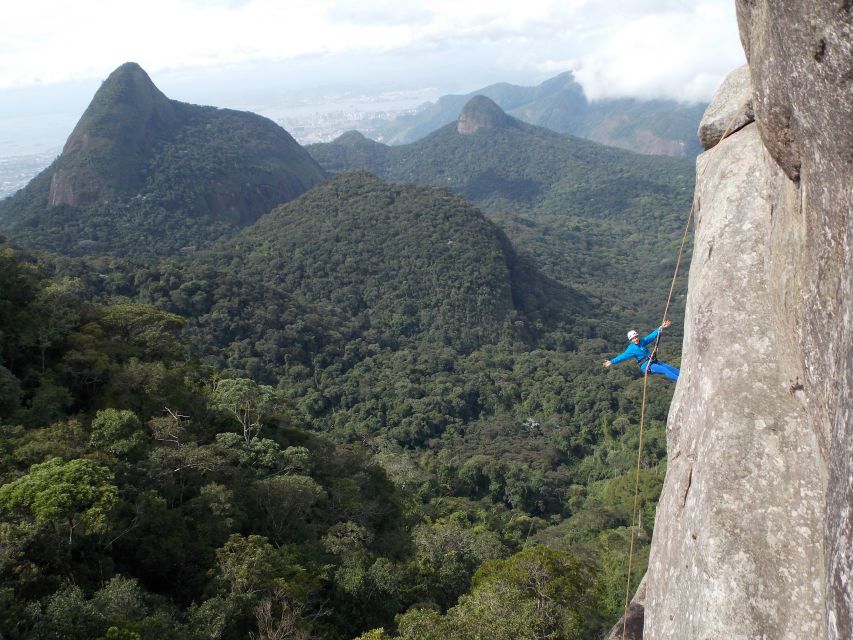
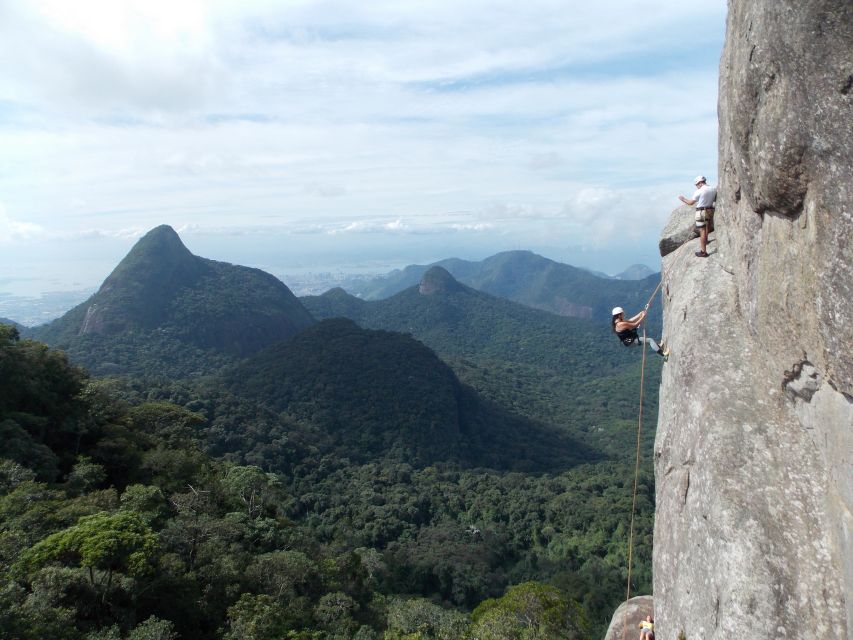
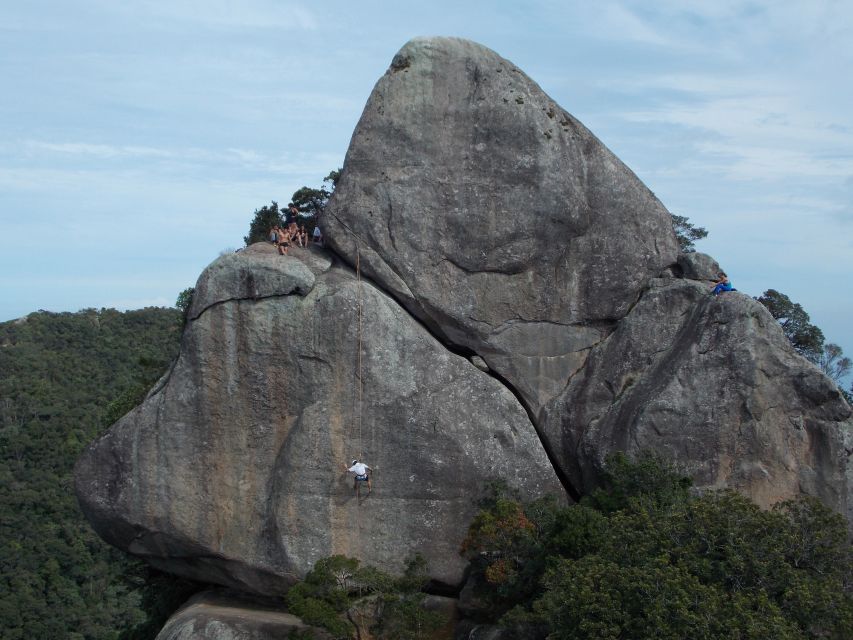
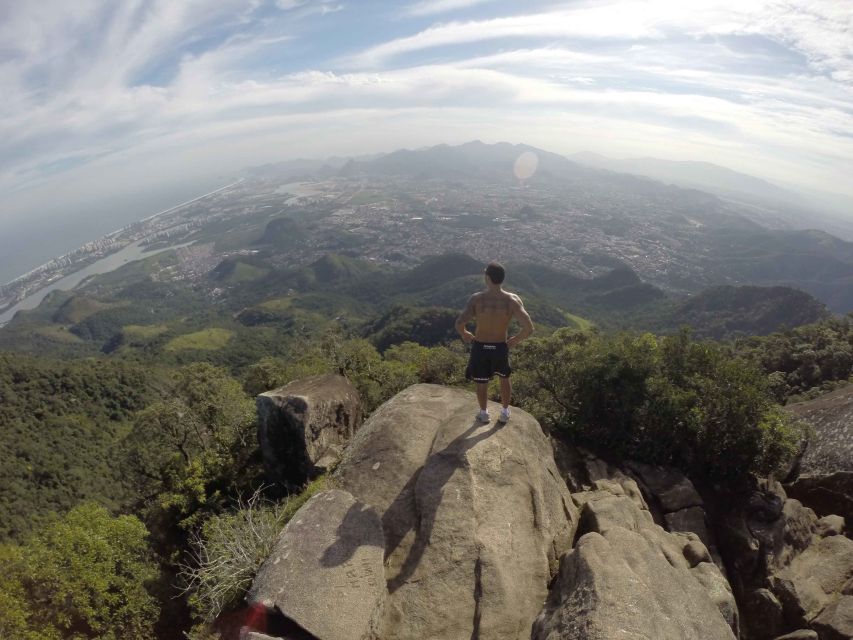
Bico do Papagaio is the second highest peak in the Tijuca Forest. The tour’s timing centers on reaching the base area, then climbing a more rugged, steeper stretch. From the summit, you can see several major mountains in the park system, including Pico da Tijuca, Pedra do Conde, Cocanha, Pedra Bonita, and Pedra da Gávea. You may also catch a small part of Corcovado and even Cristo Redentor in the distance.
That view list is a big deal for one reason: the summit payoff isn’t just one angle. It’s a whole network of peaks, which makes your hike feel like you earned access to the park’s bigger picture.
The rappel happens from the summit. So yes, you’ll be tired when you get there. But you’re also in the right place at the right time to make that effort worth it. If your goal is a day that combines nature immersion with a real adrenaline payoff, this is built for that.
Rappelling (abseiling) in a real park setting: fun with structure
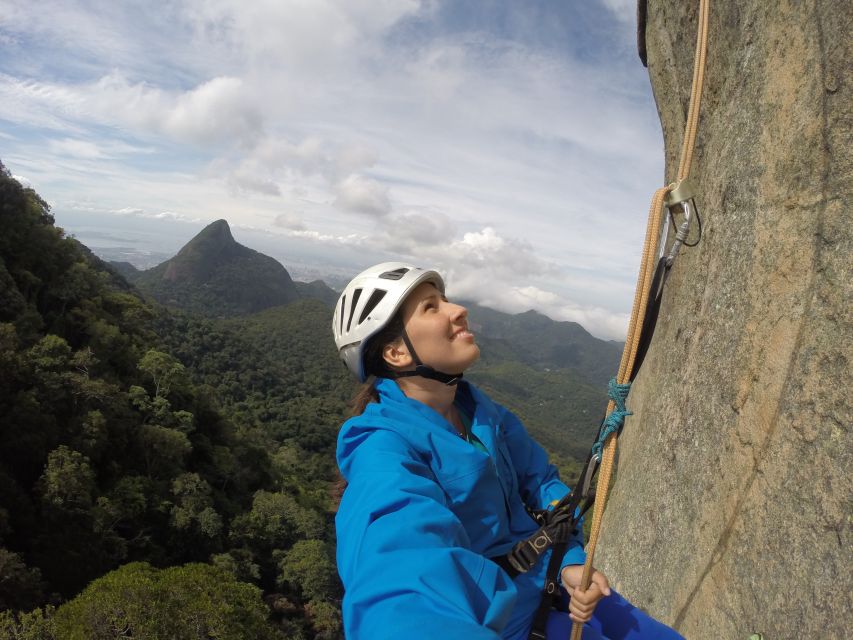
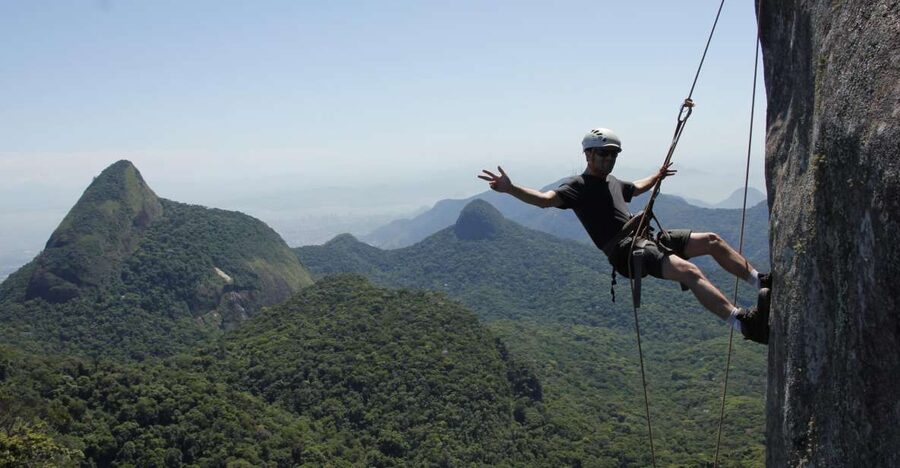
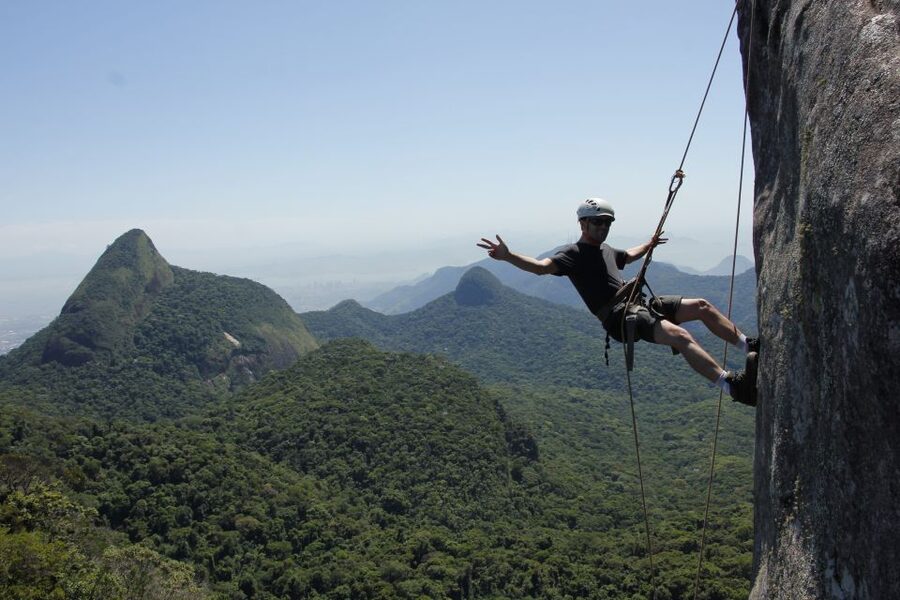
The headline activity is the rappel at the summit of Bico do Papagaio. You’ll use certified climbing equipment provided for local use, and the tour includes personal accident insurance. Those details are not just paperwork. They signal that the activity is handled with real safety structure, not a casual try-it-once thing.
What I like about the way this tour is set up is that the rappel is not separate from the hike. It’s the culmination. You climb, you reach the top, then you put your skills (and nerves) to work right where the views are best.
If you’re new to rappelling, you’ll feel better knowing the guides are used to first-timers. One guide named GG specifically stood out as helpful and informative for someone doing it for the first time, and the guide style seems to focus on clear support while you’re actually doing the task. That’s what you want when you’re strapping in.
A quick note for your mindset: the hike is hard, and the rappel adds intensity. It’s not a smooth, easy flow day. But that’s also why it feels like a true Rio adventure rather than a checklist tour.
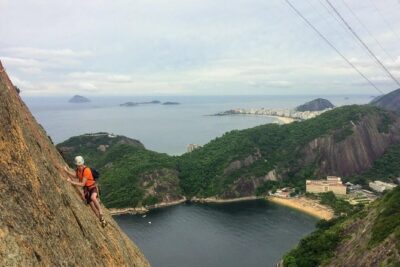
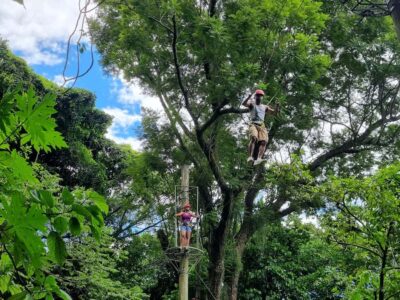
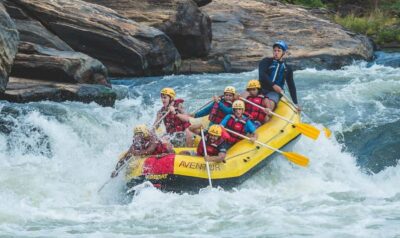
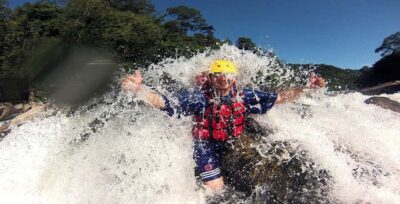
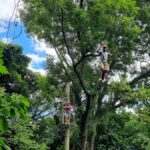
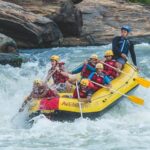
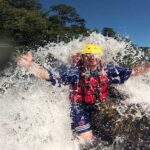
Rope, rock and rapids: more Rio adventures

Cachoeira das Almas: the natural shower stop that feels like a reset
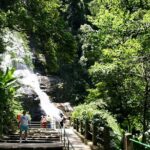
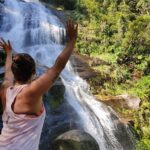
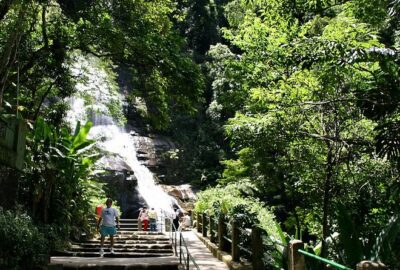
Cachoeira das Almas is one of the planned highlights. You’ll reach the waterfall during the route, and the tour includes time for a natural shower there.
This stop works for two reasons. First, it gives your legs a break. Second, in a day filled with climbs and gear, it’s a human-scale moment: water, cooling air, and the simple fact that the forest is doing its own thing regardless of your itinerary.
You also get something practical out of it: after hiking in heat and humidity, a cooling splash can make the rest of the day feel manageable. Just bring your energy back up, because the rappel is still ahead.
The museum and visitor center: learning that doesn’t slow you down
The tour includes a guided visit to the Tijuca National Park Museum. You also stop at the visitor center area as part of the overall route.
This isn’t a deep academic lecture tour. It’s more useful than that: it gives you a framework for what the forest is, why it matters, and what you’re passing through while moving between trails. When a guide can explain the place in a way that clicks, you end up noticing details you’d otherwise walk right past—plant types, the park’s role, and how the area fits into Rio.
One of the best compliments in the feedback around this experience is that guides know the forest and explain it well, including cultural connections to Rio. That kind of guide makes the museum stop feel like part of the hike instead of a detour.
Itinerary reality: what your 8 hours will actually feel like
The tour runs about 8 hours. Exact timing and order can shift due to weather or conditions on the trails, which is common in forests. That’s worth remembering because you’re not walking in a theme-park environment—you’re moving through living terrain.
Here’s the flow you should expect in plain terms:
- Meet at the park gate area and head into Tijuca National Park
The trail begins at the entrance gate. This sets the tone: you’re in motion early, and your hike starts before the day gets too long.
- Visitor center and museum
You pause to learn and reorient. This is also where you get small breaks before the harder climbing segments.
- Cachoeira das Almas waterfall shower
You get cooled off and refreshed. It’s also a morale boost in a full day itinerary.
- Trail to the base of Bico do Papagaio, then a steeper, rugged climb
The route continues as far as the base of the mountain, with obstacles along the way. Then you hit a more rugged, steep section that requires focus and good footing.
- Rappel from the summit
This is the big finale: gear on, technique managed, and down you go.
- Return to the meeting point
Your day ends back at the starting point.
If you like routes with structure—hike, learn, cool off, climb harder, then action—this itinerary fits that style.
What the guides do well (and why it matters on steep trails)
Guides aren’t just there to keep you from getting lost. In a steep, forested hike where weather can change what you can safely attempt, a guide’s judgment matters.
The best guide feedback here centers on two things:
- Guides give clear explanations about the forest and Rio culture.
- Guides look after people’s well-being during the climb, including checking how you’re doing.
One review specifically praised a guide who knew a lot about the forest and Rio culture and explained things well, while still respecting everyone’s needs. That mix—knowledge plus care—is a big reason this tour gets strong ratings.
Also, because this tour supports private or small groups, you’re more likely to get time to ask questions or get help adjusting pace. If you’re trying to manage energy for the rappel, that personal attention helps.
Fitness, gear, and small rules that keep the day smooth
Let’s talk real-world prep.
Wear and pack like you’re hiking
Bring:
- Water (3 liters recommended)
- A daypack
- A light snack
- Sunscreen
Wear:
- Comfortable footwear with good grip
Don’t bring:
- Sandals or flip flops
- Pets
- Luggage or large bags
And there are firm rules around safety: don’t drink or take drugs before or during the activity, and no weapons are allowed. That’s a “this is adventure sport” policy, not a suggestion.
Who should skip this tour
This one is important. It’s not recommended for heart complaints or other serious medical conditions. It’s also not suitable for pregnant women, people with back problems, people with mobility impairments, wheelchair users, or people with heart problems.
If any of those apply, don’t try to power through. A steep hike plus rappel requires stable physical condition and a safe body.
Price and value: is $59 worth it?
At $59 per person for an approximately 8-hour day, the value depends on what you compare it to. If you’re thinking of paying for a guide just for hiking, this price already includes more than that.
You’re getting:
- A professional bilingual guide
- Guided hiking through several trails inside the park
- A guided visit to the museum/visitor areas
- Cachoeira das Almas natural shower stop
- Certified climbing equipment for the rappel
- Personal accident insurance
- Optional hotel pickup (only for supported hotels in the tourist zone)
So you’re not just buying access to nature. You’re paying for guided logistics, safety gear, and multiple structured stops. If you want one full day that gives you hiking plus a real vertical sport experience, it’s strong value for Rio.
Should you book Rio: Hiking and Rappelling at Tijuca Forest?
Book it if you want:
- A full-day active experience in one of Rio’s most important natural areas
- A mix of forest hiking, museum context, and a true summit rappel
- A guide style that explains things clearly and keeps an eye on your well-being
- The chance to end with a waterfall shower payoff
Skip it if:
- You know you won’t handle steep, rugged climbing
- You have heart issues, significant back problems, or mobility limitations
- You’re looking for an easy stroll and short stops only
If your legs are up for it, this tour is one of those rare combinations: you get deep time in Tijuca Forest and then you finish the day doing something bold and physical from the top.
FAQ
FAQ
How long is the hike and rappel?
The tour lasts about 8 hours.
Where does the tour start?
You meet at Praça Afonso Viseu, 104 – Alto da Boa Vista, Rio de Janeiro – RJ, 20531-580, Brasil.
Is hotel pickup included?
Pickup is optional. It’s available only if your hotel is in the tourist zone of Rio de Janeiro and is one of the supported hotels.
What languages are the guides?
Guides are available in Spanish, English, and Portuguese.
Is climbing equipment included for the rappel?
Yes. Certified climbing equipment for local use is included, along with personal accident insurance.
What should I bring?
Bring water (3 liters recommended) and a light snack, plus sunscreen and a daypack.
What footwear is required?
You should wear comfortable footwear with good grip. Sandals or flip flops are not allowed.
Who should not take this tour?
It is not recommended for participants with heart complaints or other serious medical conditions, and it is not suitable for pregnant women, people with back problems, people with mobility impairments, wheelchair users, or people with heart problems.
More Tour Reviews in Rio De Janeiro






More Adventure Days Around Rio

More of the Tijuca Forest



Fresh off the review desk: newer Rio De Janeiro tours we have been out on




Tijuca Forest & Waterfalls, compared.
 ★ 4.7Christ, Selaron Steps, and Tijuca Park TourFrom $68857 reviews
 ★ 4.3Guided Jeep Tour through Tijuca RainforestFrom $90740 reviews
 ★ 4.0Jeep Adventure: Guided Tour through Tijuca Rain ForestFrom $88554 reviews
 ★ 4.9Tijuca Forest Small Group Hike to Caves and WaterfallsFrom $69536 reviews
 ★ 4.7Paraty: Jungle Waterfalls and Cachaça Distillery Jeep TourFrom $37491 reviews
 ★ 4.5Half-Day Jeep Tour at Floresta da TijucaFrom $60353 reviews
 ★ 4.34-Hour Botanical Garden & Tijuca Forest TourFrom $51275 reviews
 ★ 4.5Rio de Janeiro Botanical Garden & Tijuca Forest TourFrom $55168 reviews
Browse the lists this tour appears in