

Reviewed · RIO DE JANEIRO
Rio Street Art Tour
Street art is Rio’s loudest history lesson. I like how Wellington connects graffiti to real local stories, and how the Selarón Staircase shows up as both landmark and living backdrop for the art. One heads-up: you’ll do a fair bit of walking and standing, so comfortable shoes matter.
This is a private tour for your group, priced at $68.61 per person for about 3 hours, and it runs on public transportation (subway plus VLT/tram). The stops are mostly outdoors or transit-adjacent, so the day feels active and local instead of a bus-and-point tour. If the weather turns bad, the experience can be rescheduled or refunded, so keep some flexibility.
In This Review
- Key highlights I’d plan around
- Price and what $68.61 buys you
- Meet at the Municipal Theater: start in Rio’s core
- Glória’s Boulevard and the first legalized graffiti angle
- Small note on “free” stops
- Selarón Staircase: Rio’s staircase that refuses to be just a staircase
- What to expect
- Cinelândia: libraries, theater energy, and civic Rio
- Olympic Boulevard: museum territory with street-art logic
- Porto Maravilha: finishing at the largest-mural payoff
- A possible extra depending on the day
- Transportation and pacing: easy walking, still bring stamina
- Who this tour is best for (and who should skip)
- What makes the guide matter: Wellington’s style
- Weather, timing, and why flexibility helps
- Should you book this Rio Street Art Tour?
- FAQ
- What is the duration of the Rio Street Art Tour?
- How much does the tour cost per person?
- Is it a private tour or shared with other groups?
- Where does the tour start and where does it end?
- Is the tour near public transportation?
- What happens if the weather is bad?
Key highlights I’d plan around

- Real transit, not just sightseeing: subway and VLT/tram links keep the tour grounded in how locals get around
- Graffiti with context: political and cultural meanings explained alongside the art itself
- Selarón Staircase in two beats: it’s encountered early on the route, then visited again as the main photo stop
- Cinelândia’s civic art scene: libraries and Rio’s big theater energy enters the story
- Porto Maravilha + the massive mural factor: you end near the world’s largest graffiti mural and related street-art walls
Still browsing Rio de Janeiro? These are the ones we go back to
- Rio Street Art Tour★ 5.0 · 76 reviews
Price and what $68.61 buys you

At $68.61 per person for roughly 3 hours, this Rio Street Art Tour sits in the “worth it if you like meaning” category. You’re not just paying for walls and photos. You’re paying for a guide who can read the murals like they’re street-level newspapers—then link them to Rio’s architecture, neighborhoods, and shifting politics.
It also helps that the route uses public transit (subway and VLT). In a city like Rio, transportation is part of the experience. The tour isn’t only about where you go; it’s also about how you move through the city like someone who lives there.
Meet at the Municipal Theater: start in Rio’s core
You start at the Municipal Theater of Rio de Janeiro in Centro. It’s a smart pick because it puts you near major transit and right in the central zone where street art, architecture, and big civic buildings overlap.
From the start, the tour’s tone is practical: you move quickly, stop to look closely, and you get explanations that help you notice details you’d miss solo. If you’ve ever looked at street art and thought, I like it but I don’t get it, this is exactly the cure.
Glória’s Boulevard and the first legalized graffiti angle
The first stop is Boulevard Olimpico area, starting with a subway ride to Glória. This part matters because it reframes “graffiti” as something Rio officially wrestled with—starting with the idea of legalized graffiti. Instead of treating street art as random decoration, your guide walks you through why certain works were allowed, where that happened, and what changed when walls became permitted canvases.
You’ll also pass through the European architectural influence in Rio. That sounds abstract, but it’s useful: when you see older, ornate buildings alongside modern tags and murals, you get a visual comparison between past power and present voices.
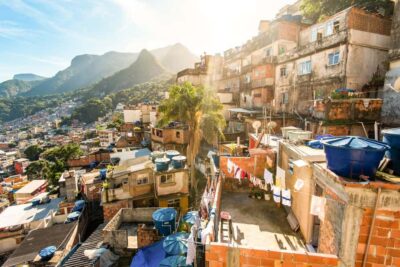
Then the tour takes you through the Selarón Staircase area and continues onward by VLT (Rio’s public tram system). You’re using the city’s actual grid, not a private bubble. That’s a big deal if you want your Rio day to feel like a real afternoon, not a scripted loop.




Small note on “free” stops
The tour lists admission as free at multiple stops. In practice, that usually means you’re exploring from public space and viewing murals/buildings without paid entry into a specific museum room. Still, plan to spend most of your time outside or at transit-adjacent viewpoints.
Selarón Staircase: Rio’s staircase that refuses to be just a staircase

Escadaria Selarón is treated as a main event. This is the third most visited tourist spot in the city, and the reason is obvious the second you’re there: it’s color-heavy, personal, and constantly telling you to look down and sideways at the details.
What makes the visit more than a photo run is how your guide ties the staircase into the wider street-art conversation. You don’t just get what the staircase looks like; you get why it looks that way and how it fits into Rio’s broader cultural identity. You’ll also get the sense that the staircase isn’t frozen in time—it’s part of a city where public space is always being argued over and rewritten.
What to expect
- A strong focus on visual detail and symbols
- A bit of wandering/pausing for photos
- An easy chance to ask questions, because the route naturally slows here
If you’re the type who likes street art mainly for the craft, you’ll enjoy the visuals. If you want the why behind the paint, this is where the “story” part clicks hardest.
Cinelândia: libraries, theater energy, and civic Rio
Next you head toward Cinelândia, where the tour highlights major libraries and the main theater of the city. This stop is a clever reminder that art doesn’t only live on walls. In Rio, it also lives inside grand public buildings, and the contrast helps you understand why street art feels like a parallel cultural system.
Then you take the VLT again, this time heading toward Olympic Boulevard. This move matters because it keeps the pacing from becoming all-walking-all-the-time. It also changes your angle—street art and architecture read differently when you’re viewing them from a moving tram line and arriving at stops with new sightlines.
Olympic Boulevard: museum territory with street-art logic
The tour arrives at Olympic Boulevard, described as home to Rio’s main museums. Even if you don’t go inside every museum during the tour window, you still get the benefit of being in the right neighborhood: big institutions and street culture are close enough here that you can compare them.
This section works especially well if you’ve been in Rio long enough to feel the city split into zones: classic sights here, street scenes there. The guide stitches the logic together so you don’t feel like Rio is two different cities pasted side by side.
You also get more chances to look at how murals relate to identity—who’s represented, who isn’t, and what messages get painted in public view.
Porto Maravilha: finishing at the largest-mural payoff
The final stretch ends in Porto Maravilha, where you meet the biggest end-of-tour moment: the largest graffiti mural in the world, as the tour frames it. Even without a museum ticket or formal exhibit, the scale is the star. When you see a mural meant for public attention at that size, street art stops feeling like a hobby and starts feeling like infrastructure for storytelling.
Porto Maravilha is also the part of the tour that tends to connect street art with the city’s social and historical layers—especially through an Afro-Brazilian lens. In some runs, the guide also points out how street art can relate to the broader history of Brazil, including the long shadow of slavery. That framing is one reason this tour scores so well with people who like art but don’t want it separated from reality.
A possible extra depending on the day
In at least one version of the experience, the route includes an opportunity to see where Carnival floats are staged and stored. You can’t count on it every time, but it’s a great example of what makes this tour different: it doesn’t treat street art as a separate museum world. It links it to how Rio builds celebrations, community, and identity.
Transportation and pacing: easy walking, still bring stamina

The pace is built around public transit legs and short stops for looking. One note from what I’d expect in a tour like this: there’s still walking, and some spots are stairs or uneven ground. It’s usually manageable, but don’t show up in sandals and hope for the best.
If you take the practical advice seriously:
- Wear comfy shoes
- Bring water
- Expect you’ll spend time looking down as well as up
The guide also seems to encourage questions, so if you want to stop and ask what a symbol means, your day won’t feel rushed out of your curiosity.
Who this tour is best for (and who should skip)
This Rio Street Art Tour is a great fit if you:
- Love street art but want the meaning, not just the photos
- Enjoy architecture and city history, even when it’s told through murals
- Want a way to see neighborhoods you might pass without a plan
- Prefer walking + transit over a full-day bus tour
I’d think twice if you:
- Hate standing and slow photo stops
- Need fully seated attractions with minimal walking
- Are visiting only for museums and nothing outdoors
For families and solo travelers, the structure works because it moves, stops, and explains. For groups, it’s private, so you don’t have to compete for attention.
What makes the guide matter: Wellington’s style
The tour is listed under Guia Wellington / Berimbautour, and the standout pattern in the tour’s experience is how Wellington explains street art as culture, not decoration. You get history and politics tied to specific images, plus a friendly rhythm that keeps it fun.
Another practical win: the explanations are in clear English, and there’s even room for light Portuguese practice during the day. That’s the kind of small thing that makes the city feel less like a checklist and more like a conversation.
Weather, timing, and why flexibility helps
This experience requires good weather. That means if rain hits hard, the tour may be moved to another date or you’ll get a full refund. If your Rio schedule is tight, try to place this tour in a day that has a little slack.
The tour lasts about 3 hours. That’s long enough to see multiple neighborhoods and get context, but short enough that you won’t lose an entire day to sightseeing fatigue.
Should you book this Rio Street Art Tour?
Yes, if your goal is to understand Rio through street art and the city around it. The best reason to book isn’t the mural names—it’s the way the tour turns murals into a map of Rio’s identity: architecture in Centro, public space arguments, Afro-Brazilian history threads, and the contrast between civic buildings and wall art.
If you just want a quick photo circuit, you might be able to do the big stops on your own. But if you want the explanations to make the art click—and you’re happy to use the subway and VLT like a local—this is one of the more satisfying ways to spend a half day in Rio.
FAQ
What is the duration of the Rio Street Art Tour?
It lasts about 3 hours.
How much does the tour cost per person?
The price is $68.61 per person.
Is it a private tour or shared with other groups?
It’s a private tour/activity, so only your group participates.
Where does the tour start and where does it end?
It starts at the Municipal Theater of Rio de Janeiro in Praça Floriano, S/N – Centro. It ends in a different location (details are provided at booking).
Is the tour near public transportation?
Yes. The meeting area and the route are near public transportation.
What happens if the weather is bad?
The experience requires good weather. If it’s canceled due to poor weather, you’ll be offered a different date or a full refund.