
Reviewed · SAMBA & CARNIVAL EXPERIENCES
Rio Samba Bus: hop-on hop-off city tour in Rio de Janeiro
Rio looks better from a moving viewpoint. I like the live commentary in English, Spanish, and Portuguese, and I like that the loop covers giants like Christ the Redeemer and Sugarloaf with 24 hop-on stops. The main drawback: hop-on/off timing can be inconsistent, so plan for some waiting.
What makes this one interesting is the mix of classic skyline stops and “Rio in motion” vibes. You start in Copacabana, the bus covers 30+ points of interest, and you get free Wi‑Fi plus musical performances on board. Still, tickets for the big sights are not included, so you’ll need to budget extra if you want the cable car or the train.
I’d book this when you want a fast city orientation without hunting for buses or figuring out routes. If you’re the kind of person who likes to sit back first, then jump out later for photos, this format fits well.
In This Review
- Key things to know before you ride
- Why a hop-on bus works so well for first-time Rio
- The Copacabana start: waterfront views and a fast sense of place
- Sugarloaf Mountain stop: cable car day-trip energy in a tight schedule
- Aterro do Flamengo and the walk-through city feel
- Cinelândia and Lapa: where Rio’s landmarks feel close enough to picture
- Cathedral, Imperial Palace, and Candelária: three icons in one sweep
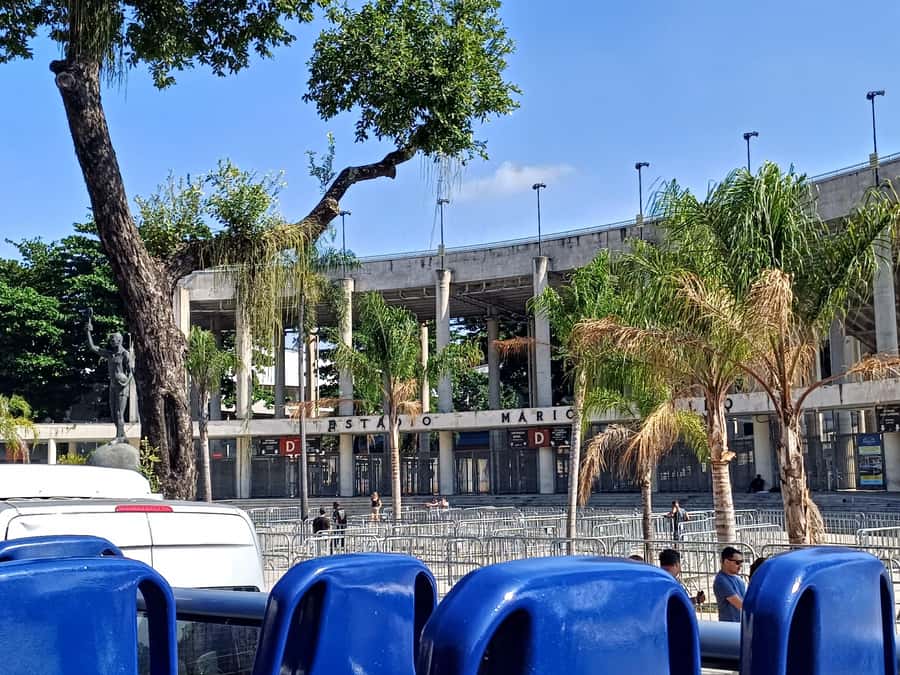
- AquaRio, Yup Star, Sambódromo, and Maracanã: big venues on the map
- The Christ the Redeemer stop: Corcovado Railway and the Tijuca Forest view
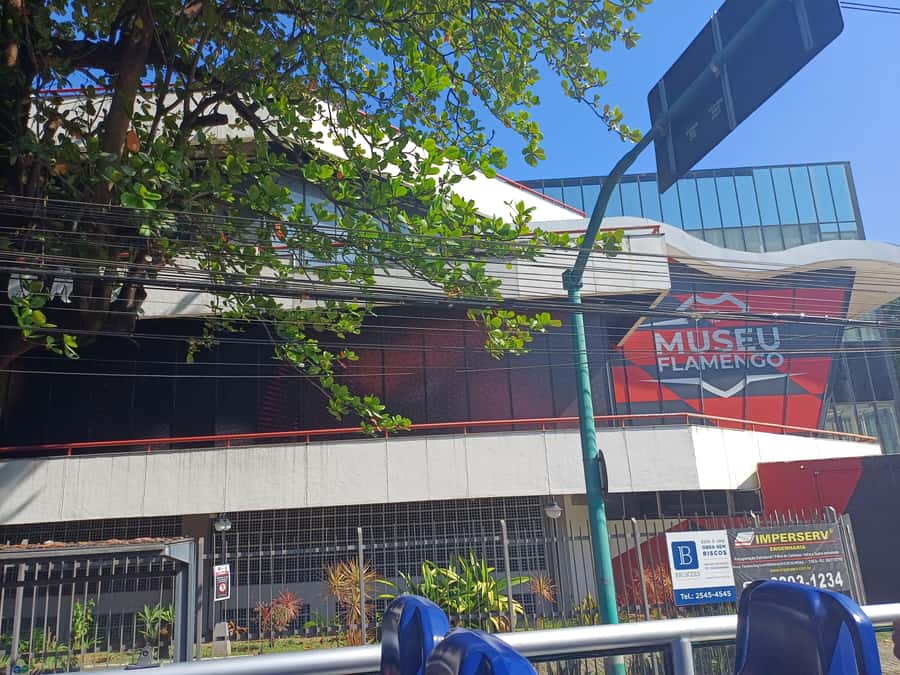
- On the way back: Lagoa, Flamengo Museum, and Ipanema’s last-photo energy
- Music onboard: MPB and samba sing-alongs, with expectations managed
- Price and value: what you really get for $31
- Timing and logistics: the hop-on/off reality check
- Who should book this Rio Samba Bus?
- Should you book the Rio Samba Bus?
- FAQ
- How long is the Rio Samba Bus tour?
- Where does the tour start?
- Can I hop on and hop off at different stops?
- Are tickets for attractions included?
- Does the tour include the Christ the Redeemer visit?
- Does it include Sugarloaf Mountain?
- What languages is the live commentary offered in?
- Is Wi‑Fi included on the bus?
- What are the departure times?
- Is there free cancellation?
Key things to know before you ride

- 2 hours on the clock, with lots of chances to hop on/off at 24 stops across the city
- Built-in guide + multilingual live commentary (Portuguese, English, Spanish)
- Music onboard is part of the experience, with sing-alongs to Brazilian rhythms like MPB and samba
- Major “must-see” sights are on the route: Sugarloaf area, Lapa, and Christ the Redeemer
- Attraction tickets are not included, including the cable car and the Corcovado train
- Bus types can vary (some rides are fully closed with A/C, others open-air for sightlines)
More full-city Rio sightseeing runs
- Rio de Janeiro: 6-Stop Highlights of Rio with Lunch★ 4.4 · 5,157 reviews
- Rio: Carnival Backstage Tour at Samba City with Cocktail★ 4.6 · 520 reviews
- Hop-ON Hop-OFF Sightseeing Bus in Rio de Janeiro – Rio Samba Bus★ 3.5 · 457 reviews
- Rio de Janeiro: Private Guided City Tour★ 4.6 · 207 reviews
Why a hop-on bus works so well for first-time Rio

Rio can feel like a puzzle at first. Neighborhoods are close on a map, but traffic and hills stretch your day. This kind of hop-on hop-off loop helps you get oriented quickly because it links the South Zone beaches, the central landmarks, and the famous viewpoints into one guided route.
I like that the tour is designed as an efficient “see the big stuff, decide what to do next” plan. You’re not stuck with one fixed stop order. You can stay on for the ride-by views, or jump off at points that match your energy.
Another smart touch is the local guide narration. Live facts and trivia while you pass landmarks beats reading a guidebook while staring at a skyline you can’t fully place.
The Copacabana start: waterfront views and a fast sense of place
The outward journey kicks off around Copacabana Beach with multiple boarding stops along the beachfront area (Copacabana Beach Station 5, 4, 3, and 2). This is a good place to begin because it sets the tone immediately: sea views, the famous promenade energy, and the scale of the South Zone right away.
If you like photography, this is when you’ll spot a lot of “Rio basics” in one go: coastline lines, beach activity, and the way the city hugs the water. Even if you don’t hop off, sitting on the upper deck-style viewpoints (when available) gives you a sweeping overview before the route heads inland.
Two practical notes: first, you’ll want to be at your chosen start stop a bit early so you’re not scrambling. Second, when you later hop off, keep your stop name or number in mind so you don’t lose track in busy areas.
Sugarloaf Mountain stop: cable car day-trip energy in a tight schedule

One of the biggest reasons to pick this tour is that it brings you to the Sugarloaf Cable Car Park area. From there, you can access the cable car ride toward Morro da Urca, and that’s the classic angle where Sugarloaf dominates the background.
This is a great moment to switch modes. On the bus, you get views as you pass. At the Sugarloaf stop, you’re closer to the action and able to frame photos with the mountain clearly in the composition.
Just remember: tickets to the cable car aren’t included. That doesn’t ruin the value, it just means you should plan for a separate purchase if you want the full “up top” experience. If you don’t do the cable car, you can still use the stop as a photo and viewpoints break.
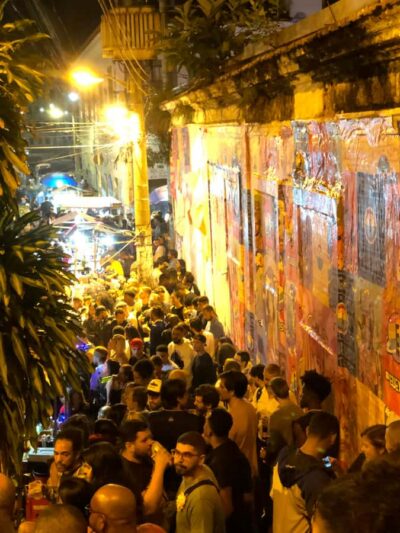
Where the samba keeps going after dark
Aterro do Flamengo and the walk-through city feel

As the bus moves past Aterro do Flamengo, you get a glimpse of a different side of Rio. The Aterro waterfront stretch is a key connector that feels like both a scenic promenade and a major urban corridor.
Then the route starts trending toward the center. This matters because Rio’s “best-known images” aren’t all beaches. You want the skyline, yes. But you also want architecture, plazas, churches, and the big institutional landmarks that make the city feel like more than a postcard.
The bus keeps things moving while you learn what you’re actually looking at. That live commentary is what turns a drive-by into a meaningful tour stop.
Cinelândia and Lapa: where Rio’s landmarks feel close enough to picture

Once you’re back in the city center area, the route hits Cinelândia, described as Rio’s main historic district. This part of the loop is built around landmark clusters, including the Municipal Theatre, the Museum of Fine Arts, and the National Library.
If you hop off here, it’s easy to connect the dots: you’re seeing the cultural “brain” of the downtown core. If you stay on the bus, you’ll still benefit from the narration that helps you place what you’re seeing.
Then comes Lapa, including the Arcos da Lapa and the Selarón staircase. This is where the tour starts to feel more street-level and human. The Arcos are a bold structure you can’t miss, and the Selarón staircase brings color and texture to your memory of Rio fast.
One caution: this is also where it’s easiest to lose time if you get caught up taking photos, because you’ll be making hop-off decisions in a busy area. I’d treat Lapa as a “one main stop, then re-board quickly” kind of moment.
Cathedral, Imperial Palace, and Candelária: three icons in one sweep
From Lapa and the downtown zone, the bus continues past major landmarks:
- Rio de Janeiro Metropolitan Cathedral
- Paço Imperial
- Candelária Church
This isn’t a museum-style stop where you linger for hours. It’s a guided route that shows you where these places sit in the city’s geography and why they’re central to Rio’s identity.
That’s valuable if your goal is orientation. You’ll understand the city’s layout more clearly after seeing these key points in sequence rather than piecing them together on your own.
Also, these are good “context anchors.” Later, when you walk around Rio independently, your brain can label what you’re seeing: this is where the civic center is, this is where the historic core pulls you in.
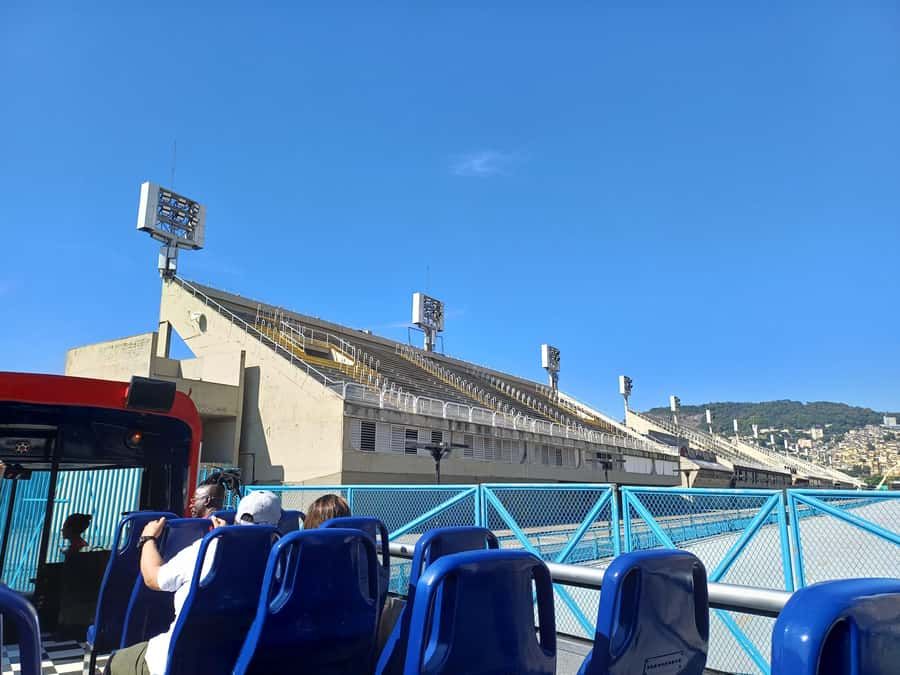
AquaRio, Yup Star, Sambódromo, and Maracanã: big venues on the map
The bus route also passes by major attractions and venues such as:
- AquaRio / Yup Star Rio
- Sambódromo
- Maracanã (listed on the outward route)
Even if you don’t step inside any venues, seeing where they sit helps you plan future visits. Rio’s scale can surprise you, and these sites give you landmarks for the “big events” side of the city, not just the scenic side.
One thing to keep in mind: the tour is still a bus ride with hop-on/off opportunities. So you’ll be using these stops more as location context unless you choose to hop off and handle separate attraction tickets on your own.
The Christ the Redeemer stop: Corcovado Railway and the Tijuca Forest view

The standout moment for many people is the Christ the Redeemer stop. The tour route includes the Corcovado Train to Christ the Redeemer, where you ride along the century-old railway and head through the Tijuca Forest toward the summit.
This is the kind of sightseeing where timing and expectations matter. The bus brings you into the right system, then the train carries you up. Tickets to the attractions are not included, so you’ll need to plan for separate access if you want to go to the top.
Even so, the value is strong because you’re not trying to coordinate transport across multiple modes. You’re getting a single guided approach to one of the world’s most recognizable viewpoints.
On the way back: Lagoa, Flamengo Museum, and Ipanema’s last-photo energy

The return route swings back toward the South Zone with stops like:
- Largo do Boticário
- Lage Park
- Lagoa Skate Park
- Flamengo Museum
- Rua Garcia Dávila Gastronomic Center
- Ipanema Beach (Post 9 and Post 8)
This is a smart mix because it closes the loop between Rio’s iconic skyline moments and everyday neighborhood life. Lagoa adds a lakeside feel, Flamengo brings you toward culture, and Ipanema wraps things up with the beach vibe people come for.
If you only do one thing after Christ the Redeemer, I’d focus your remaining energy on a South Zone beach stretch for photos. Copacabana started you off with the sea-facing glamour. Ipanema gives you a different look and mood to end with.
Music onboard: MPB and samba sing-alongs, with expectations managed
Music is included as part of the onboard experience, with performances meant to connect you to Brazilian rhythms like MPB and samba. In theory, this is the moment where the bus stops feeling like transport and starts feeling like a moving street party.
At the same time, music plans can be affected by real-world conditions. If you’re the type who expects the exact schedule to be perfect every single time, keep your expectations flexible.
Even when the music is light or short, the guided commentary still gives the ride structure, and that’s what keeps the experience from feeling like just another bus tour.
Price and value: what you really get for $31
At $31 per person for a 2-hour loop, you’re paying for three core things:
1) a panoramic guided ride across many landmark areas
2) live commentary in multiple languages
3) musical performances onboard
The big trade-off is that tickets to the attractions aren’t included. That means if you plan to ride the cable car or the Corcovado train, you’ll pay extra beyond the bus price.
Still, I think it’s good value for the use case it’s built for. You’re not trying to cover the city at random. You’re using one guided system to see a lot of top highlights quickly, then decide what’s worth more time and separate ticket purchases.
This tour is also efficient for people staying a short time in Rio. It helps you prioritize. After this loop, you’ll know whether your next day should be more beach-focused, more museum-focused, or more viewpoints-focused.
Timing and logistics: the hop-on/off reality check
The tour runs multiple departure times throughout the day, starting from 9:15 am and later (up through 5:15 pm). Once you’re on board, you’ll see a lot of stops lined up by name, especially in the downtown and South Zone corridors.
Here’s the practical reality: hop-on/off only works if the schedule holds and the stops are easy to find. If you’re picking a departure stop in Copacabana, give yourself buffer time to reach the correct boarding point. One missed boarding can derail the whole day.
Also, some parts of the route can be hard to navigate from the curb if the stops aren’t obvious. The best defense is mental prep: know the exact stop name you’re aiming for before you exit.
If you end up stuck waiting longer than you expected, consider that you may need a backup plan to reach your next priority. In a city like Rio, that’s not a failure. It’s just being smart with time.
Who should book this Rio Samba Bus?
This tour is a strong fit if:
- you want a guided overview of Rio’s top sights in a short window
- you like bus-based sightseeing with hop-on/off flexibility
- you want live commentary and onboard music as part of the experience
- you’re okay with attraction tickets being separate
It may be less ideal if:
- you’re on an extremely strict schedule and can’t tolerate waiting
- you want a fully ticket-included day where every stop is guaranteed
- you’re hoping the bus will deliver entrance to every venue without extra steps
Should you book the Rio Samba Bus?
Yes, if your goal is orientation and efficient sightseeing. The route hits the big Rio icons that many people come for, including Sugarloaf and Christ the Redeemer, plus downtown landmarks like Cinelândia, Lapa, and the major churches. For $31, you get a guided pass through a lot of meaningful places in just 2 hours, with onboard music and free Wi‑Fi.
I’d skip it only if you hate timing uncertainty or you want a rigid, every-stop program with included tickets. If you can stay flexible and treat this as your “set the map, choose your next move” day, it’s a practical way to start your Rio story.
FAQ
How long is the Rio Samba Bus tour?
The duration is listed as 2 hours.
Where does the tour start?
The tour starts in Copacabana, with multiple departure/boarding points along the Copacabana Beach area.
Can I hop on and hop off at different stops?
Yes. The tour is hop-on hop-off, and you can get on and off at the 24 stops along the route.
Are tickets for attractions included?
No. Tickets to the attractions are not included.
Does the tour include the Christ the Redeemer visit?
The route includes the Corcovado train stop for Christ the Redeemer, but attraction/train access is not included in the bus price.
Does it include Sugarloaf Mountain?
Yes. The route includes the Sugarloaf Cable Car Park stop, where you can access the cable car experience separately.
What languages is the live commentary offered in?
Live commentary is provided in Portuguese, English, and Spanish.
Is Wi‑Fi included on the bus?
Yes. Free Wi‑Fi is included on board.
What are the departure times?
Departure times listed include 9:15 am, 10 am, 10:45 am, 11:30 am, 12:15 pm, 1 pm, 1:45 pm, 2:30 pm, 3:15 pm, 4:15 pm, and 5:15 pm.
Is there free cancellation?
Yes. Free cancellation is available up to 24 hours in advance for a full refund.
More Tour Reviews in Rio De Janeiro






More Samba and Carnival Nights






More Rio City Sightseeing



Fresh off the review desk: newer Rio De Janeiro tours we have been out on





Samba & Carnival Experiences, compared.
 ★ 4.9Beginner Samba Lesson in IpanemaFrom $251,071 reviews
 ★ 4.7Pub Crawl in Lapa with Cachaça Tasting and Live SambaFrom $33881 reviews
 ★ 4.6Carnival Backstage Tour at Samba City with CocktailFrom $27520 reviews
 ★ 3.5Hop-ON Hop-OFF Sightseeing Bus in Rio de Janeiro – Rio Samba BusFrom $30457 reviews
 ★ 4.6Samba Class in CopacabanaFrom $25262 reviews
 ★ 4.7Ginga Tropical Samba and Folklore Show TicketFrom $61231 reviews
 ★ 4.5Ginga Tropical – Brazilian Samba and Folklore ShowFrom $65216 reviews
 ★ 4.4Pedra do Sal: Live Samba Night with Local Guide & DrinkFrom $41183 reviews
Browse the lists this tour appears in