

Reviewed · CHRIST THE REDEEMER & CORCOVADO
Rio in Style: A Journey Thru Corcovado, Sugarloaf, Selaron
Rio’s top icons in one tight day. You’ll pair Corcovado and Sugar Loaf with a hands-on walk through Selarón and Rio’s central neighborhoods, all with a guide-led plan and a cloud backup built in.
I love the 7:00 am start that helps you get to Christ the Redeemer and Sugar Loaf before the thickest crowds. I also like the air-conditioned minivan and selected-hotel pickup/drop-off, so you spend the day seeing Rio instead of figuring out routes.
One catch: the big view spots cost extra on arrival, and the day moves fast with stairs on the Selarón steps. If that’s not your style, you’ll want to adjust your expectations going in.
In This Review
- Key highlights that make this tour worth your time
- A 7:00 am start from Copacabana you’ll feel good about later
- Ipanema, Copacabana, and the beach-city orientation you actually need
- Morro da Urca: the short climb that sets up the best views
- Sugar Loaf Mountain: breathtaking views, but budget for the cable car
- Palácio do Catete and Lapa Arches: where Rio shifts from postcard to lived-in
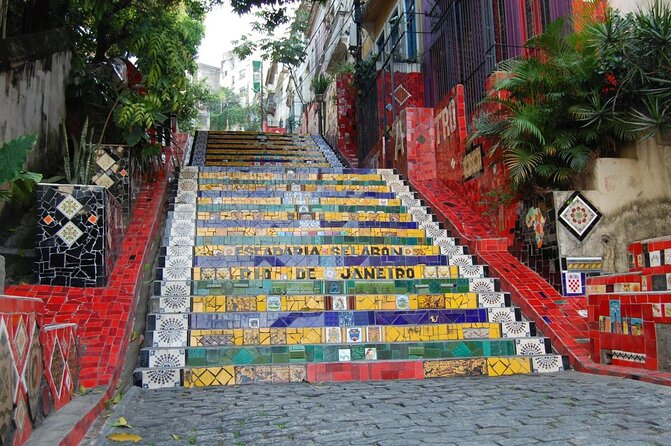
- Selarón Steps: 215 tiled steps of street-level art with a real backstory
- Metropolitan Cathedral of Saint Sebastian: a cone-shaped landmark with great acoustics
- Tijuca Forest and Paineiras: the ride that makes Corcovado feel like a destination
- Christ the Redeemer (Corcovado): arrive early, and know the cloud plan
- Mosteiro de São Bento and the Golden Church: quiet, old, and close to the bustle
- Maracanã and the Carnaval parade stadium: you may see exterior views more than full access
- Price and tickets: does $97 feel fair in real life?
- Guides and group size: why a max of 14 people can change everything
- What to bring so you enjoy the stairs and the viewpoints
- Who should book this tour, and who should skip it
- Should you book Rio in Style: Corcovado, Sugar Loaf, Selarón?
Key highlights that make this tour worth your time
- Early access timing that can mean shorter waits at Christ the Redeemer and Sugar Loaf
- Small group (max 14) and a guide who keeps you together through multiple neighborhoods
- Cloud backup at Corcovado with Mirante Dona Marta listed as the alternate viewpoint
- Selarón steps with real story behind Jorge Selarón’s 215-tile tribute
- Mix of viewpoints and street-level Rio, from cable-car views down to Lapa and churches
Other ways up to Christ the Redeemer, compared
- Christ the Redeemer Entry Ticket by Corcovado Train★ 4.4 · 4,476 reviews
- Rio: Christ the Redeemer, Sugarloaf, Selaron & BBQ Lunch★ 4.5 · 2,428 reviews
- Rio de Janeiro: Christ, Selaron Steps, and Tijuca Park Tour★ 4.7 · 857 reviews
- Skip the Line to Christ Redeemer, Sugar Loaf and Barbecue Lunch★ 4.0 · 593 reviews
A 7:00 am start from Copacabana you’ll feel good about later

This tour is built around an early start. You meet at Hilton Rio de Janeiro Copacabana at 7:00 am, and if your hotel is in the pickup zone, you’ll be collected there instead. The idea is simple: hit the two headline viewpoints while morning is still fresh and before lines get ugly.
That early push matters in Rio because the waits can swing wildly by day and weather. When you’re doing Corcovado and Sugar Loaf in one morning, shaving even 30 to 60 minutes off the pressure time can make the whole day feel calmer.
You’re traveling in an air-conditioned minivan, which sounds basic until you hit Rio heat. The van also keeps the day efficient. You won’t be hopping between random taxis and buses while the guide is trying to herd a group.
Ipanema, Copacabana, and the beach-city orientation you actually need
After pickup, the tour begins in the beach corridor, with stops that anchor you geographically. Ipanema is a key reference point: it runs between Arpoador Beach and Leblon, and it’s known for being one of Rio’s more expensive, polished areas.
Then you move into Copacabana, one of the world’s best-known beaches. On a whistlestop tour, these beach stops aren’t about staying long. They’re about context: once you see how the coast curves and where the hills rise, the rest of the day makes more sense.
If this is your first time in Rio, I’d treat these early beach moments like your quick map lesson. You’ll later recognize angles from the viewpoints that you might otherwise miss.
Morro da Urca: the short climb that sets up the best views
Your first proper viewpoint stop is Morro da Urca, a 220-meter hill. It’s a relatively brief stop, but it’s not filler. From here, you get a broad sweep that helps you understand what you’re going to see again at Sugar Loaf, only bigger.
From the top area, you can spot major parts of the city: beaches like Botafogo and Flamengo, the Corcovado area with Cristo Redentor, Guanabara Bay, Rio’s downtown, Santos Dumont Airport, Governador Island, and even the Serra do Mar and Dedo de Deus peak in the distance.
Admission tickets aren’t included for this stop, so plan to pay at the appropriate point. The time here is tight, so take a slow walk around for photos, then be ready to move when the group does.
More cable-car and Sugarloaf runs we have taken


Sugar Loaf Mountain: breathtaking views, but budget for the cable car

Next comes Sugar Loaf Mountain at about 396 meters above sea level. This is where Rio earns its nickname of being the wonderful city. The viewpoints here are the kind that make you stop talking because your camera can’t keep up.
This is also where your money planning needs attention. The tour’s description lists a Sugar Loaf admission fee that isn’t included (and that’s on top of the tour price). And at least some departures can involve additional payment for the cable car portion depending on how tickets are handled that day. Translation: don’t assume every ride detail is bundled into the price you booked.
A practical tip: bring cash or a card for ticket gaps, and keep an eye on whether you’re being told to buy cable car rides separately. One guide-led day includes strict group control, so if you’re unclear, ask right away before you’re already at the boarding area.
Palácio do Catete and Lapa Arches: where Rio shifts from postcard to lived-in

Once you come down from the hills, the tour does something smart: it threads through Rio’s center so you’re not just collecting views.
You’ll pass the Palácio do Catete, a neoclassical palace built around 1853 for merchant Machado Coelho. It was later acquired by the imperial government around 1865 for Princess Isabella and the Count of Eu. After the Republican government took over in 1889, the building went through restorations, and it has been state government property since 1960.
Then you hit Lapa, home to the Carioca Aqueduct—often called Arcos da Lapa. This is not just a monument. It’s a functioning part of how the neighborhoods connect because it carries a popular tram route linking the city center up toward Santa Teresa.
These stops are a good reminder that Rio’s big energy isn’t only at the lookouts. Lapa’s streets and arches are where you’ll feel the city’s rhythm more up close.
Selarón Steps: 215 tiled steps of street-level art with a real backstory
If you want one stop that feels personal, make it Escadaria Selarón (Selarón Steps). This is a colorful staircase made of tiles collected from across Rio and from visitors who donated pieces from around the world.
The artist is Jorge Selarón, a self-taught Chilean artist who moved to Rio in 1983. He worked in a tiny house in front of the stairs, transforming the steps into an ongoing tribute. He’s credited with laying over 2,000 tiles, and the main colors—green, yellow, and blue—are chosen to echo Brazil’s flag.
This is also where pop culture sneaks in. The stairs have appeared in music videos, including Beautiful by Snoop Dog and Pharrell Williams (2002).
Time here is usually around 25 minutes, and admission is free, which is a rare win in a city where lots of sights cost extra. Here’s what to watch: there are 215 steps, and railings may not be what you’d expect. If you have balance concerns, take your time, pause often, and don’t let the group’s pace rush you.
Metropolitan Cathedral of Saint Sebastian: a cone-shaped landmark with great acoustics
Next you’ll visit the Metropolitan Cathedral of Saint Sebastian. It’s known for its conical shape—architecture inspired by the Mayan pyramids of Mexico—and the design idea is that the shape brings worshippers closer to God.
Inside, there are stained glass windows that run from floor to ceiling, forming a cross at the top. The stop is short, and you’ll want to move efficiently, but it’s a worthwhile contrast after the street art.
The cathedral stop is listed as free, which makes it one of the better value moments in the schedule. If you like architecture more than shopping malls or museums, you’ll probably enjoy this one more than you expect.
Tijuca Forest and Paineiras: the ride that makes Corcovado feel like a destination
Now you shift from city blocks into greenery. The tour heads toward the Tijuca Forest, a tropical rainforest inside Rio. It’s small compared to the country, but it’s huge as a city escape: it’s described as 3.5% of Rio’s area, about 11 times Central Park in New York.
You’ll reach Tijuca with a stop at Paineiras, then board official vehicles managed by the National Park authority to get up toward the Corcovado area.
This is where your day gets more than scenic. You get a break from the urban feel and a sense of scale: Rio isn’t only beach and buildings. The hills and forest are part of the same story.
Christ the Redeemer (Corcovado): arrive early, and know the cloud plan
Your big moment is Corcovado and Christ the Redeemer. The statue is 38 meters tall, built with reinforced concrete and clad in a mosaic of thousands of triangular soapstone tiles.
The time here is about 45 minutes, and tickets aren’t included in the tour price. The listed cost for Corcovado is $20.00 per person, so factor that into your total budget.
The best part of going early is that you often meet the viewpoint before it’s fully packed. You still get the classic photos, but you may have more breathing room for angles and for looking at the city beyond the statue.
And there’s a key feature I really like: if the summit is obscured by cloud cover, you don’t just abandon the plan. The tour includes an alternative stop at Mirante Dona Marta (362 meters), which is generally less affected by clouds and still offers major city views. Admission for this stop is listed as free.
Mosteiro de São Bento and the Golden Church: quiet, old, and close to the bustle
After the viewpoints, the tour makes a cultural detour to Mosteiro de São Bento. It’s described as the oldest monastery in the city with a Golden Church.
This is another free stop, and the time is short. Still, it’s a satisfying counterbalance to the big tourist scenery. The monastery gives you a feel for Rio’s older spiritual layer without turning the day into a museum crawl.
Maracanã and the Carnaval parade stadium: you may see exterior views more than full access
The tour also includes stadium-area stops, including Maracanã, described as the most famous stadium in the world, plus a Carnaval parade stadium stop.
One reality to know: stadium access can depend on events and schedules. If the day’s conditions don’t allow inside viewing, you’ll still get the location context and the photo opportunities, but it won’t be the same as a full guided stadium tour. Build your expectations around exterior viewing and close-by landmarks rather than guaranteed interior access.
Price and tickets: does $97 feel fair in real life?
The tour price is $97.00 per person and the duration is about 8 hours. That already includes the parts that cost time and energy on your own: a professional guide, air-conditioned minivan transport, and hotel pickup/drop-off for selected hotels.
What’s not included is where Rio can sneak up on your budget:
- Corcovado – Christ the Redeemer: $20.00 per person (not included)
- Sugar Loaf Mountain: $35.00 per person (not included)
On top of that, at least some days can involve extra payment for the cable car segment at Sugar Loaf if it’s not packaged in the same way you assumed. So I’d budget in a range rather than a single number.
So is it good value? For me, the value comes from reducing decision fatigue. This is the type of day where you’d otherwise spend hours figuring out timing, ticket lines, and how to connect neighborhoods. The tour compresses that into one organized run, and the early start at the two most crowded lookouts can be worth real money.
One more note: lunch is not listed as included, though you do get time to eat and the guide typically points out options. Some groups get steered toward Brazilian barbecue-style dining in Ipanema, but since lunch isn’t guaranteed in the base price, I suggest setting aside money for it.
Guides and group size: why a max of 14 people can change everything
The group size is capped at 14 travelers, which is a big deal. You’ll still be a group, but it’s small enough that the guide can keep track of faces and help you plan photo stops without losing half the van.
Guides on these days are often energetic and attentive. Names that come up with this operation include Sabina, Victoria, Monica, Ana, Carmen, and Vincent, and each is described as doing a strong job keeping the group moving and explaining what you’re looking at.
One practical comfort point from real on-the-ground experience: hot days hit hard. A recurring tip is to bring water, since it isn’t always provided in the afternoon. Also bring sun protection. Rio mornings start out easy, then the heat catches up fast.
What to bring so you enjoy the stairs and the viewpoints
This is not a minimalist tour. It includes stairs and viewpoint walking. To make it comfortable:
- Wear shoes with grip for Selarón’s steps
- Bring a refillable bottle and sunscreen (it’s a long day)
- Carry cash for ticket add-ons and any cable car costs
- If you qualify for any discounts, bring ID (especially if you’re using senior pricing)
- Have a light layer for wind on the hilltops, where weather can change quickly
If mobility is a concern, do not assume it’s fully flat. Selarón is stairs, and the viewpoint areas involve uneven surfaces. The good news is that the small-group setup can help, but you should check in early with the operator about your needs.
Who should book this tour, and who should skip it
You’ll probably love this tour if:
- You’re in Rio for a short stay and want an efficient overview
- You prefer guided logistics over ticket-line math
- You care about the big photo hits: Christ the Redeemer and Sugar Loaf
- You like a mix of viewpoints plus street-level culture like Lapa and Selarón
You might not love it if:
- You strongly dislike paying separate ticket fees after booking
- You want long museum-style time at each site (this is more of a highlights day)
- You can’t handle stairs, especially at Selarón
Should you book Rio in Style: Corcovado, Sugar Loaf, Selarón?
Yes, if your goal is to get oriented fast and check Rio’s headline sights off your list with less stress. The early timing, the cloud backup at Corcovado, and the tight routing through beach areas, Lapa, churches, and the rainforest make it a practical first-day or second-day plan.
But book with your eyes open on costs. The tour price is only part of the equation. Plan for the listed entrances for Corcovado and Sugar Loaf, and be ready for possible extra cable car payment depending on how tickets are processed that day.
If you want an easy, high-impact Rio day that balances big views with real neighborhood texture, this is a solid choice.
Santa Teresa and Lapa, Three More Ways






Sugarloaf and the Cable Car, Keep Going





Christ the Redeemer, More Routes Up


Fresh off the review desk: newer Rio de Janeiro tours we have been out on





Christ the Redeemer & Corcovado, compared.
 ★ 4.4Christ the Redeemer Entry Ticket by Corcovado TrainFrom $454,476 reviews
 ★ 4.5Christ the Redeemer, Sugarloaf, Selaron & BBQ LunchFrom $692,428 reviews
 ★ 4.7Christ, Selaron Steps, and Tijuca Park TourFrom $68857 reviews
 ★ 4.0Skip the Line to Christ Redeemer, Sugar Loaf and Barbecue LunchFrom $113593 reviews
 ★ 4.0Skip the Line Christ the Redeemer Admission TicketFrom $45508 reviews
 ★ 4.6Christ the Redeemer and Sugarloaf Tour with…From $141499 reviews
 ★ 4.45-hour Christ the Redeemer and Sugarloaf Express TourFrom $109407 reviews
 ★ 4.8Christ the Redeemer Early Access and SugarloafFrom $125404 reviews
Browse the lists this tour appears in